
Industrial Edge: Metal Entryway Benches with Storage Solutions
Discover how metal entryway benches combine rugged durability with smart storage. Explore top industrial designs to organize your foyer in style.
Feb 4, 2026 - Written by: linda wise

The entryway is the handshake of the home. It is the transitional space where the chaos of the outside world meets the sanctuary of the interior. Despite its importance, this area is frequently overlooked, often devolving into a cluttered drop zone for shoes, keys, and coats. For homeowners seeking a balance between formidable durability and striking aesthetics, the industrial trend offers a compelling solution. specifically through the use of metal entryway benches equipped with storage.
Industrial design is rooted in the celebration of raw materials. It exposes what other styles attempt to hide, finding beauty in structural elements, distressed finishes, and utilitarian forms. When applied to entryway furniture, this aesthetic provides a distinct advantage: resilience. A metal bench is not merely a stylistic choice; it is a practical investment capable of withstanding the high traffic, moisture, and wear that characterizes the average foyer.
This comprehensive guide explores the multifaceted world of industrial metal benches. We will delve into design variations, storage mechanics, and styling techniques that transform a simple piece of furniture into the anchor of your home’s entrance.
The Utilitarian Appeal of Industrial Design
To understand the value of an industrial bench, one must first appreciate the design philosophy behind it. Originating from the conversion of old factories and warehouses into residential lofts, industrial style emphasizes history, mechanics, and raw functionality.
In the context of an entryway, this translates to furniture that does not feel precious or fragile. A foyer is a high-utility zone. It is where muddy boots are kicked off, heavy grocery bags are dropped, and wet umbrellas are leaned. Traditional wood furniture with delicate varnishes can easily succumb to scratches and water damage in such an environment. Metal, conversely, thrives on abuse. Powder-coated steel, distressed iron, and brushed aluminum offer surfaces that are impervious to the typical wear and tear of daily life.
Furthermore, the “open” nature of many industrial designs—often featuring wire grids or open shelving—promotes airflow. This is a critical, yet often ignored, feature for shoe storage. enclosed cabinets can trap odors and moisture, whereas the breathable structure of a metal rack ensures that footwear dries properly, preserving both the shoes and the olfactory pleasantness of your home.
Evaluating Metal Bench Configurations
Not all metal benches are created equal. Depending on the dimensions of your entryway and your specific storage requirements, different configurations will offer varying benefits.
The Low-Profile Shoe Rack Bench
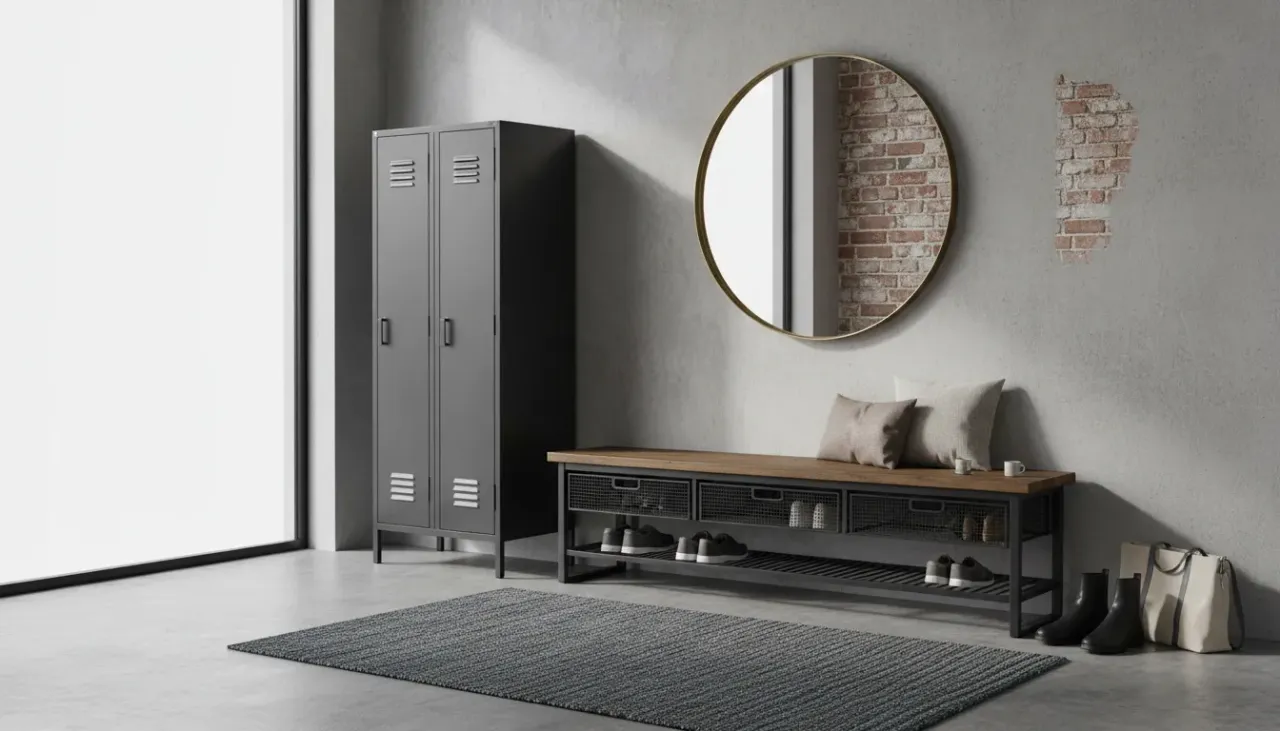
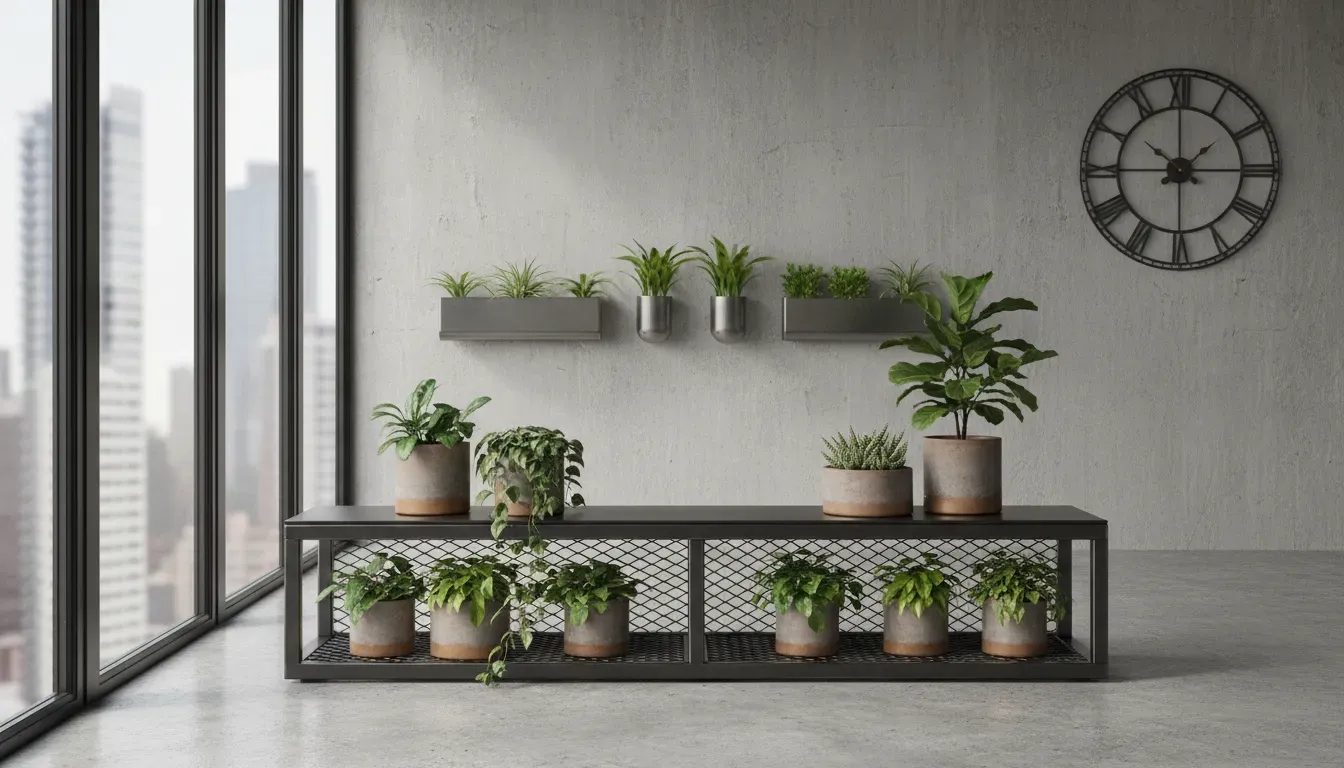
The most common iteration of the industrial bench is the low-profile unit featuring a seating surface atop one or two tiers of metal grid shelving. This design is ideal for narrow hallways or apartments where visual weight needs to be minimized. The open frame allows light to pass through, preventing the space from feeling cramped.
When selecting this type of bench, pay close attention to the weight capacity. A high-quality industrial bench should support at least 250 to 300 pounds, ensuring it serves as a safe seat for putting on shoes, rather than just a storage rack.
The Hall Tree Combination
For households that lack a coat closet, the industrial hall tree is a powerhouse of organization. These units extend vertically, connecting the bench to a backing framework equipped with hooks and often a top shelf.
The metal construction of an industrial hall tree provides the necessary rigidity to support heavy winter coats and backpacks without leaning or warping. This vertical utilization of space creates a comprehensive “landing station” where every item—from scarves to boots—has a designated place.
The Mixed-Material Hybrid
While pure metal makes a bold statement, many homeowners prefer the warmth of mixed materials. The combination of a matte black metal frame with a rustic wood top is a hallmark of modern industrial design. This juxtaposition softens the harshness of the steel, making the piece more inviting.
For those looking to blend durability with rustic charm, consider exploring options that feature reclaimed wood or high-grade engineered wood with a vintage finish.
Check out the latest Mixed Material Entryway Benches here
The Enclosed Storage Chest
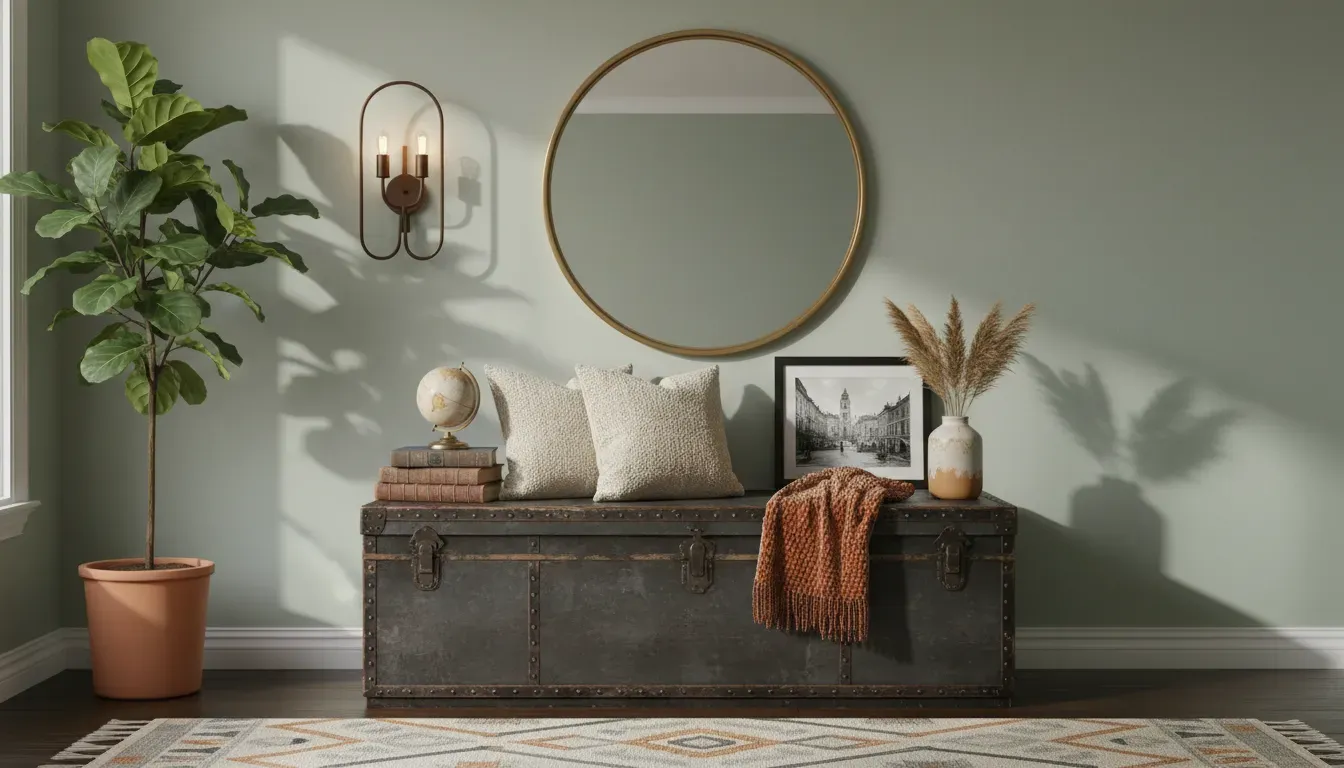
If your goal is to hide clutter entirely, a metal storage trunk or chest bench offers a clean solution. These pieces feature a flip-top lid, revealing a deep internal cavity. This is excellent for storing seasonal items like blankets, winter gear, or sports equipment that does not need to be accessed daily. The aesthetic here leans more towards “vintage locker” or “steamer trunk,” adding a heavy dose of character to the room.
Analyzing Storage Mechanics
The efficacy of an entryway bench is defined by its storage capacity. In the realm of industrial metal furniture, storage solutions generally fall into three categories: open grid, sliding bins, and hidden compartments.
Open Grid Shelving
This is the standard for most metal benches. It consists of horizontal metal slats or wire mesh.
- Pros: Excellent ventilation; easy to clean (dirt falls through or can be wiped off); easy visibility of shoes.
- Cons: Small items (keys, loose change) cannot be stored here without a tray; creates visual clutter if shoes are untidy.
Integrated Wire Baskets
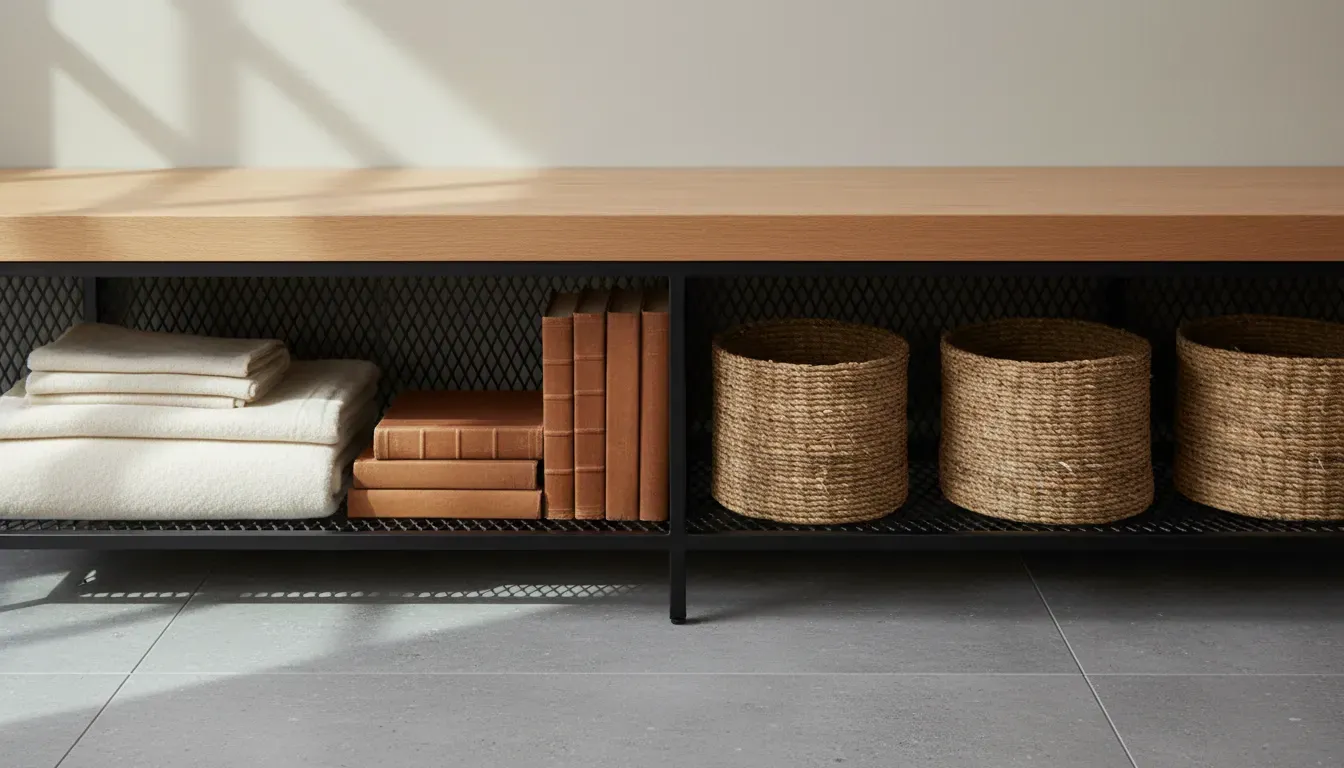
Some industrial designs incorporate pull-out wire drawers or baskets beneath the seat. This provides a containment system for loose items like gloves, dog leashes, or mail. It maintains the industrial look while offering the organization of a drawer.
- Pros: Segregates small items; maintains airflow.
- Cons: Can be difficult to clean if dust accumulates in the mesh.
Flip-Top Compartments
Usually found in mixed-material benches, the seat itself may lift on hinges. In all-metal designs, this mimics a toolbox or locker mechanism.
- Pros: Completely conceals clutter; highly secure.
- Cons: Requires the user to stand up to access storage; hinges can be pinch points for children.
Sizing and Spatial Planning
Before purchasing a bench, precise measurement is non-negotiable. The industrial aesthetic is bold, and an ill-fitting piece can dominate a small room or look lost in a large foyer.
Width and Clearance
Measure the width of your wall. Ideally, you should leave at least 6 to 12 inches of clearance on either side of the bench to prevent the area from looking crowded. If the bench is placed near a door, ensure the swing of the door does not collide with the bench corner.
Depth for Traffic Flow
The depth of the bench is critical for flow. Standard entryway benches range from 12 to 18 inches in depth. In a narrow corridor, a 12-inch depth is preferable. Ensure there is at least 36 inches of walking path remaining in front of the bench to allow for comfortable passage, especially when carrying groceries.
Height and Ergonomics
Standard seating height is between 18 and 20 inches. If the bench is too low, it becomes difficult for adults to stand up from; if too high, it is uncomfortable to tie shoes. If you plan to add cushions, factor their thickness into the total height.
Styling the Industrial Entryway
An industrial metal bench can look stark if not styled correctly. The goal is to integrate the piece into the home so it feels curated rather than accidental.
Softening with Textiles
Metal is cold and hard. To create a welcoming atmosphere, introduce textiles. A faux fur throw draped over the back of a hall tree, or a set of tufted cushions on the seat, adds immediate warmth. Look for fabrics in neutral tones—charcoal, cream, or cognac leather—to complement the industrial palette.
Lighting the Scene
Industrial furniture shines under the right lighting. A vintage Edison bulb pendant light or a metal cage sconce installed above the bench reinforces the theme. The warm glow of the filament bulb contrasts beautifully with the cool tones of the metal framework.
Greenery and Life
The “urban jungle” look pairs exceptionally well with industrial decor. The organic, chaotic lines of a fern or a snake plant break up the rigid geometry of a metal bench. Place a potted plant on the top shelf of a hall tree or on the floor beside the bench to breathe life into the space.
Organizing with Accessories
To maximize the utility of open metal shelves, use additional organizers. Woven seagrass baskets or felt bins can be placed on the wire racks to hold items that would otherwise fall through. This also introduces texture, further softening the metallic look.
For those requiring extensive vertical storage, consider a robust hall tree unit.
Discover Top-Rated Metal Hall Trees here
Durability and Maintenance of Metal Furniture
One of the primary selling points of metal furniture is its longevity. However, different finishes require different care protocols to maintain their appearance over time.
Powder Coating vs. Painted Finish
High-quality industrial benches usually feature a powder-coated finish. This is a dry powder applied electrostatically and then cured under heat. It is significantly more durable than conventional paint, resisting chipping, scratching, and fading. When shopping, prioritize items explicitly stating “powder-coated steel.”
Rust Prevention
While indoor benches are less prone to rust than outdoor furniture, wet boots and humidity can take a toll over time. If you live in a coastal area or a region with heavy snowfall (road salt is corrosive), ensure you wipe down the metal legs regularly. If a scratch penetrates the coating, touch it up immediately with a matching metal paint to prevent oxidation.
Cleaning Protocols
Cleaning metal is straightforward. A damp cloth with mild soap is usually sufficient. Avoid abrasive scouring pads, which can dull the finish. For mixed-material benches, use a wood conditioner on the seat to prevent drying or cracking, especially if the bench sits near a radiator or heat source.
Integrating Industrial with Other Styles
You do not need to live in a converted warehouse to use an industrial bench. This furniture style is surprisingly versatile and can be blended with various interior design themes.
Modern Farmhouse
Industrial and Farmhouse styles overlap significantly. Both value utility and raw materials. A metal bench with a distressed wood top fits perfectly into a farmhouse foyer. The metal adds an edge to the shiplap and white tones typical of farmhouse decor. For more on this intersection, you might enjoy reading about Mixing Modern and Rustic Elements.
Minimalist Modern
The clean lines of a simple black metal frame align with minimalist principles. In a white-walled, uncluttered space, a sleek metal bench acts as a graphic, sculptural element. The lack of ornamentation keeps the visual noise low.
Bohemian
Boho style is eclectic and embraces mixing eras and materials. An industrial metal bench can serve as a neutral base for colorful Kilim pillows, macramé wall hangings, and an abundance of plants. The metal grounds the airy, colorful bohemian elements.
Heavy-Duty Solutions for Maximum Storage
For households with serious storage needs—large families, sports enthusiasts, or those in colder climates requiring heavy gear storage—standard racks may not suffice. Heavy-duty metal trunks provide the ultimate “hide-all” solution. These units are often built with reinforced steel corners and can double as a secure lockbox.
Explore Heavy-Duty Metal Storage Trunks
The DIY Alternative: Pipe Furniture
A sub-genre of industrial design involves furniture made from plumbing pipes and fittings (galvanized or black iron). While many retailers sell pre-made pipe benches, this is also a popular DIY project.
Building your own allows for custom dimensions. You can use standard 1/2-inch or 3/4-inch floor flanges, nipples, and elbows to construct a frame, topping it with a custom-stained plank of lumber. However, be aware that authentic iron piping is heavy and often comes coated in industrial grease that must be meticulously cleaned and sealed to prevent staining clothing. For most homeowners, purchasing a pre-finished unit that mimics this look is the more practical and cleaner option.
Color Palettes and Finishes
While black is the default color for industrial metal, it is not the only option.
- Matte Black: The classic choice. Graphic, bold, and hides dirt well.
- Gunmetal Grey: Softer than black, offering a more vintage, “machinist” vibe.
- Distressed Copper/Bronze: Adds warmth and a touch of antique elegance.
- White Metal: A rarer choice, but excellent for “Scandi-Industrial” styles, keeping the room bright while retaining the durability of steel.
- Raw Steel: Usually sealed with a clear coat, this shows the weld marks and grinding patterns, offering the most authentic industrial look.
Making the Final Decision
When selecting the perfect metal entryway bench, revisit your primary motivation.
- Is it organization? Prioritize tiers of shelving and hall tree hooks.
- Is it aesthetics? Focus on the quality of the mixed materials and the silhouette of the frame.
- Is it durability? Look for heavy-gauge steel and powder coating.
The entryway sets the tone for your entire home. By choosing a piece that embodies the industrial spirit—strong, unpretentious, and deeply functional—you create a space that welcomes you home with order and style. Whether you opt for a sleek, modern wire bench or a rugged vintage-style locker chest, the metal bench is a steadfast guardian against the clutter of daily life.
For further inspiration on organizing your space, consider reading our guide on Small Entryway Hacks to maximize every square inch of your foyer.