
Modern Mudroom Storage: Trending Bench and Locker Designs for 2026
Discover the architectural shifts redefining 2026 mudroom storage. From monolithic bench topography to ventilated locker dynamics, master your home's transition zone.
Mar 14, 2026 - Written by: Linda Wise
The entryway is the psychological airlock of your home. It absorbs the chaotic, wet, muddy energy of the outside world and neutralizes it before it can bleed into your pristine living spaces. Over the last decade, we treated this space like an afterthought—a place to haphazardly toss a shoe rack and nail up some basic peg hooks. Those days are dead.
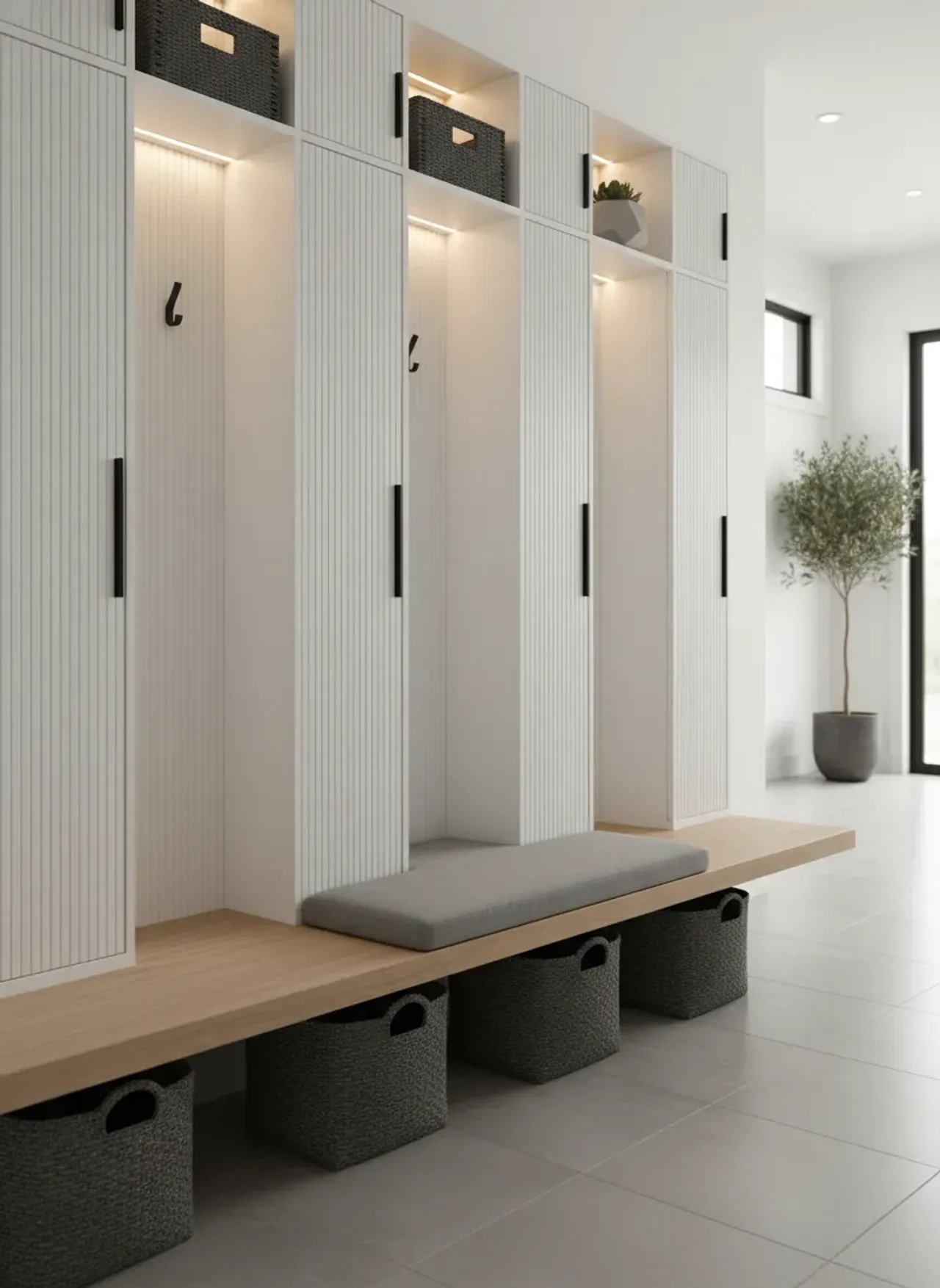
As we push deep into 2026, the architectural consensus has violently shifted. Homeowners and custom builders are no longer settling for flimsy, farmhouse-style cubbies that display every piece of visual clutter to anyone walking through the garage door. Instead, we are seeing a massive pivot toward hyper-functional, concealed, and architecturally integrated mudroom systems. Think monolithic benches with integrated radiant heating, perforated metal locker fronts for aggressive ventilation, and bespoke acoustic dampening to quiet the morning rush.
I’ve personally spent the last year consulting with interior architects across the Pacific Northwest and the Northeast—regions where a mudroom genuinely has to perform under the extreme duress of snow, sleet, and torrential rain. You’ll notice that the resulting design trends aren’t just about aesthetics. They are heavily rooted in durability, spatial psychology, and high-performance engineering.
Before we tear into the specific mechanics of locker depth, bench topography, and hardware spatial dynamics, take a look at the current front-runners in off-the-shelf and semi-custom modular solutions that are dominating the residential market.
Quick Comparison: Top Picks
| Product | Rating | Check Price |
|---|---|---|
| Prepac Wide Hall Tree | ⭐⭐⭐⭐⭐ | View on Amazon |
| Crosley Furniture Seaside Hall Tree | ⭐⭐⭐⭐½ | View on Amazon |
| Bush Furniture Salinas Entryway Bench | ⭐⭐⭐⭐ | View on Amazon |
The Evolution of Mudroom Architecture in 2026
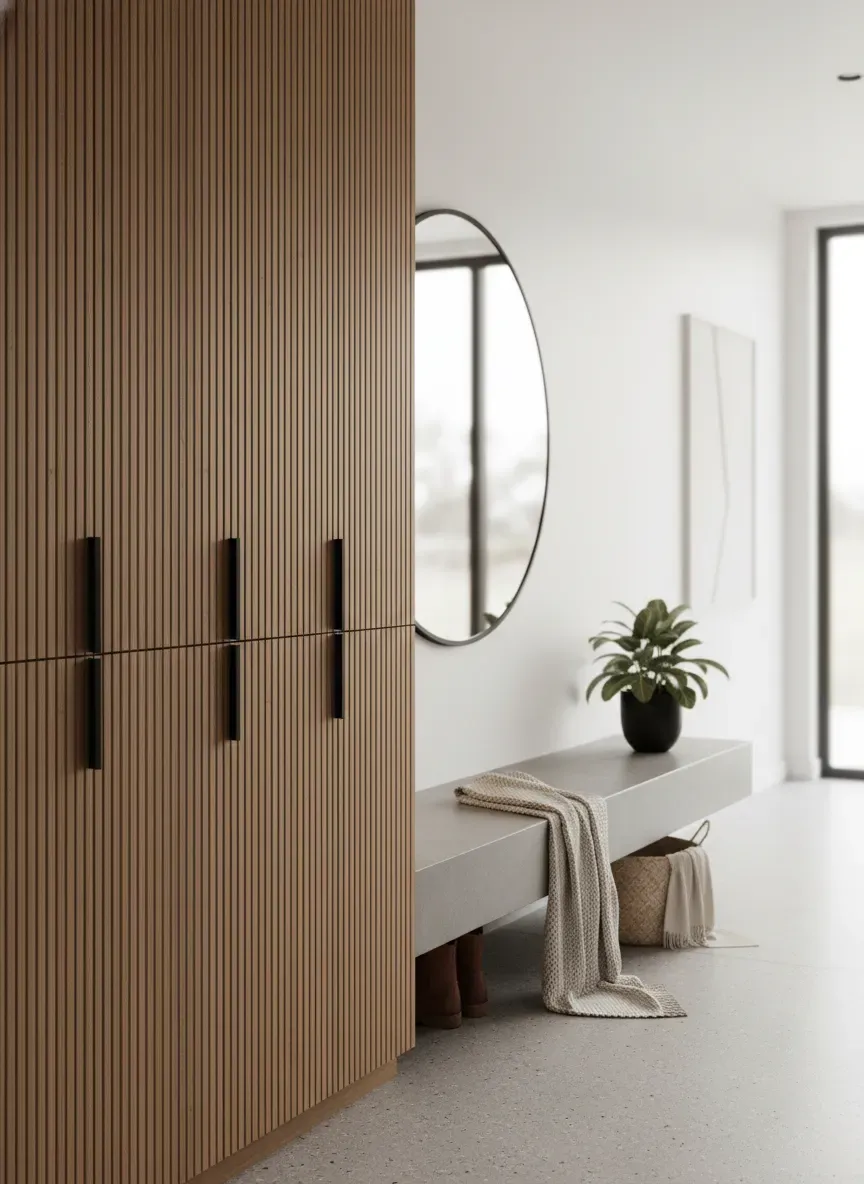
For years, the dominating aesthetic was open-concept storage. Baskets, exposed hooks, and open lower cubbies ruled the design magazines. The reality? That setup only looks good when it’s entirely empty. Add three soaking wet winter coats, a pair of muddy boots, a rogue hockey stick, and a mountain of mismatched mittens, and your entryway instantly resembles a chaotic thrift store bin.
The 2026 response is all about visual silence.
Designers are heavily leveraging concealed cabinetry. Floor-to-ceiling locker systems with pocketing or bifold doors are becoming the absolute standard in high-end builds. By hiding the mess behind beautifully milled flat-panel or fluted wood doors, the mudroom maintains a serene, architectural elegance even when it’s housing forty pounds of winter gear.
But hiding the gear introduces a distinct chemical and biological problem: moisture and odor. You cannot lock a damp wool coat and a pair of soaked Blundstones inside a sealed MDF box. It will rot, warp, and smell atrocious within a week.
Ventilation Dynamics and Active Airflow
To combat the trapped-moisture dilemma, modern locker designs incorporate sophisticated passive and active ventilation strategies. We are seeing a massive resurgence of cane webbing, but reimagined in durable, synthetic weaves that won’t degrade. Perforated powder-coated steel inserts on cabinet doors offer an industrial, tactile edge while allowing necessary airflow.
Here’s the real kicker: high-end 2026 mudrooms are actually tying cabinetry into the home’s HVAC system. By routing a small return vent into the base of the locker system, air is actively pulled through the cabinetry, rapidly drying wet garments and exhausting odors directly outside.
Pro Tip: If tying into your HVAC isn’t feasible, install low-voltage, silent PC cooling fans at the top of your locker columns. Pair them with discreet louvered vents at the toe-kick. This creates an artificial updraft that dramatically accelerates the drying time for heavy winter coats.
Locker Design Anatomy: The 2026 Blueprint
When assessing the anatomy of modern lockers, the conversation instantly shifts from simple aesthetics to structural geometry. You have to design for the specific volume and mass of what you are actually storing.
Materiality and Textural Interplay
Standard painted MDF is falling out of favor for heavy-use contact zones. Wet umbrellas and aggressive backpack zippers will shred a basic satin paint job in months. Instead, we are utilizing high-pressure laminates (like Fenix NTM), which are highly resistant to scratches, thermally healable, and entirely impervious to water.
For the organic touch, white oak remains heavily heavily integrated, but often treated with an intense commercial-grade matte polyurethane or hardwax oil (like Rubio Monocoat) to stop water from penetrating the grain. The contrast of an ultra-matte, fingerprint-resistant black laminate locker exterior framing a warm, heavily-grained oak interior is the defining look of the year.
The Depth and Dimension Equation
One of the most catastrophic mistakes I see interior designers make is treating mudroom lockers like standard kitchen cabinetry. Kitchen uppers are typically 12 inches deep. Wardrobes are 24 inches. A mudroom locker sits awkwardly in the middle.
If you make the locker too shallow, standard hangers sit at an angle, jamming the door. If you make it too deep, items get lost in the dark recesses, and the cabinetry eats up vital floor space in what is usually a narrow corridor. Knowing exactly how deep mudroom lockers should be is the foundational math of your entire project. For 2026, the golden ratio has settled at 18 to 20 inches of internal depth. This perfectly accommodates heavy adult-sized winter parkas hung sideways on hooks, while leaving enough room at the base for an angled shoe shelf.
Illumination Tactics Inside the Box
Lighting is no longer just for the ceiling. Digging through a dark, 20-inch-deep cabinet at 6:00 AM while trying to find a specific black glove is an exercise in pure frustration.
Modern lockers feature routed LED strip channels recessed directly into the vertical gables. These are paired with recessed micro-plunger switches or infrared motion sensors. The moment you pull the locker door open, the interior is flooded with 3000K, high-CRI light. It completely transforms the utility of the space, turning a dark cave into an organized retail-style display.
Bench Topography: Rethinking the Seating Plane
The mudroom bench is the anchor of the room. It takes the most physical abuse of any surface in your home outside of the kitchen counter. You sit on it, you drop 40-pound grocery hauls on it, kids stand on it to reach the upper shelves.
Monolithic and Floating Bench Structures
Historically, the bench was just a wooden box with a lid. Today’s architecture favors either a heavily grounded monolithic plinth or a completely cantilevered floating slab.
The floating bench, engineered with heavy steel L-brackets lag-bolted directly into the wall studs, creates a massive visual relief in tight spaces. It allows the floor material to run uninterrupted beneath the seating area, tricking the eye into perceiving a wider room. More importantly, it leaves the floor entirely open for oversized, rugged drip trays that can easily slide out for cleaning.
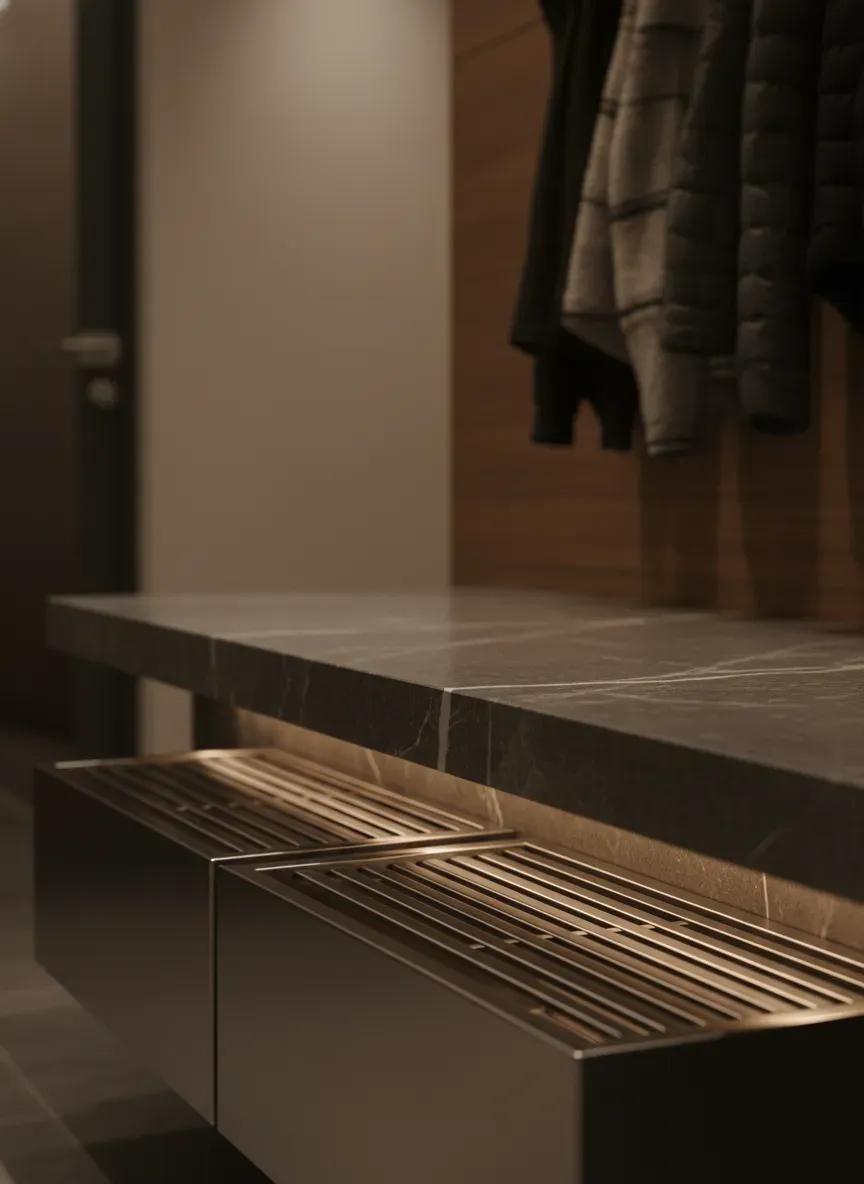
Conversely, the monolithic bench is all about grounded utility. Instead of wood, we are increasingly seeing these high-impact surfaces capped with natural stone—specifically soapstone or honed granite. Why? Because wood dents. Stone endures.
Radiant Heat Integration
I’ve personally found that the ultimate luxury upgrade for a cold-climate mudroom is the heated bench. By milling a channel into the substrate beneath a stone or quartz bench top, installers drop in a standard electric radiant floor heating mat.
Sitting down on a warm stone bench to lace up your boots on a negative-ten-degree February morning fundamentally changes how you experience your home. Furthermore, the ambient heat radiating from the bench actively dries the damp gloves and hats you toss onto it.
Beneath the Bench: Managing the Sludge
The zone under the bench is ground zero for dirt. 2026 designs reject the “open cubby” for shoes. An open cubby down at floor level just collects dust bunnies, salt stains, and gravel that is impossible to vacuum out easily.
Instead, opt for heavy-duty, full-extension drawers equipped with high-weight-capacity Blum under-mount glides. Inside these drawers, utilize removable, heavy-duty rubber boot trays. When the boots melt and shed their salty sludge, it stays perfectly contained within the rubber tray inside the drawer. You simply lift the tray out, hose it down in the garage, and drop it back in. The visual mess is entirely hidden, and the physical mess is completely contained.
The Mechanics of Hanging: Hardware and Spatial Dynamics
Hardware is the jewelry of the mudroom, but its function is brutally mechanical. A cheap, cast-zinc hook will snap under the weight of an adult canvas work jacket loaded with tools and keys.
Forged Metals and Living Finishes
Trending heavily right now is the shift away from sterile brushed nickel toward living finishes—materials that patina and age with the house. Unlacquered brass, blackened steel, and tumbled bronze are the premium choices. These materials tell a story of use.
However, if you detest tarnishing, PVD (Physical Vapor Deposition) coatings are essential. A PVD matte black or brass finish is molecularly bonded to the metal, making it virtually impervious to scratching from metal coat hanger hooks or heavy bag straps.
The Geometry of Hook Placement
You can buy the most expensive forged steel hooks on the market, but if you screw up the spatial geometry, your mudroom will fail. Staggering your hardware is critical.
Contractors frequently miscalculate the ideal spacing between hooks, creating a clustered bottleneck where bags and coats aggressively overlap, knocking each other off the wall.
The 2026 standard utilizes a high-low staggered mounting system. The upper row (mounted at approximately 66 inches from the floor) takes the long, heavy coats. The lower row (mounted directly between the upper hooks, at about 42 inches from the floor) catches shorter items like backpacks, purses, and umbrellas. This creates a dense but perfectly unencumbered matrix of storage.
- Key Takeaways for Hardware:
- Never use drywall anchors for primary coat hooks. Always install a continuous solid wood blocking plate behind the drywall during framing.
- Avoid sharp, pointed hooks. They will eventually punch holes in the collars of your heavy wool coats. Opt for hooks with wide, rounded finials.
- Include specialized double-prong ceiling hooks underneath upper cabinets to hang items vertically, maximizing deep locker space.
Deep-Dive Product Spotlights: 2026’s Best Off-the-Shelf Solutions
Not everyone has a $25,000 budget for custom millwork. Fortunately, the consumer furniture market has rapidly caught up to high-end architectural trends. If you are retrofitting a space on a realistic budget, these three modular systems offer spectacular value and structural integrity.
1. Prepac Wide Hall Tree
The Prepac Wide Hall Tree acts as an excellent standalone surrogate for custom built-ins. What makes this piece highly relevant for 2026 is its aggressive width and partitioned lower storage. It doesn’t skimp on seating real estate. The laminate coating is surprisingly robust, handling daily backpack drops without chipping. I frequently recommend this unit for transitional spaces like a wide hallway just off a garage entrance where you can’t recess cabinetry into the walls. The upper cubbies are perfectly dimensioned for standard rattan or felt acoustic bins, allowing you to instantly hide smaller visual clutter like dog leashes and winter hats.
2. Crosley Furniture Seaside Hall Tree
If your architectural styling leans slightly softer, perhaps bridging the gap between coastal and modern transitional, the Crosley Furniture Seaside Hall Tree delivers. The beadboard backing provides a subtle vertical texture that draws the eye upward, mimicking the fluted wood paneling trend without the bespoke price tag. Its real strength lies in the depth of its lower seating bench and the robust drop-down cabinet doors. By utilizing closed lower storage, you completely eliminate the “shoe pile” aesthetic that ruins most open-concept mudrooms.
3. Bush Furniture Salinas Entryway Bench with Storage
Sometimes, you don’t need the towering verticality of a full locker system; you just need a heavily fortified drop zone. The Bush Furniture Salinas Entryway Bench excels here. It is a dense, low-profile anchor piece. The tapered legs give it a slightly elevated, furniture-grade feel rather than looking like a utilitarian garage fixture. I love using this specific bench beneath a large, pre-existing window in an entryway where a tall locker system would block natural light. You pair this bench with a heavy piece of custom wall-mounted hardware above it, and you’ve instantly engineered a highly functional, light-filled transition zone.
Catastrophic Pitfalls in Entryway Conceptualization

Even with the best materials, mudrooms routinely fail due to incredibly basic oversights during the planning phase. These are the specific landmines you need to sidestep.
Ignoring Acoustic Chaos Mudrooms are inherently loud. Heavy boots stomping on hard tile, metal zippers smashing against wood, doors slamming. If you surround the space with nothing but hard surfaces—glass, tile, MDF, steel—the sound reverberates aggressively into your living room. Counteract this. Use felt-lined bins. Specify soft-close mechanisms on absolutely every hinge and drawer glide. Incorporate a heavy, washable runner rug to absorb footfall impact.
The Porous Seating Mistake I see so many DIYers build a beautiful bench and finish it with a standard interior latex paint. Within a month of winter use, the paint will bubble, peel, and flake away as melting snow sits on the surface. If you are painting a bench, you must use a heavy-duty urethane alkyd enamel. It cures to a hard, plastic-like shell that can actually withstand standing water and the abrasive grit of sand and road salt.
Insufficient Clearances People frequently build out deep, luxurious lockers on both sides of a narrow hallway. Suddenly, a 5-foot wide corridor becomes a 2-foot wide trench. If two people cannot comfortably stand back-to-back while putting on their coats, the room is too tight. Always prioritize floor space over cabinet depth. If the corridor is tight, abandon the lockers entirely and utilize high-density, flat-to-the-wall hanging systems paired with a very narrow floating bench.
The Bottom Line The trajectory of mudroom design in 2026 is an uncompromising march toward concealed utility. The spaces that succeed are those designed defensively. You must assume the room will be bombarded by water, dirt, and heavy impact on a daily basis. By prioritizing waterproof laminates, robust ventilation strategies, calculated hardware spacing, and heavy-duty, hidden storage compartments, you transform a chaotic entryway into a silent, highly efficient machine. Build it for the worst-case winter scenario, and it will effortlessly serve you year-round.