
Modular vs. Bespoke: The Ultimate Guide to 2026 Custom Storage ROI
Discover the exact financial metrics, material science, and design strategies separating high-end modular systems from bespoke architectural millwork.

Mar 12, 2026 - Written by: Linda Wise
You walk into a newly renovated home. The smell of fresh paint lingers, the hardwood floors gleam, but your eyes aren’t drawn to the sprawling kitchen island. They snap straight to the entryway. Why? Because the storage architecture dictates the entire organizational rhythm of the house. I’ve spent the better part of a decade analyzing how residential infrastructure impacts property valuation, and I can tell you this: the way we handle our physical possessions has undergone a radical transformation.
We are operating in an era where custom storage is no longer viewed as a luxury afterthought. It is a measurable, hard-asset class inside residential real estate. Homebuyers and appraisers in 2026 scrutinize built-ins with the same critical eye previously reserved for primary bathrooms. This fundamental shift leaves homeowners staring down a massive financial decision: do you invest in high-end modular systems, or do you commission true bespoke millwork?
The answer isn’t a simple matter of budget. It requires a forensic breakdown of material science, installation labor, depreciation curves, and psychological friction. Here’s the real kicker: most people entirely miscalculate the return on investment (ROI) of their cabinetry because they conflate the price tag with the value added.
Before we dissect the granular details of structural integrity and appraisal capitalization rates, review the snapshot below. These are the foundational components you need to understand the current landscape of high-performance organization.
Quick Comparison: Top Picks
| Product | Rating | Check Price |
|---|---|---|
| ClosetMaid MasterSuite System | ⭐⭐⭐⭐⭐ | View on Amazon |
| Sauder Select Modular Wardrobe | ⭐⭐⭐⭐½ | View on Amazon |
| Kreg Jig 720 Pro Pocket Hole Kit | ⭐⭐⭐⭐⭐ | View on Amazon |
The Financial Anatomy of Storage Investments in 2026
To understand the true ROI of any permanent home upgrade, you have to separate your personal utility from the market equity. Personal utility is the daily joy you experience when your winter coats actually fit on a hanger without bunching. Market equity is the cold, hard cash an appraiser adds to your home’s valuation sheet.
In the current real estate market, properties suffer from what industry insiders call the “clutter penalty.” A house with adequate square footage but poor organizational infrastructure routinely sits on the market longer and sells for less than a smaller, hyper-organized counterpart. Buyers unconsciously discount the value of a space if they can’t immediately visualize where their life will fit into it.
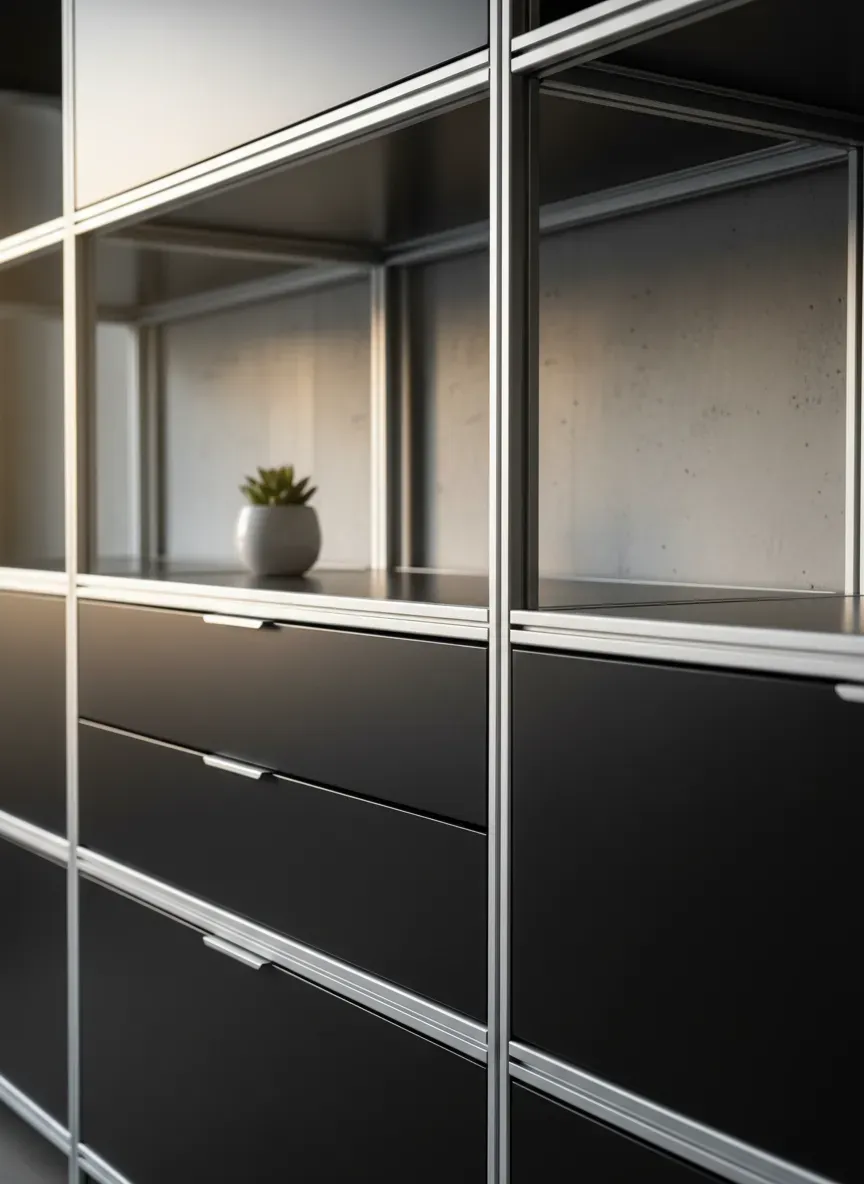
When you bolt cabinetry to a wall, it transitions from personal property to a fixture. Fixtures stay with the house. This distinction is paramount. A beautifully crafted freestanding armoire might cost $4,000, but it adds zero dollars to your property value because you load it onto the moving truck when you leave. Conversely, a built-in unit constructed from similar materials mathematically increases the comparables of your home.
However, appraisers recognize the difference between a hastily screwed-together particleboard rack and architectural millwork. The capitalization rate—the ratio of the storage’s cost to the actual value it adds to the home—varies wildly between modular and bespoke approaches. Your goal is to maximize the spread between your upfront capital expenditure and the eventual equity extraction.
The Modular Renaissance: Prefabricated Elegance
Forget everything you know about the flimsy, sagging bookshelves of the early 2000s. The modular storage industry has undergone a technological renaissance driven by computer numerical control (CNC) machining and advanced material composites. Today’s premium modular systems utilize high-density fiberboard cores wrapped in thermally fused laminates that mimic the grain, texture, and durability of exotic hardwoods.
Predictable Scaling
The primary advantage of the modular route is absolute predictability. You know exactly what the components will look like, you know precisely how much they cost down to the penny, and you know they will arrive in uniform boxes. This standardization relies heavily on the “32mm system,” a globally recognized cabinetmaking standard where all holes for hinges, drawer slides, and shelf pins are drilled in increments of 32 millimeters.
This predictability translates directly to cost control. You aren’t paying a carpenter for fifty hours of custom routing and sanding in your driveway. You are paying for the efficiency of a factory that produces ten thousand identical side panels a day.
For instance, I’ve personally found the ClosetMaid MasterSuite System offers a rare intersection of heavy-duty melamine construction and modular adaptability. The thick edge-banding resists the peeling commonly associated with cheaper flat-pack furniture, providing an aesthetic that aggressively mimics custom cabinetry at a fraction of the bespoke price tag.
The Assembly Illusion
Here is where the financial calculations often derail. Manufacturers heavily market modular units as “weekend DIY projects.” While technically true for a single standalone unit, retrofitting an entire mudroom or walk-in closet is a logistical beast.
Floors are rarely level. Walls are almost never perfectly plumb. If you assemble a perfectly square modular cabinet and push it against a wall that leans out by half an inch, you are going to see a massive, unsightly shadow line. Mitigating these structural realities requires shimming, scribing filler panels, and adjusting hardware to compensate for the house’s imperfections. You’ll notice that the Sauder Select Modular Wardrobe mitigates this exact issue by incorporating adjustable base glides, an absolute necessity if you plan on installing over uneven tile or transitioning hardwood.
Deciding what actually goes into these systems also plays a role in the aesthetic longevity. For example, deciding whether to pursue a highly curated display requires understanding the practical benefits of open vs. closed shoe storage before you commit to specific cabinetry styles. Closed modular cabinets require precise door alignments; open shelving is far more forgiving during installation but demands rigorous daily tidiness.
Pro Tip: Never trust a bubble level implicitly when installing modular tall cabinets. Use a traditional plumb bob dropped from the ceiling to establish a true vertical line. A cabinet that is one degree off at the base will lean a full inch off the wall by the time it reaches an eight-foot ceiling.
The Bespoke Paradigm: Architectural Integration
If modular is predictable efficiency, bespoke is uncompromising artistry. True bespoke storage is not assembled; it is born within the specific dimensions of your home. It ignores standard catalog sizes in favor of maximizing every available fraction of an inch.
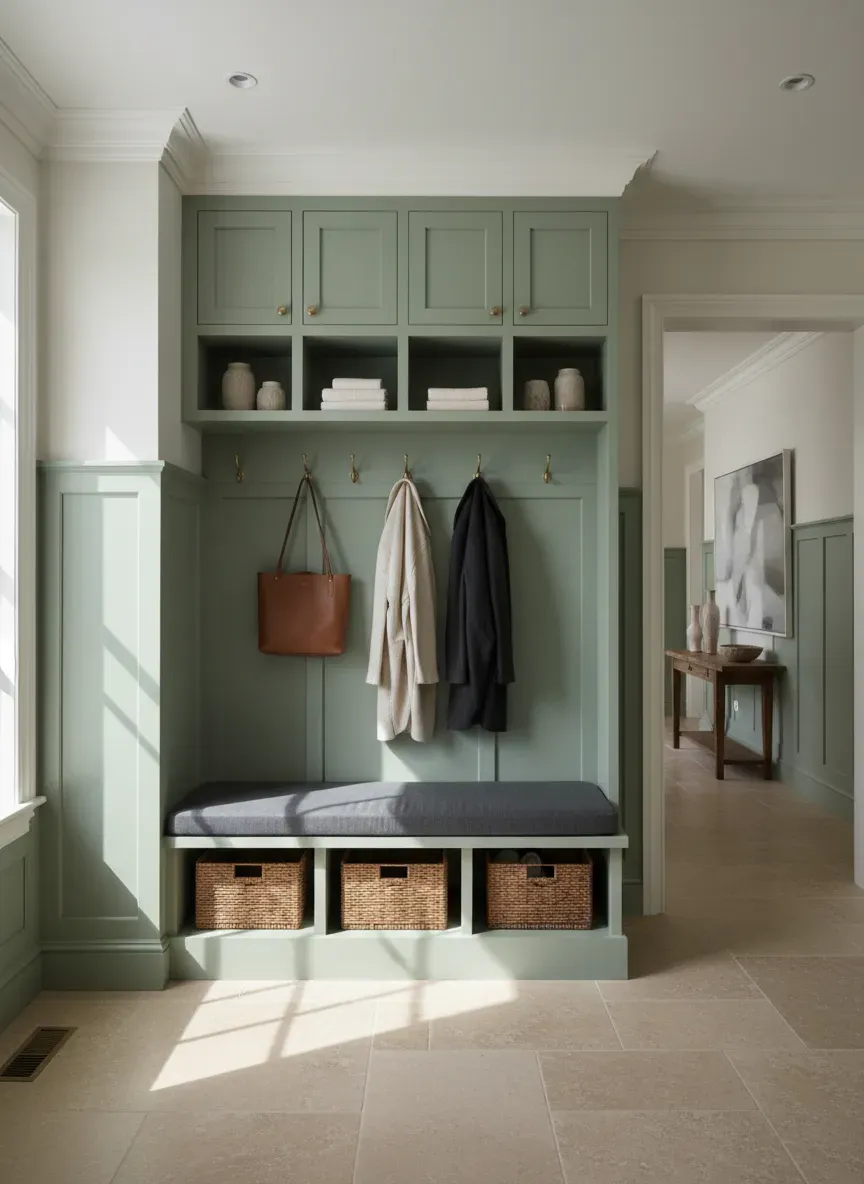
When you commission bespoke millwork, the carpenter isn’t bringing boxes to your house. They are bringing raw lumber, specialized joinery tools, and an architectural mindset. The unit is built to navigate around your specific HVAC vents, to integrate seamlessly with your existing baseboards, and to wrap around awkward bulkheads.
Micro-Tolerances and Scribing
The magic of custom cabinetry lies in the scribe. Scribing is the meticulous process of shaping a piece of wood to perfectly match the irregular undulations of a wall or ceiling. A skilled craftsman will take a compass, run it along the wavy drywall, trace that exact wave onto the wooden filler panel, and then back-bevel the cut with a block plane.
The result? The cabinet looks like it grew out of the wall. There are no gaps, no caulk lines attempting to hide mistakes, and no wasted space.
This level of detail requires an entirely different toolkit. If you are venturing into building your own built-ins, the learning curve often begins with a straightforward weekend project, much like the exact process of building a simple mudroom bench, which serves as a gateway into complex millwork. Here’s the real kicker: utilizing a tool like the Kreg Jig 720 Pro Pocket Hole Kit transforms a pile of raw lumber into a structurally sound cabinet carcass in a fraction of the time traditional mortise and tenon joinery demands. It democratizes the structural side of bespoke building, even if the finishing work still requires artisan patience.
Value Appreciation
Bespoke millwork demands a staggering upfront capital injection. Yet, the architectural permanence it lends to a space fundamentally alters the perceived caliber of the entire property. Appraisers categorize premium built-ins alongside high-end kitchen renovations.
Solid hardwood frames, dovetail drawer boxes, and hand-sprayed lacquer finishes age beautifully. When bespoke wood gets dented, it gains a patina. When cheap particleboard gets dented, it reveals the fuzzy, glued-together core beneath the plastic veneer. The long-term ROI heavily favors bespoke if you plan to stay in the home for more than seven years, as the depreciation curve essentially flatlines after the initial installation.
- Key Takeaways for Bespoke Equity:
- Adds verifiable premium value to real estate comparables.
- Maximizes cubic storage volume by utilizing dead space (corners, high ceilings).
- Allows for exact color-matching to existing historical or custom home trim.
The Math Behind the Magic: Calculating Real ROI
We need to examine the actual calculus of these investments. Emotional satisfaction aside, the numbers dictate the strategy. To calculate the true ROI, you must factor in the cost of materials, the cost of labor (or the opportunity cost of your own time), and the estimated lifespan of the installation.
Imagine a twelve-foot blank wall in a master bedroom. A premium modular system might cost $3,500 in materials. If you hire a handyman to assemble and mount it, you are looking at another $800 in labor. Total cost: $4,300. A fully bespoke, painted-to-match built-in wardrobe spanning the exact same wall will easily cost $12,000 to $15,000 from a local cabinetmaker.
Does the $15,000 bespoke unit add $10,700 more to your home’s value than the modular unit? Usually, no. The modular unit captures about 70% of the functional real estate equity for roughly 30% of the price.
Material Depreciation Curves
However, the math shifts dramatically when we look at a ten-year timeline. In a high-traffic zone like an entryway or mudroom, cheap materials fail rapidly. Wet boots, heavy winter coats, and daily abuse test the structural limits of engineered wood. Water infiltration causes medium-density fiberboard (MDF) to swell and crumble, entirely destroying its structural integrity and plummeting its equity value to zero.
This is exactly why failing to account for structural integrity is disastrous, making calculating load-bearing limits and understanding weight distribution absolutely mandatory before ordering materials. A shelf spanning thirty-six inches made of standard 5/8-inch particleboard will physically sag under the weight of heavy denim or winter gear within six months. Solid birch plywood or custom-milled hardwoods will remain dead flat for a century.
Hardware Longevity
The silent killer of modular ROI is cheap hardware. Factory-supplied drawer glides and hinges are notoriously engineered to the absolute minimum acceptable standard. When a drawer track bends or a hinge spring snaps, the entire unit feels cheap, immediately signaling to a potential homebuyer that the house is filled with corners cut. Bespoke installations almost exclusively use heavy-duty, soft-close, under-mount hardware from brands like Blum or Salice, which are rated for hundreds of thousands of open/close cycles.
Hybridization: The 2026 Compromise
Why choose a side when you can engineer a compromise? The most sophisticated trend emerging in residential storage architecture is the hybrid approach, colloquially known in the trade as “carcass and cladding.”
This methodology acknowledges a simple truth: nobody sees the inside walls of your cabinets. Spending bespoke money on the hidden structural boxes (the carcasses) is a poor deployment of capital. Instead, savvy homeowners and contemporary designers are purchasing high-quality modular boxes from major retailers, assembling them as the structural skeleton, and then hiring local millworkers strictly for the visible elements.
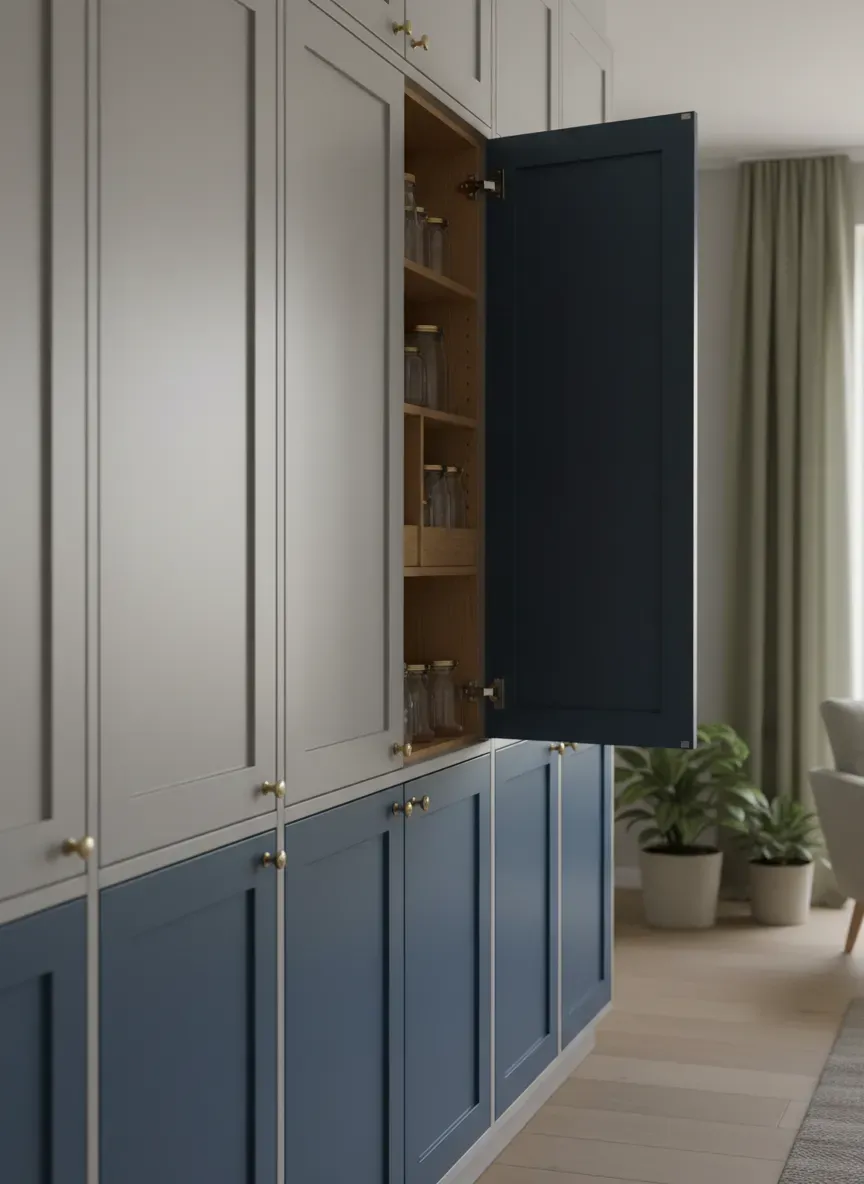
The carpenter installs the modular boxes, shims them perfectly level, and secures them to the studs. Then, they wrap the entire assembly in custom-milled face frames, solid wood baseboards, and towering crown molding that meets the ceiling. Finally, they attach bespoke, grain-matched doors and drawer fronts.
You achieve the micro-tolerances, the scribed architectural integration, and the premium hardware feel of a true bespoke installation, while leveraging the mass-production cost savings of the modular core. This hybrid strategy frequently delivers the highest possible ROI, capturing 95% of the aesthetic and appraisal value of a fully custom build while stripping out 40% of the labor costs.
Navigating the Pitfalls of Custom Storage Construction
Regardless of the path you choose, the friction of installation is inevitable. I’ve overseen enough renovations to tell you bluntly: poor planning will bankrupt your timeline and your patience.
The most common catastrophic error is ignoring the room’s existing infrastructure. Homeowners routinely design massive floor-to-ceiling built-ins without realizing they are completely blocking an essential cold-air return vent. Rerouting HVAC ductwork through the toe-kick of a cabinet requires specialized ducting and significantly inflates the budget.
Electrical outlets present a similar hurdle. Pushing a cabinet tightly against a wall covers up the receptacles. By electrical code in most jurisdictions, you cannot simply bury a live outlet behind a fixed panel. You must hire a licensed electrician to pull those wires forward and mount new junction boxes seamlessly into the back panels or side casing of your new storage unit.
Lighting also demands foresight. An expansive, dark mahogany bespoke wardrobe looks incredibly luxurious in a showroom but creates a literal black hole in a poorly lit bedroom. Integrating LED channel lighting into the routing of the shelves transforms the usability of the space, but those wires must be mapped and hidden before a single cabinet box is permanently attached to the wall.
Final Verdict: Where Should You Allocate Your Budget?
Financial allocations in residential infrastructure strictly adhere to the laws of physical durability and daily friction. If you are outfitting a secondary guest bedroom closet or a basement storage perimeter, routing premium capital into bespoke woodwork is an exercise in vanity. High-end modular solutions will perform flawlessly, look fantastic, and keep your budget intact.
Conversely, primary touchpoints—your main entryway, your master walk-in closet, the central mudroom—demand a higher caliber of permanence. These spaces absorb the heaviest daily abuse and serve as the anchor points for how a home feels to live in. In these high-visibility, high-traffic zones, commissioning bespoke millwork or executing a high-level hybrid installation is a fundamentally sound financial maneuver.
The Bottom Line: Your goal isn’t just to hide clutter. Your goal is to engineer an environment where everything has a frictionless resting place, permanently elevating both your daily routine and the ultimate market value of your property. Choose the system that fits the room’s demands, respect the complexity of the installation, and invest heavily in the hardware you will touch every single day.