
Slim Bench for Entryway: 10-12 Inch Deep Picks for Narrow Hallways
Slim bench for entryway: 10-12 inch deep picks with width, depth, height, and weight capacities on every model, plus the narrow storage bench fit test.
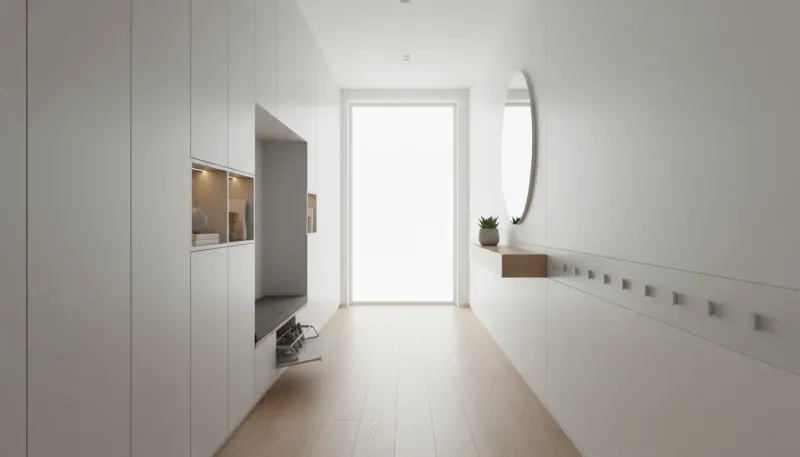
Feb 1, 2026 · Linda Wise
15 min readAn ultra-slim entryway bench is 10 to 12 inches deep or less — enough to sit and stash, not enough to block anything.
I measure hallways for a living, so I’ll be honest about what this category can and can’t do: an 11-inch-deep bench holds shoes, bags, and a seated adult, but it will never hold a coat wardrobe or a deep drawer stack. What it does is convert a hallway you could barely pass through into one that works — and it does it without touching the traffic lane.
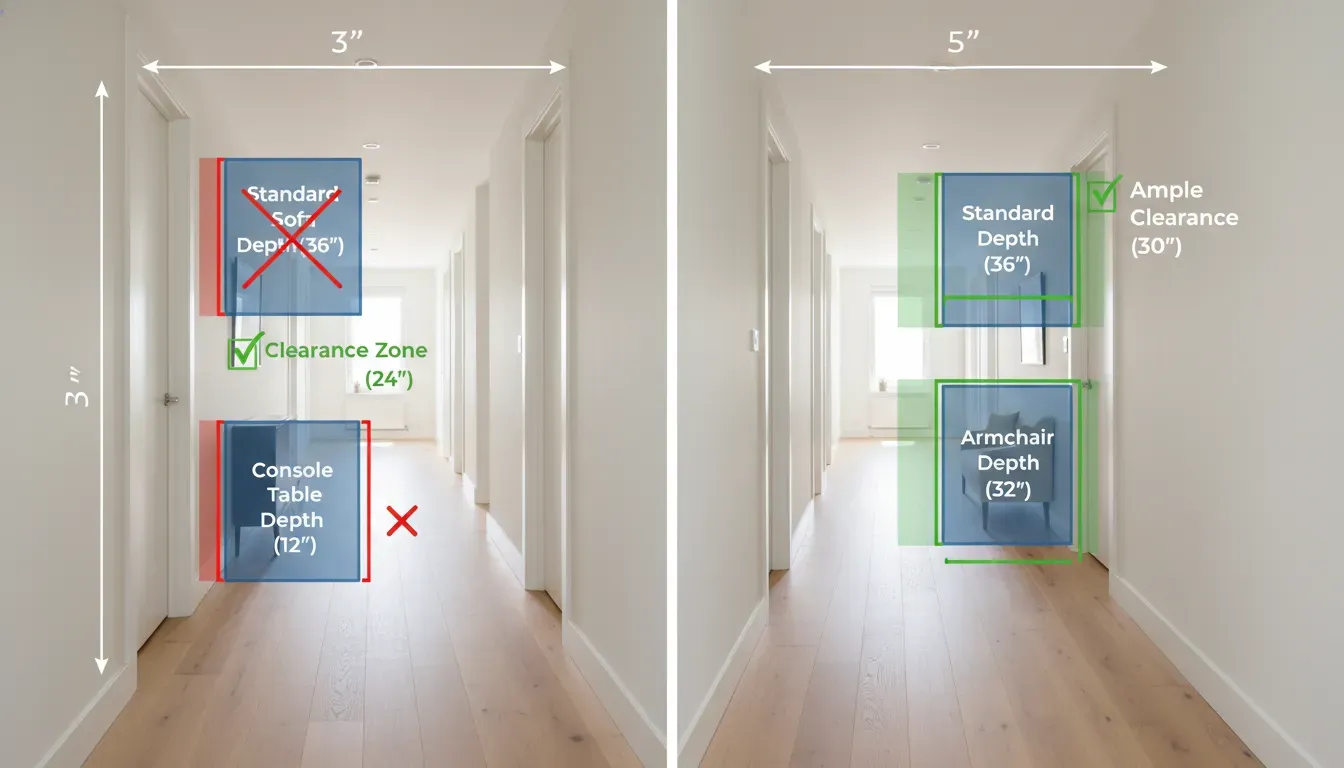
The Ultra-Slim Bench: What It Really Holds (dimensions with each pick)
| Pick | Width | Depth | Height | Weight capacity | What it holds |
|---|---|---|---|---|---|
| Tribesigns Slim Entrance Organizer | 31.5” | 11.8” | 71” | 250 lb bench | Coats, shoes, full bench seat |
| Hoobro Slim Shoe Bench | 24” | 9.8” | 16.5” | 220 lbs | One person’s shoes plus seating |
| SONGMICS Tipping Shoe Cabinet | 26.4” | 7.5” | 39.4” | 12 pairs of shoes | Door-front vertical shoe storage |
| Sobuy Slim Entry Bench | 30” | 11.4” | 17.5” | 300 lbs | Seat with cubby tiers below |
| Vasagle Industrial Hall Tree (the 13.3” control) | 28.3” | 13.3” | 72” | 220 lb bench | Full hall tree duty, regular slim |
1. Tribesigns Slim Entrance Organizer — the all-in-one
31.5” W x 11.8” D x 71” H, with a 250-pound bench rating. Three hooks up top, a bench in the middle, and a raised metal rack for shoes below. It’s the closest thing to a full hall tree at an ultra-slim depth, and it must be wall-anchored — nothing that slim stands without one.
2. Hoobro Slim Shoe Bench — the sit-and-stash
24” W x 9.8” D x 16.5” H, 220-pound capacity, with two open tiers under the seat and a low back and armrests. The 9.8-inch depth qualifies as true ultra-slim, and at 16.5 inches tall it doubles as a stair for small kids.
3. SONGMICS Tipping Shoe Cabinet — the door-adjacent hero
26.4” W x 7.5” D x 39.4” H, holding about 12 pairs in tilting buckets. The 7.5-inch depth disappears against the wall; the tradeoff is that it’s a shoe cabinet, not a seat — pair it with hooks above for a complete wall system.
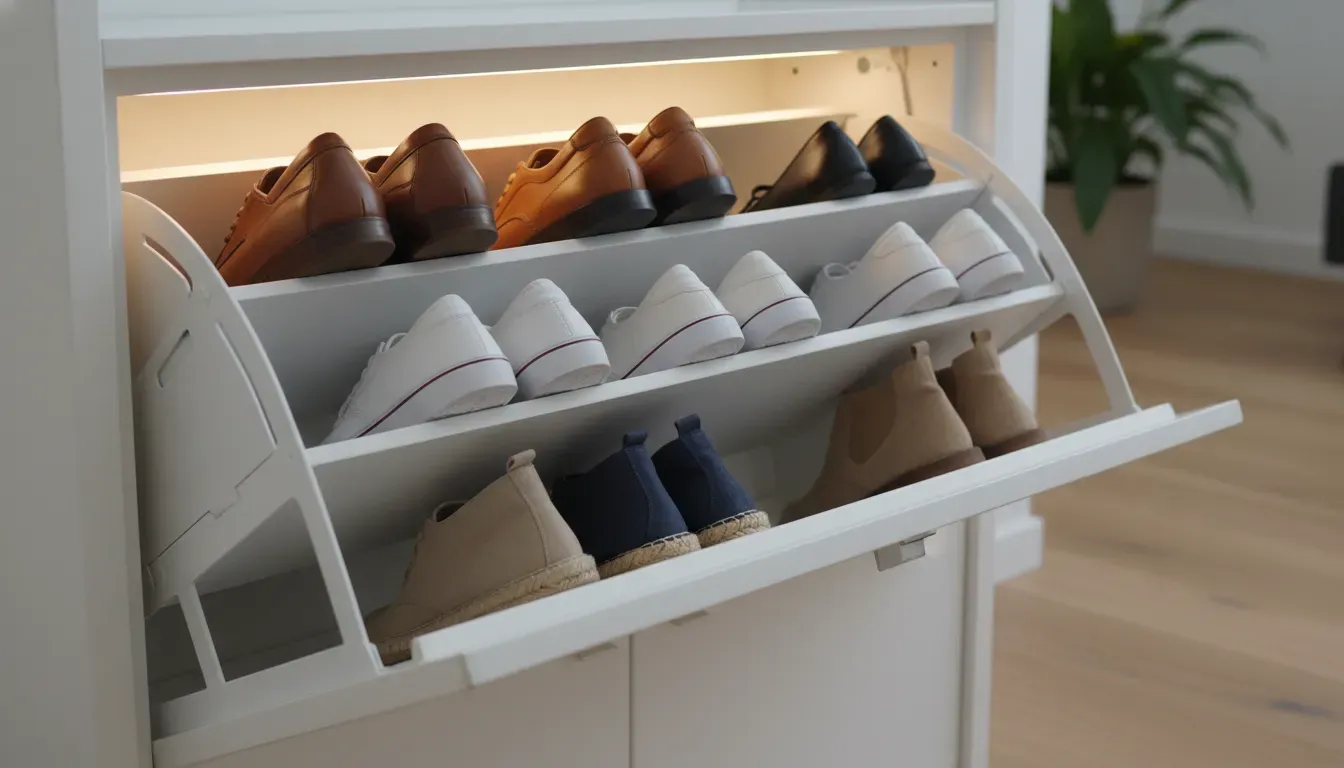
4. Sobuy Slim Entry Bench — the one-with-everything
30” W x 11.4” D x 17.5” H with a 300-pound seat — the strongest seat in the ultra-slim class — and cubby tiers underneath for basket storage. At 17.5 inches it hits the ergonomic seat-height range dead center.
5. Vasagle Industrial Hall Tree (the control)
28.3” W x 13.3” D x 72” H, 220-pound bench. At 13.3 inches it’s regular slim, not ultra — and it proves the point of the comparison: that extra 1.5 inches buys hanging length and real boot room, at the cost of the lane.
Very Narrow Storage Benches (10–12” deep options)
If the hallway is under 36 inches, you’re in the true ultra-slim zone, and three options remain: the Hoobro at 9.8 inches, the Tipping Cabinet at 7.5 inches, and the wall-mounted fold-down bench — a board on a hinge that folds flat at 4 to 6 inches when not in use. A few rules for the extra-narrow range:
- Anchor anything over 30 inches tall. Short bench-and-cubby units rarely need it; tall ones always do.
- Check the baseboard gap. A flat-backed unit against a baseboard leans forward up to an inch — look for a notch or mount it a half-inch off the floor.
- Felt pads on the legs. Narrow halls get bypassed, not walked through; protection is cheaper than refinishing.
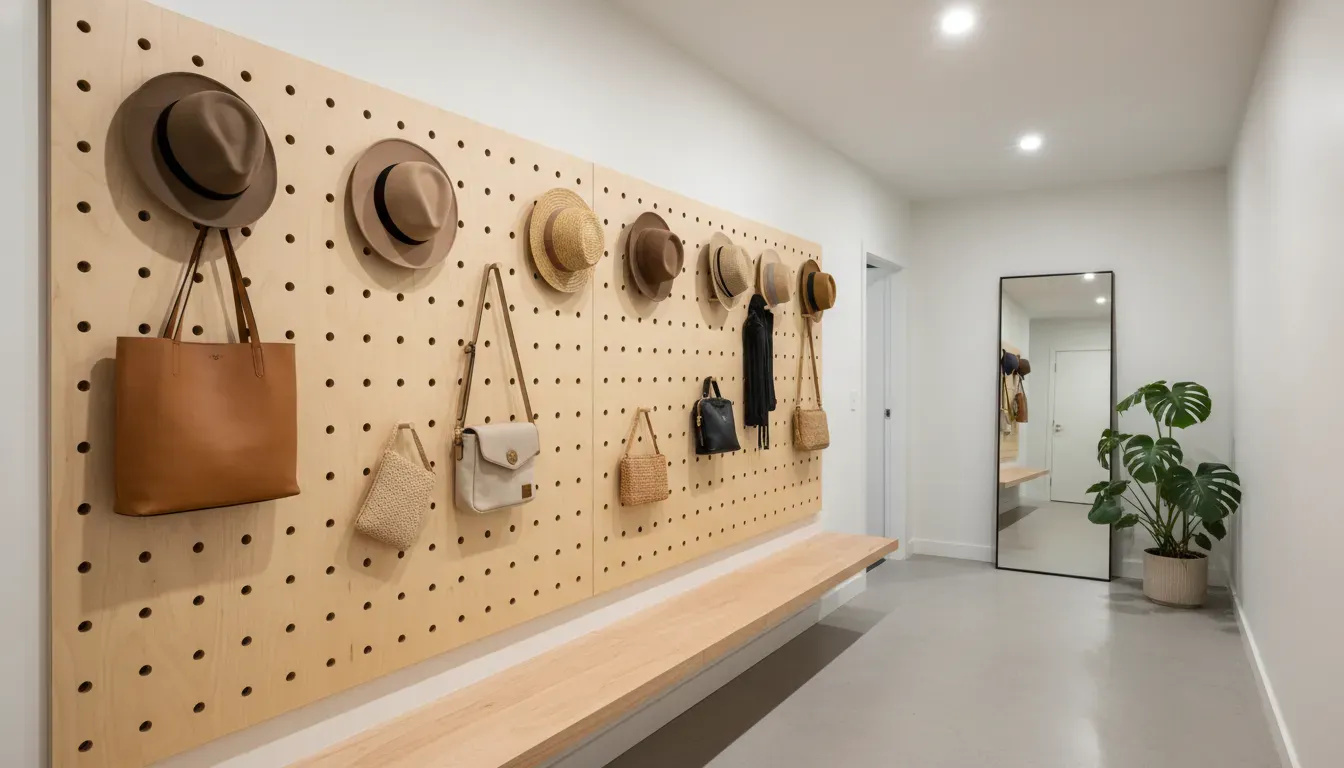
If even 10 inches feels like too much, take the wall route — a peg rail or hook wall costs zero floor depth and keeps the ultra-skinny bench for seating only.
Slim Bench for Entryway: The Fit Test
Run these six steps in your actual hallway before you buy anything:
- Measure the hall width at the bench spot, not at the doorway — baseboards and trim steal an inch.
- Subtract the bench depth from the hall width.
- Leave at least 24 inches of lane. If your hallway is 36 inches, a 12-inch bench leaves a 24-inch lane. That’s the kind of math this page is about.
- Check the door swing. If the front door opens past the bench, the door edge — not the handle — is the clearance number that matters.
- Subtract the baseboard gap from the depth you’re planning around.
- Sit on it in the store. A 250-pound rating at 11.8 inches deep still spreads weight differently than a full-depth bench; the seated feel, not the sticker, is the last test.
Ultra Slim vs. Regular Slim (yes, there’s a difference)
| Ultra slim (10–12”) | Regular slim (12–16”) | |
|---|---|---|
| Shoe storage | Tipped or sideways | Flat, full-length |
| Lane saved | 4–8” more | Standard |
| Seating comfort | Upright, tighter | Full thigh support |
| Tipping risk | Higher — anchor tall units | Lower |
| Best room | Hallways under 40” | Standard foyers with a squeeze |
The difference matters because the two categories serve different hallways: ultra-slim is for the corridor you genuinely cannot block, regular slim is for the entry that just wants to feel open. Both are worth owning — they’re just not the same purchase.
Buy Links & Our Verdict
- Tribesigns Slim Entrance Organizer — the verdict: best all-in-one if you can anchor it. Shop Tribesigns
- Hoobro Slim Shoe Bench — the verdict: the default ultra-slim pick; best blend of depth and seating under 10 inches. Shop Hoobro
- SONGMICS Tipping Shoe Cabinet — the verdict: unbeatable depth; buy it with a separate hook row. Shop Tipping Shoe Cabinets
- Sobuy Slim Entry Bench — the verdict: the strongest seat for the smallest footprint; our pick for kids’ hallways. Shop Narrow Entry Benches
- Vasagle Industrial Hall Tree — the verdict: the control — pick it when the hall has room for a regular slim unit. Shop Vasagle
The narrow hallway doesn’t need a miracle; it needs a bench with math attached. Measure the lane at 24 inches minimum, keep the depth at 12 inches or under, anchor the tall stuff — and the hallway stops being a bottleneck and starts being an entryway.
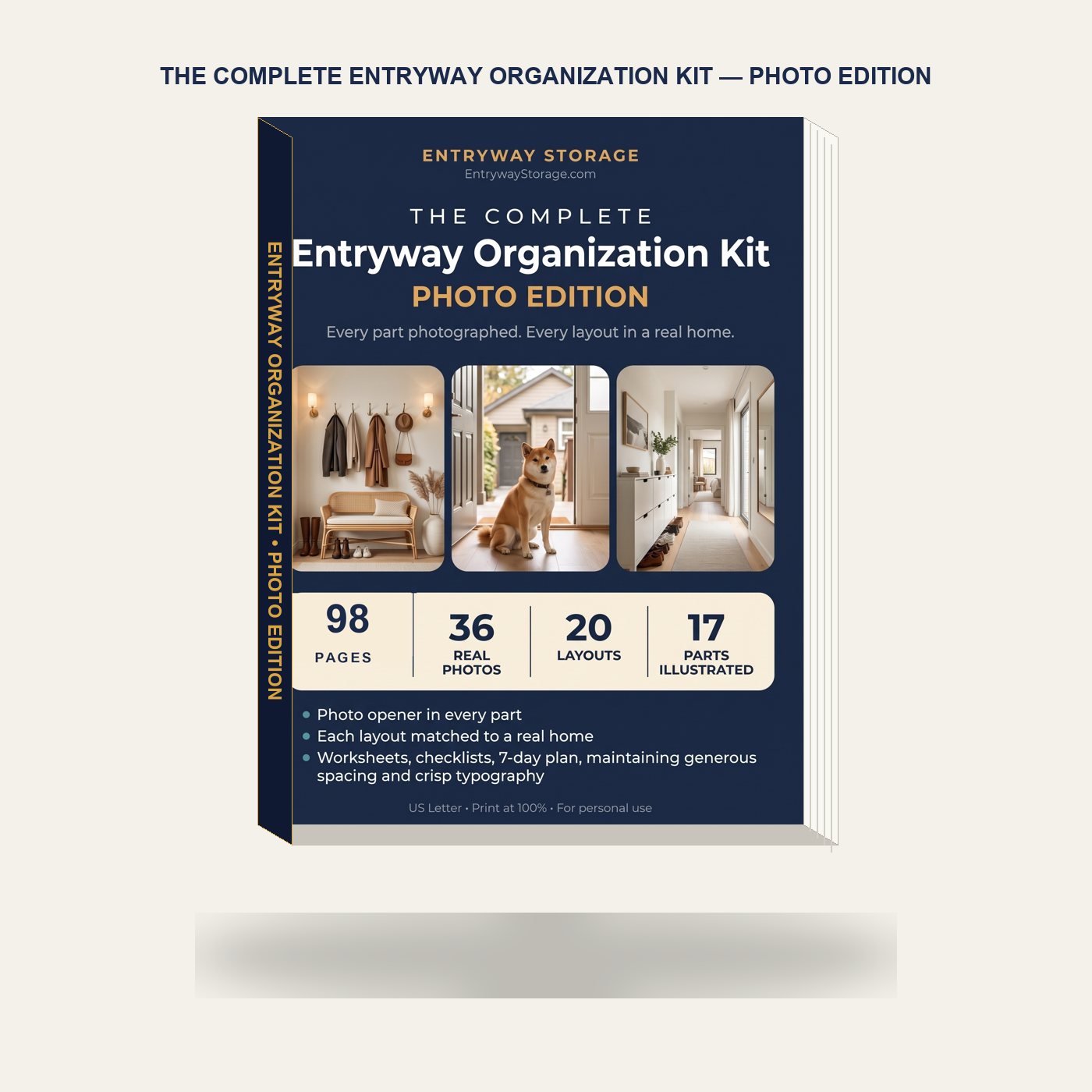
Stop Guessing Measurements. Build Your Dream Entryway with Confidence.
Transform awkward hallways, cramped foyers, and cluttered mudrooms into organized sanctuaries. Includes 20 CAD floor plans, facing real-home photo spreads, the 36-Inch Clearance Rule, the Shoe Pairs Formula, and 7 printable worksheets.
Core Edition ($17.99) · Flagship Photo Edition v5 ($39.99)
