
Rustic Charm: Weathered and Distressed Wood Mudroom Ideas You’ll Love
Discover expert strategies for designing a weathered, distressed wood mudroom. Learn how to source, treat, and build rustic entryway storage that balances raw beauty with modern functionality.
Apr 2, 2026 - Written by: Linda Wise

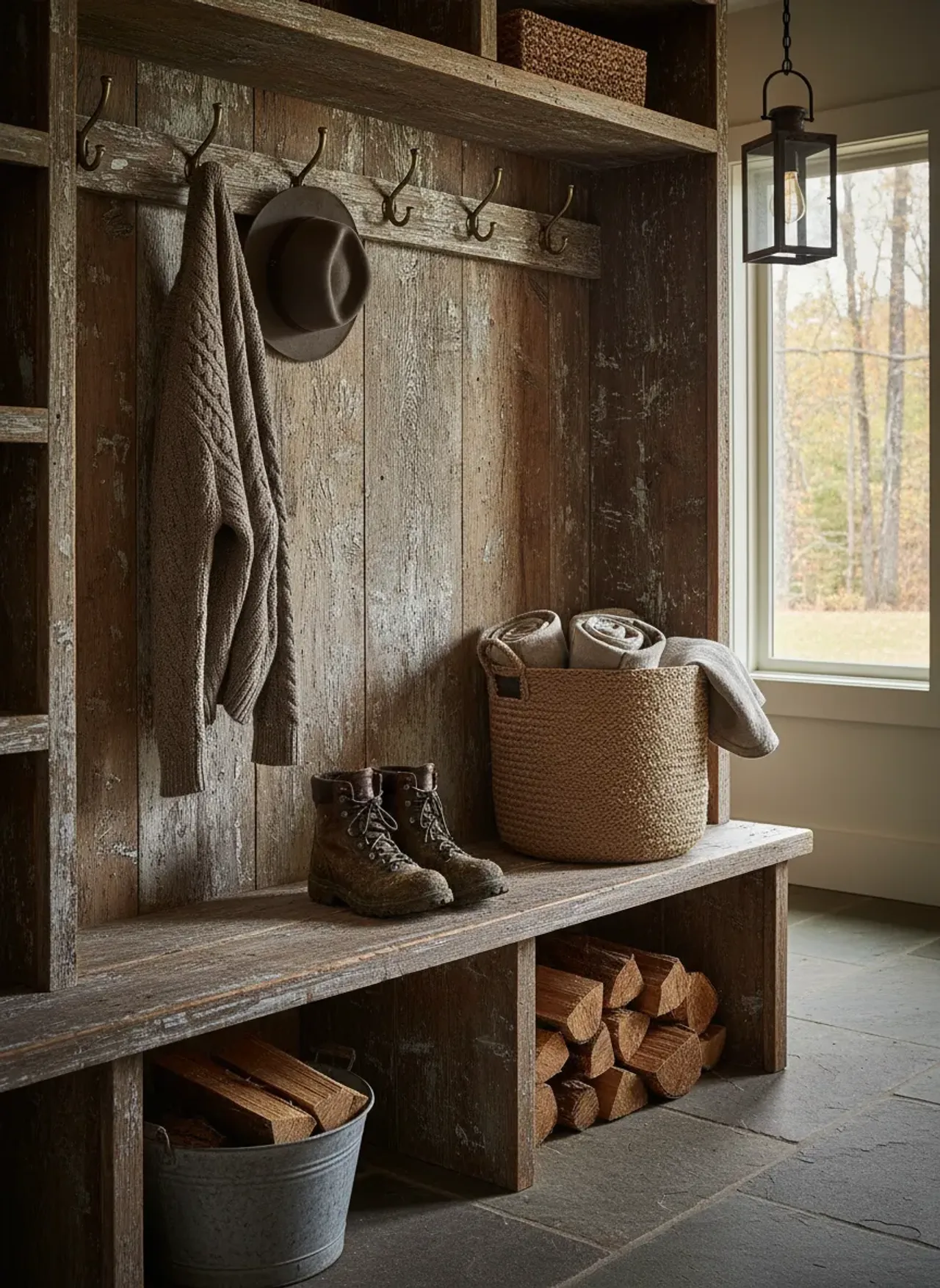
There is an undeniable gravitational pull to a space built from materials that have lived a previous life. You walk through the door, kick off your boots, and immediately feel the grounded, tactile warmth of aged timber. A mudroom serves as the hardworking threshold between the chaotic outside world and the sanctuary of your home. Building it with weathered, distressed wood doesn’t just add aesthetic value; it brings a profound sense of permanence and history to a highly functional space.
I’ve personally found that many homeowners crave this exact aesthetic but struggle to execute it without veering into a cartoonish “theme park” territory. The secret to capturing authentic rustic charm lies in restraint, material selection, and an uncompromising approach to architectural scale. We are going to break down the exact mechanics of designing, sourcing, and building a distressed wood mudroom that feels genuinely bespoke.
Quick Comparison: Top Picks
Before we get our hands dirty with the design theory, here are three standout products I frequently recommend to clients who are building out their rustic entryways.
| Product | Rating | Check Price |
|---|---|---|
| Rustic Cast Iron Coat Hooks | ⭐⭐⭐⭐⭐ | View on Amazon |
| Distressed Entryway Storage Bench | ⭐⭐⭐⭐½ | View on Amazon |
| Varathane Weathered Wood Accelerator | ⭐⭐⭐⭐⭐ | View on Amazon |
The Anatomy of Authentic Rustic Charm
What makes a piece of wood look truly weathered? It isn’t just about slapping some grey paint on a pine board and taking a piece of sandpaper to the edges. Authentic weathering is a complex chemical and physical degradation process.
When timber is exposed to the elements over decades, UV radiation breaks down the lignin in the wood cells, causing that distinct silver-grey patina. Wind and rain erode the softer earlywood, leaving the denser latewood raised and highly textured. This creates a topographical landscape across the surface of the board—a tactile footprint of time.
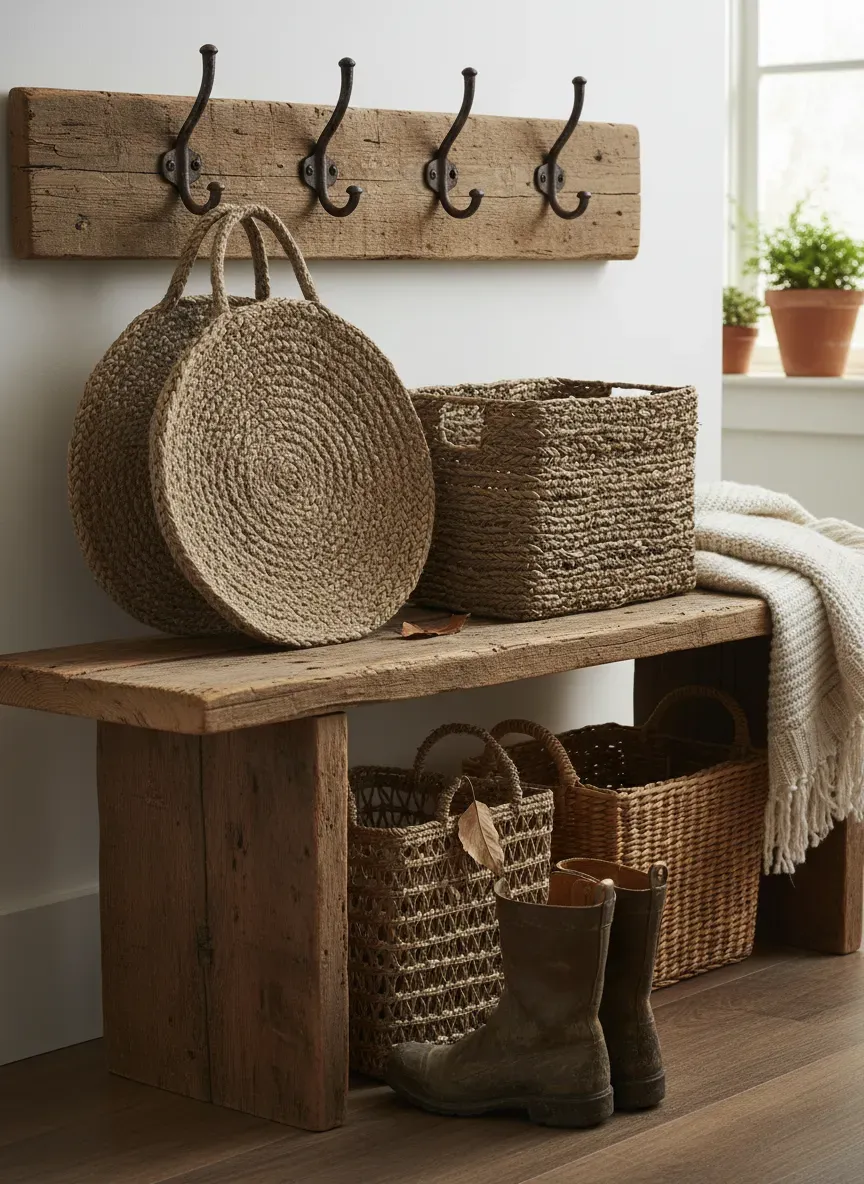
If you decide to use actual reclaimed barn wood or architectural salvage for your mudroom bench or backing, you inherit this natural topography. The visual weight of these materials demands respect. Because the wood itself is so visually loud, the surrounding spatial dynamics need to be carefully calibrated. For instance, cramming too many bulky jackets onto heavily textured beadboard can make the space feel claustrophobic. You have to be incredibly intentional with your hardware layout, figuring out the ideal spacing for hanging items so the wood grain can actually breathe and remain visible between the winter coats.
Key Takeaways for Material Selection:
- Species Matters: White oak and hickory distress beautifully and possess the density required for high-traffic mudrooms. Pine is softer and will naturally dent over time, accelerating the rustic look.
- Milling Marks: Look for boards retaining original circular saw marks (kerf marks). These horizontal striations catch the light and scream authenticity.
- Patina Variation: Do not strive for uniform color. A true weathered aesthetic relies on the chaotic interplay of charcoal greys, warm ambers, and faded whites.
Sourcing vs. Faking: Getting That Weathered Look
You generally have two avenues when designing your distressed mudroom: hunting down authentic reclaimed lumber, or artificially aging new stock.
The Hunt for Reclaimed Lumber
Sourcing genuine salvaged timber is a labor of love. I recommend visiting local architectural salvage yards or searching for specialized reclaimed lumber dealers. When buying salvaged wood, you must check for structural integrity. A board might look beautifully rustic on the surface, but if it is riddled with active powderpost beetles or severe dry rot, it has no business supporting your family’s weight on a mudroom bench. Always ask the dealer if the wood has been kiln-dried. The kiln process not only stabilizes the moisture content but effectively sterilizes the wood, killing any dormant insects.
The Art of Artificial Distressing
Sometimes, budget constraints or specific dimensional requirements force you to use new lumber. Here’s the real kicker: you can artificially age new wood so convincingly that even a seasoned carpenter will do a double-take.
Mechanical distressing involves physically inflicting damage on the wood to mimic decades of wear.
- Wire Brushing: Run a heavy-duty wire brush attachment on an angle grinder along the grain. This tears out the soft earlywood, perfectly mimicking years of wind erosion.
- The Chain Technique: Take a heavy logging chain and aggressively strike the surface of the boards. This creates random, organic indentations that look far more natural than hitting the wood with a hammer.
- Edge Softening: New dimensional lumber has sharp, 90-degree edges. Use a block plane or a random orbital sander to aggressively round over and chamfer these edges, simulating areas that have been rubbed and touched for decades.
Chemical Weathering Techniques
Once you have the physical texture, you need to alter the color. Forget off-the-shelf grey stains; they sit on top of the wood like a muddy film. You want a reactive stain.
Pro Tip: Create your own iron acetate solution. Shred a pad of #0000 steel wool, wash it with dish soap to remove machine oils, and drop it into a mason jar filled with white vinegar. Let it sit for a week. When you brush this solution onto tannin-rich woods like oak or walnut, a rapid chemical reaction occurs, instantly turning the wood a deep, complex, weathered grey-black from the inside out. If you are using pine, pre-treat the wood by brushing on strong black tea to introduce tannins before applying the iron acetate.
Mudroom Cabinetry and Lockers: The Structural Core
The lockers and cubbies are the architectural anchor of any mudroom. When applying a rustic aesthetic to these large vertical structures, you have to balance the visual weight of the distressed wood with practical ergonomics.
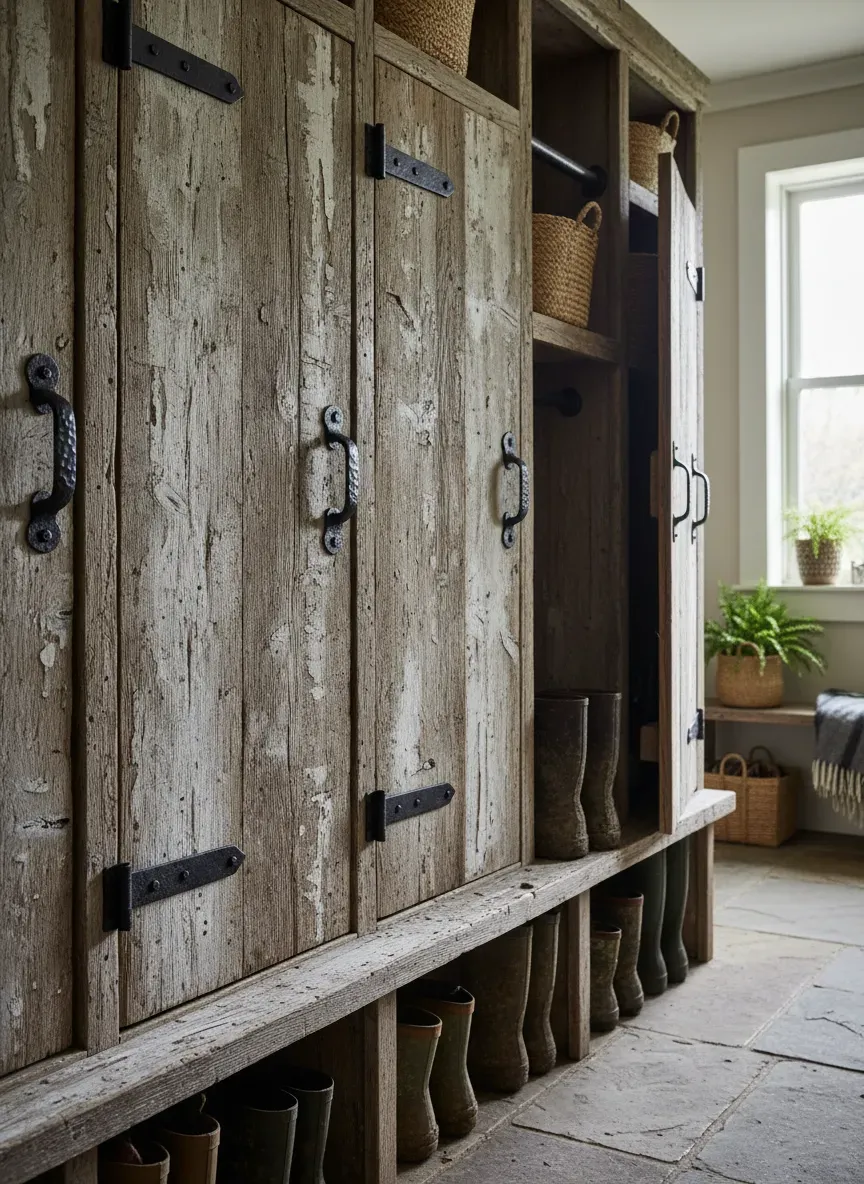
Open-concept lockers built from weathered hemlock or Douglas fir create a stunning focal point. However, dimensions are non-negotiable here. A mudroom that looks gorgeous but cannot physically contain a puffy winter coat or a size 12 snow boot is a structural failure. I constantly remind clients to start their layout by referencing a reliable mudroom locker depth guide. A depth of 15 to 18 inches is typically the sweet spot. Anything shallower, and your garments will violently spill out into the walkway, completely ruining the clean lines of your rustic design.
For the seating area, the bench needs to be robust. A thick, live-edge slab or a massive piece of reclaimed barn beam serves as the perfect anchor. When determining the ideal height and seat depth, finding the sweet spot between 12 and 24 inches ensures that children can easily hop up while adults can sit comfortably to lace up their boots.
Customizing the Cubbies
- Upper Cubbies: Reserve the highest sections for out-of-season items. Woven rattan baskets or galvanized metal bins slide perfectly into these slots, contrasting beautifully with the rough-hewn timber.
- Shoe Storage: Ground-level cubbies take a massive beating from wet, salty, and muddy footwear. I highly recommend lining the bottom of these specific cubbies with an unobtrusive, heavy-duty rubber mat cut precisely to size, or sealing the distressed wood with an incredibly durable marine-grade epoxy.
Integrating Seating and Storage Solutions
A distressed mudroom relies heavily on the juxtaposition of materials. Wood alone can feel monotonous. To elevate the design, introduce secondary materials that complement the raw timber.
Hardware That Complements the Timber
Shiny, polished chrome has absolutely no place in a weathered mudroom. The hardware you choose acts as the jewelry of the space, and it needs to carry the same historical weight as the cabinetry.
Look for hand-forged blacksmith hardware. Blackened steel, oil-rubbed bronze, and unlacquered brass are your best friends here. Unlacquered brass is particularly fascinating because it is a “living finish.” As you touch the coat hooks and drawer pulls day after day, the oils from your hands will naturally polish the high spots, while the recesses will oxidize and darken, creating a bespoke patina that mirrors the aging of your wood.
Consider swapping standard cabinet hinges for heavy exterior strap hinges. Use cast iron label holders on the front of your upper cubbies. These small, tactile details trick the eye, reinforcing the illusion that this mudroom was built a century ago.
Avoiding the “Theme Park” Trap: Common Pitfalls
I see it all the time: a homeowner falls in love with the rustic farmhouse look, and suddenly every single surface is covered in heavily distressed, multi-colored pallet wood. The space ends up looking like a stage set for a western movie rather than a sophisticated home entrance.
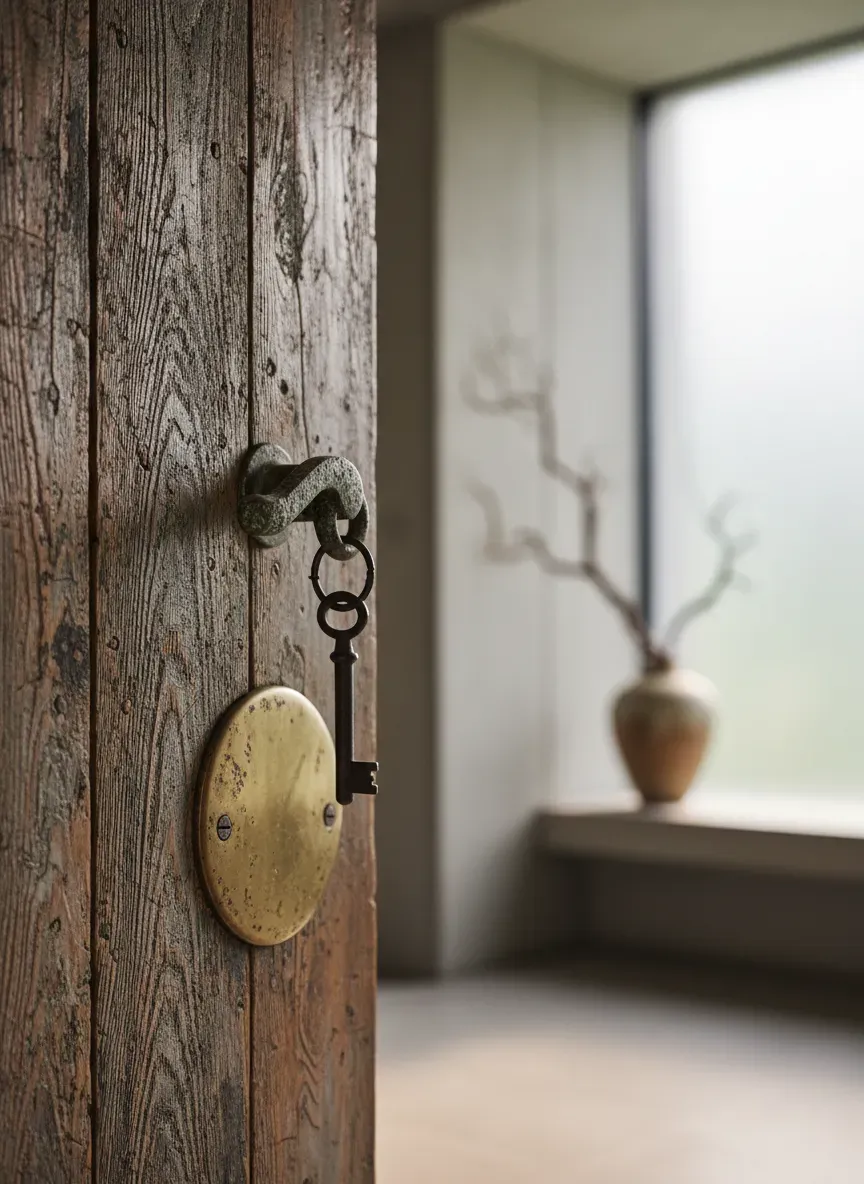
The key to high-end rustic design is negative space and contrast. If your lockers and bench are crafted from heavily textured, weathered oak, the surrounding walls should act as a quiet canvas. Crisp white shiplap, smooth Roman clay, or a soft, muted lime wash plaster provides the necessary visual relief, allowing the distressed wood to stand out as a premium architectural feature.
Lighting Spatial Dynamics Never underestimate how lighting interacts with texture. Standard overhead recessed lighting will flatten the space, washing out the beautiful ridges and valleys of your weathered wood. Instead, use directional lighting. Wall sconces placed strategically beside the lockers or a pendant light hanging slightly lower than usual will cast long, dramatic shadows across the kerf marks and wood grain, highlighting the tactile nature of the distressed surface. Opt for warm bulbs—around 2700K to 3000K—to enhance the amber tones hidden within the grey patina.
Bringing It All Together: Maintenance and Longevity
There is a massive misconception that because a piece of wood is already distressed, it doesn’t need to be protected. Nothing could be further from the truth. A mudroom is a high-moisture environment. Wet umbrellas, snow-covered boots, and damp coats will quickly turn your beautiful reclaimed bench into a rotting, splintered mess if left untreated.
However, you absolutely cannot use a high-gloss polyurethane. A shiny plastic coating instantly destroys the authentic, raw illusion of weathered timber.
You need a dead-flat, matte sealer. Hardwax oils, like Rubio Monocoat or Osmo Polyx, are exceptional choices for distressed wood. These finishes penetrate deep into the wood fibers rather than sitting on top, providing robust water resistance while maintaining the dry, tactile feel of raw lumber. For high-wear areas like the main bench seat, apply three coats of a commercial-grade, water-based matte polyurethane. It will look completely invisible but will offer armor-like protection against daily abuse.
The Bottom Line: A well-executed distressed wood mudroom is an exercise in intentional imperfection. By sourcing the right materials, understanding the chemistry of aging, planning rigorous structural dimensions, and applying the correct matte finishes, you can create a breathtaking entryway that feels both historically grounded and perfectly equipped for modern life.
Building a custom mudroom that perfectly balances structural integrity with this kind of bespoke rustic charm requires a solid blueprint. If you are ready to stop daydreaming and actually start building the entryway of your dreams, I cannot recommend a better resource than what you’ll find over at Ted’s Woodworking.
I’ve personally found that having precise, easy-to-follow schematics eliminates 90% of the frustration involved in custom cabinetry. Right now, you can get instant access to over 16,000 woodworking plans—including stunning locker designs, entryway benches, and custom shelving that you can easily adapt to a distressed aesthetic. Plus, they are currently offering a massive 75% discount.
Whether you are a weekend DIYer or a seasoned builder, having a massive library of detailed, step-by-step plans at your fingertips is an absolute game-changer. Don’t leave your entryway project up to guesswork. Click here to check out Ted’s Woodworking, secure your 75% discount, and start building your perfect mudroom today!