
Secure Self-storage: Why You Need Electronic Gate Entry Storage
Discover why electronic gate entry is the non-negotiable gold standard for self-storage security. Protect your valuables with cutting-edge access control.
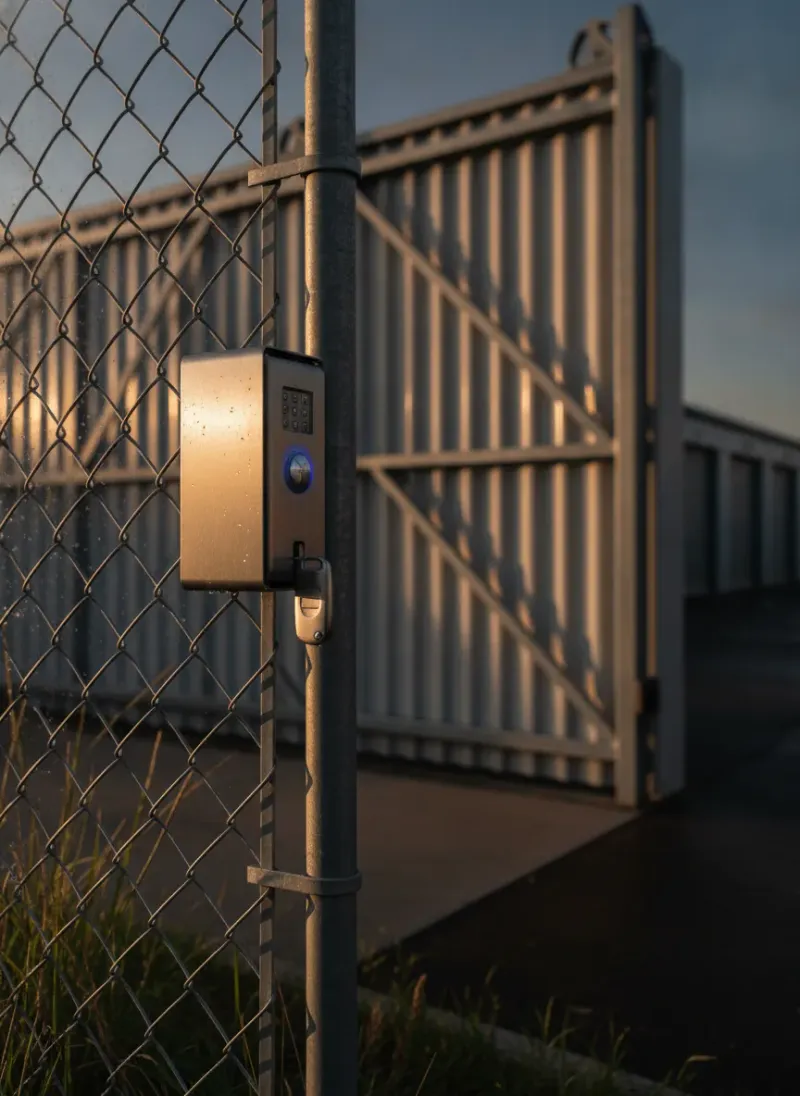
Jun 26, 2026 · Linda Wise
5 min readWe have all been there. You pack up your life’s transitions—vintage family heirlooms, thousands of dollars in commercial inventory, or seasonal gear you spent years acquiring—and you drive it to a local self-storage facility. You snap on a padlock, roll down the corrugated steel door, and drive away. But as you look in your rearview mirror, a nagging question lingers: Is my stuff actually safe here?
The truth is, traditional lock-and-key storage facilities are rapidly becoming relics of a less complicated past. Physical locks are only as strong as the perimeter protecting them. If a bad actor can easily wander onto a property undetected, they have all the time in the world to bypass even the beefiest padlock.
This is where electronic gate entry systems step in. It is no longer a luxury feature reserved for high-end commercial warehouses; it is the absolute baseline for modern, secure self-storage. I have spent years auditing security infrastructures, and I can tell you that an electronic gate is the single most critical filter separating a secure facility from an easy target. Let’s dig deep into why this technology is a non-negotiable requirement for your peace of mind.
Quick Comparison: Top Picks
Before we dissect the underlying security architecture, here is a quick look at three elite tools that will dramatically elevate the security and organization of your physical storage space once you have chosen a facility with electronic perimeter controls.
| Product | Rating | Check Price |
|---|---|---|
| Master Lock Outdoor Bluetooth Padlock | ⭐⭐⭐⭐½ | View on Amazon |
| ABUS Granit Heavy Duty Disc Lock | ⭐⭐⭐⭐⭐ | View on Amazon |
| Dewalt Mobile Tool Box Organizer | ⭐⭐⭐⭐⭐ | View on Amazon |
The Anatomy of Modern Storage Security
To understand why electronic gate entry is so transformative, we first must look at how storage facilities historically operated. For decades, security consisted of a chain-link fence, a padlock on the front gate that half the town knew the combination to, and a manager who went home at 5:00 PM.
Modern secure self-storage flips this outdated model on its head. It treats physical security as a multi-layered ecosystem. The outer perimeter is your first line of defense, and the electronic gate acts as the digital gatekeeper.
[Perimeter Fence] -> [Electronic Gate (Layer 1)] -> [CCTV & Lighting (Layer 2)] -> [Individual Unit Alarm (Layer 3)] -> [Heavy-Duty Padlock (Layer 4)]When you use a facility with an electronic gate, you are not just getting a physical barrier. You are getting an active, data-logging security guard that operates 24/7 without ever taking a coffee break. Every time someone enters or exits, a digital footprint is stamped. This completely changes the risk calculus for would-be intruders.
Why Traditional Security Fails (And How Electronic Gates Fix It)
Physical security is entirely about buying time and creating friction. A criminal wants quick, anonymous access. If a facility has an open driveway or a simple manual gate that is left unlocked during the day, anyone can drive a pickup truck right up to your unit door.
Here is why traditional setups fail, and how modern access control systems solve these vulnerabilities:
1. The Death of Anonymity
In an unsecured facility, a thief can walk onto the property, blend in as a tenant, and spend twenty minutes cutting a lock with bolt cutters. With an electronic gate, anonymity is instantly destroyed. To even get past the driveway, a user must input a unique, trackable PIN, scan an RFID card, or activate a secure smartphone app.
2. Elimination of “Tailgating” Vulnerabilities
We have all seen it: one car enters a gated area, and a second car slips in right behind them before the gate closes. Sophisticated electronic gate systems utilize rapid-close mechanisms and loop detectors that identify when more than one vehicle attempts to pass. Furthermore, advanced facilities link gate access to individual unit alarms. If someone tailgates in without entering their code, their specific storage unit lock remains armed, triggering a massive silent or audible alarm if opened.
3. Automated Auditing and Tracking
If a theft occurs at a legacy facility, finding the culprit is like searching for a needle in a haystack. With electronic gate entry storage, facility managers can instantly run an audit log. They can see exactly whose code was used to enter at 3:14 AM and match that timestamp perfectly with high-definition CCTV footage.
This level of granular control is highly reflective of broader security movements. For instance, when designing modern physical spaces, we see a massive trend toward integrating smart home technology into your entryway to establish an unbroken chain of security from the outer street curb all the way to your internal living or storage spaces. The philosophy is identical: control the perimeter, track the data, and eliminate blind spots.
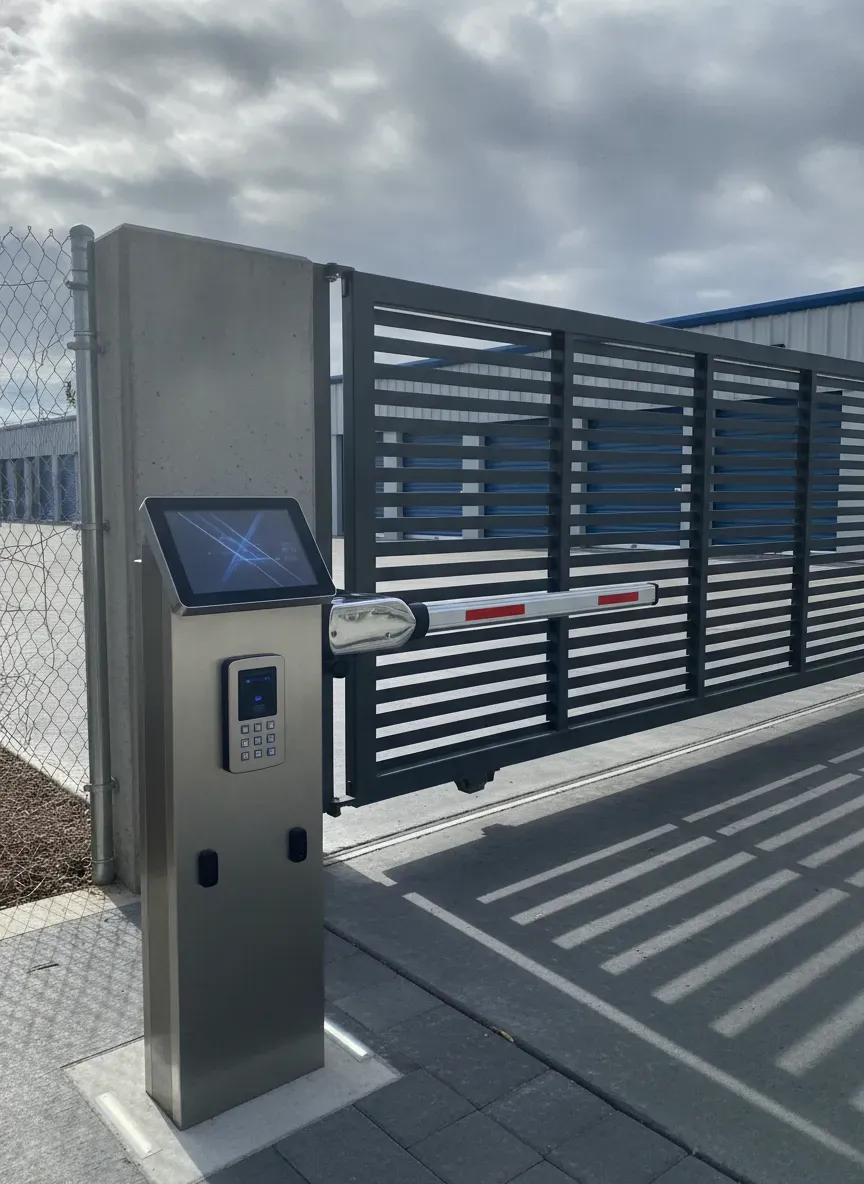
Inside the Tech: How Electronic Gate Systems Function
Electronic gates are not just simple motors connected to a keypad. They are highly sophisticated access control nodes that communicate with cloud-based management software in real time. Let’s break down the primary methods of access you will encounter:
Keypad Access (The Standard)
The most common system requires a unique personal identification number (PIN).
- The Good: Easy to remember, requires no physical device.
- The Bad: Codes can theoretically be shared with unauthorized users.
- The Security Fix: Modern keypads lock out after multiple incorrect attempts and flag the manager’s dashboard instantly.
RFID Cards and Key Fobs
These systems require you to tap a physical card or fob against a reader.
- The Good: Extremely difficult to clone compared to standard physical keys.
- The Bad: If you lose the card, someone else could theoretically use it.
- The Security Fix: Lost cards can be instantly deactivated in the facility’s software with a single click, rendering the physical plastic completely useless.
Bluetooth and Mobile App Integration (The Gold Standard)
This is the cutting edge of secure self-storage. Your smartphone acts as your key. As you approach the gate, the app uses secure, encrypted Bluetooth protocols or GPS geofencing to verify your identity and open the gate.
- The Good: Zero physical contact required, highly encrypted, and impossible for someone else to use unless they have unlocked your physical phone.
- The Bad: Requires a charged smartphone battery.
- The Security Fix: Facilities maintain backup keypad systems for emergencies, but the mobile app provides an incredibly deep digital audit trail.
Pro Tip: When touring a potential storage facility, ask the manager if their gate software is cloud-based. Cloud-based systems are superior because they update instantly. If a tenant’s lease expires or their payment fails, their gate access is revoked automatically in real-time, preventing disgruntled past tenants from entering the property.
The Psychological and Physical Deterrents of Gate Access
Criminals are fundamentally lazy; they look for the path of least resistance. When a seasoned burglar conducts surveillance on potential targets, they look for specific tells.
A rusty chain-link fence with a manual padlock screams “low budget and unmonitored.” Conversely, a heavy-duty, commercial-grade cantilever slide gate with an integrated electronic keypad, security cameras pointed directly at the driver’s side window, and warning signs about digital logging acts as an immediate psychological deterrent.
The CPTED Factor
In the security industry, we refer to this as CPTED (Crime Prevention Through Environmental Design). An electronic gate does more than physically stop a car; it communicates control. It signals to anyone approaching that this facility is actively managed, monitored, and defended.
Furthermore, this physical safety works hand-in-hand with how you organize and structure your units. Just like understanding how high you should mount heavy-duty hooks for optimal clearance and load capacity inside a tight space, understanding the physical dimensions and structural limitations of your storage facility’s entry points ensures you don’t damage your vehicle or your goods during transport.
| Security Level | Gate Type | Monitoring | Risk Profile |
|---|---|---|---|
| Basic | Manual Swing Gate | None (User relocks) | High (Often left open) |
| Moderate | Standard Automated | Keypad only | Medium (Tailgating risk) |
| Elite | Cantilever Slide Gate | App Access + Loop Detectors | Low (Full digital tracking) |
Choosing the Right Storage Facility: Key Security Features to Look For
Not all electronic gate systems are created equal. Some facilities install cheap, residential-grade gate openers just so they can check a box on their marketing materials. If you want true, ironclad security, you need to look for specific operational details.
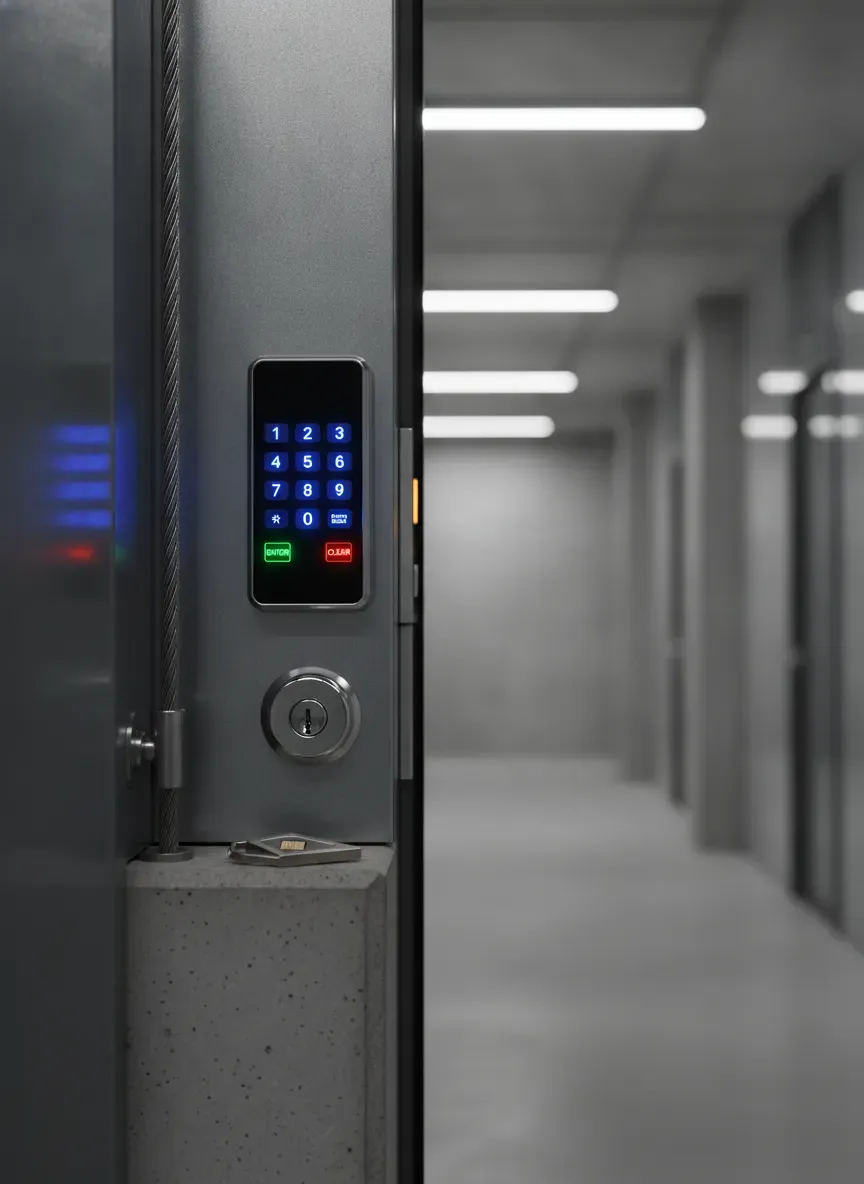
Key Questions to Ask the Facility Manager:
- Is the gate access “individualized”?
Some low-end facilities use a single, universal code for all tenants (e.g.,
1234*or the facility’s street address). This is a massive red flag. If everyone uses the same code, the digital audit trail is completely non-existent. You want a unique code generated specifically for you. - Are there “Anti-Passback” rules configured? Anti-passback prevents a user from entering their code, passing the card to a friend outside the gate, and having them enter as well. The system requires an “In” log to be balanced by an “Out” log before the code can be used to enter again.
- What are the gate hours versus office hours? A secure facility often restricts gate access to specific hours (e.g., 6:00 AM to 10:00 PM) rather than offering 24/7 access, unless specifically requested and vetted. 24/7 access sounds convenient, but it also means the facility is unmonitored during the dead of night when the vast majority of storage thefts occur.
- Are there camera systems integrated with the keypad? The best setups have a camera positioned exactly at eye level next to the keypad. This captures a crystal-clear, front-facing image of whoever is inputting the code, making it impossible for someone to claim “it wasn’t me” if their code was used during a security breach.
Maximizing Your Own Storage Unit Security
Even if you find a facility with a military-grade electronic gate, your security strategy is incomplete if you rely solely on the perimeter. Think of the electronic gate as your castle wall; you still need a solid lock on your treasury door.
Here is how to harden your personal unit within a secure facility:
1. Invest in an Elite Padlock
Do not buy a cheap $5 brass padlock from the grocery store check-out lane. Those can be bypassed in seconds with a pair of shims or basic bolt cutters.
- The Digital Route: I highly recommend the Master Lock Outdoor Bluetooth Padlock. It mirrors the convenience of your electronic gate entry by allowing keyless, military-grade encrypted access via your smartphone. You can even share temporary access codes with friends or movers and track the entry logs directly on your phone.
- The Mechanical Route: If you prefer old-school, indestructible steel, the ABUS Granit Heavy Duty Disc Lock is the undisputed king. Its disk-detainer cylinder is virtually pick-proof, and the solid steel body makes it completely immune to standard bolt-cutter attacks.
2. Optimize Your Internal Storage Layout
How you arrange your items inside the unit plays a massive role in protecting them from both theft and environmental damage.
Keep your most valuable items at the very back of the unit, hidden behind heavy, less appealing items like old sofas or plastic bins. When loading your unit, utilizing heavy-duty mobile storage solutions like the Dewalt Mobile Tool Box Organizer allows you to lock away hand tools, electronics, and documents inside a secondary, rugged, and highly portable container that can be locked down itself.
If you are dealing with a compact space, planning your storage layout requires a high level of strategic thinking. You have to treat the unit like a puzzle. To maximize safety, comfort, and accessibility, you can apply the same spatial principles used when selecting the best storage solutions for a narrow hallway. Create clear, defined pathways down the center of your unit so you can access the back without having to climb over unstable stacks of boxes that could collapse and damage your valuables.
The Financial and Emotional ROI of Secure Storage
Let’s look at this through a purely financial lens. Yes, facilities with electronic gate entry, individual unit alarms, and 24/7 monitoring usually charge a premium of 10% to 20% more per month than legacy, unsecured facilities.
But what is the actual return on investment (ROI)?
Insurance Premiums
If you store high-value items, you will want to insure them. Most major insurance providers will ask about the security features of your chosen facility. Storing your goods in a facility with a fenced perimeter, electronic gates, and active video surveillance can dramatically lower your monthly insurance premiums. Over a year or two, these savings can easily offset the slightly higher rental cost of the secure unit.
Preventing the Irreplaceable Loss
Some things cannot be replaced by an insurance check. Family photo albums, heirloom furniture, hand-written letters, or early business prototypes are priceless. The emotional toll of having your personal space violated and your memories stolen is immense.
If you are building out custom shelving or storage racks within your unit to keep these precious items safe from ground moisture and organizing them systematically, make sure you take the time to build your DIY storage structures correctly. There is nothing worse than paying for a secure facility only to have your own poorly constructed shelves collapse and destroy your valuable collections from within.
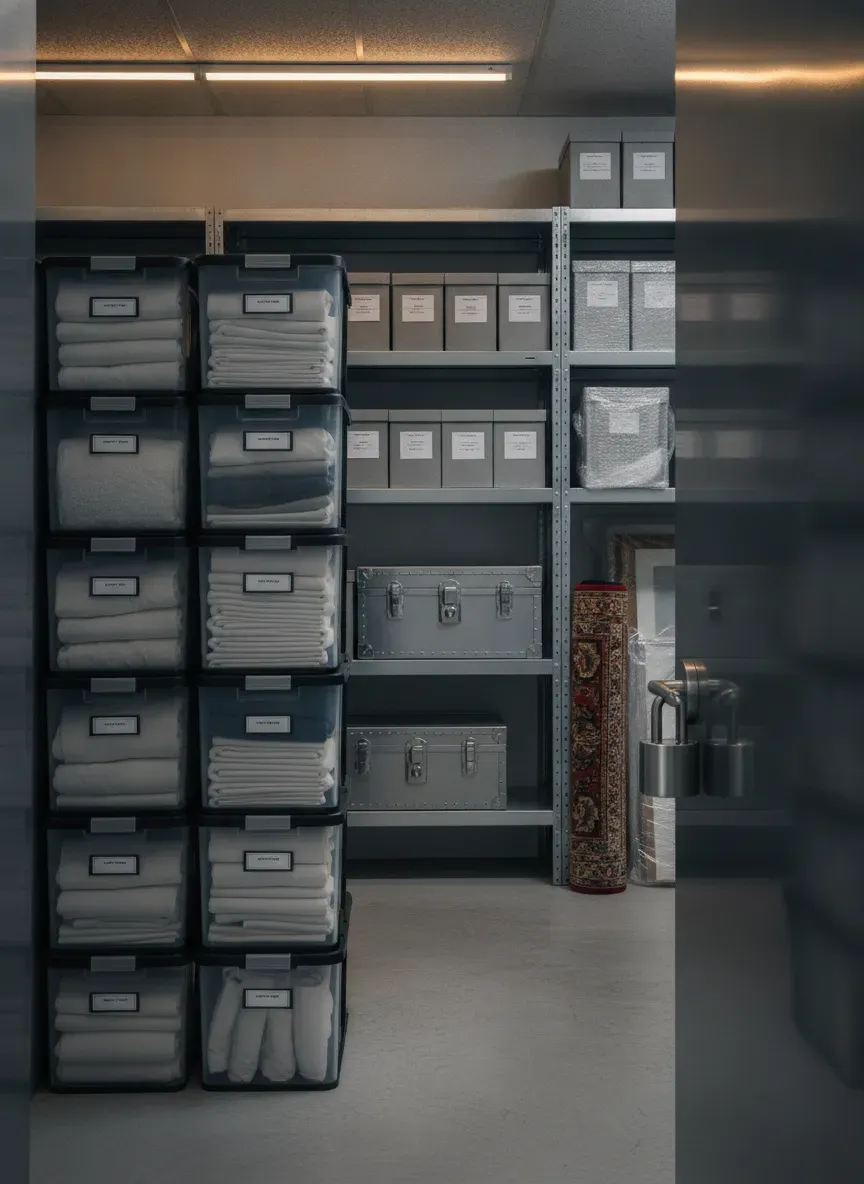
Common Myths and Misconceptions About Storage Security
Let’s dismantle a few common myths that often lead consumers to make poor choices when selecting a self-storage facility.
Myth 1: “A lock on my door is all I need.”
The Reality: A lock on a storage door is a minor speed bump if an intruder has hours of uninterrupted, unmonitored access to the property. Electronic gates keep the threat off the property entirely, meaning the thief never even gets the chance to touch your padlock.
Myth 2: “All electronic gates are the same.”
The Reality: Absolutely not. Some gates use outdated radio frequencies that can be easily intercepted and cloned by cheap devices bought online. Others are left open during business hours, completely defeating the purpose of the system. Look for facilities that enforce 100% gate closure and individualized tracking at all times.
Myth 3: “Security cameras are a substitute for a gate.”
The Reality: Cameras are passive; they only record what already happened. An electronic gate is active; it prevents the unauthorized entry from occurring in the first place. You need both working in tandem to create a truly secure environment.
Key Takeaways: Your Security Checklist
Before you sign a lease on a new storage unit, run through this quick checklist to ensure your valuables are getting the elite level of protection they deserve:
- Perimeter Hardening: Is the entire facility fully fenced, or are there gaps where someone could easily slip through?
- Access Protocols: Does the facility use unique, individualized entry PINs or secure app-based mobile access?
- Audit Logs: Does the facility management software log both entry AND exit events?
- Camera Placement: Is there a camera pointed directly at the gate keypad to capture faces and license plates?
- Gate Speed: Does the gate close quickly after a vehicle passes to prevent tailgating?
- Secondary Security: Are you pairing the facility’s gate with an elite, bolt-cutter-resistant lock like the ABUS Granit Heavy Duty Disc Lock?
The Bottom Line
When it comes to protecting your physical assets, compromise is a losing strategy. Your storage unit is an extension of your home or business. If you wouldn’t leave your front door wide open to anyone walking down the street, you shouldn’t leave your stored valuables behind a weak, unsecured perimeter.
Electronic gate entry storage is not just an added convenience; it is the cornerstone of modern asset protection. It establishes a digital moat around your belongings, deters opportunists, provides an unalterable paper trail, and gives you the invaluable peace of mind that when you drive away, your memories and investments will be exactly where you left them when you return. Do not settle for less. Choose security, choose technology, and protect what matters most.
Top Picks: Best Entryway Essentials
Editor's shortlist with verified ratings. Prices and availability below — clicking an Amazon link earns us a small commission at no extra cost to you.
| # | Product | Rating | Reviews | Tag | Check Price |
|---|---|---|---|---|---|
| 1 | Vasagle Industrial Entryway Bench | 8,420 | Top Pick | View on Amazon | |
| 2 | Crosley Furniture Seaside Hall Tree | 5,410 | — | View on Amazon | |
| 3 | Seville Classics 12-Pair Shoe Rack | 6,420 | Best Storage | View on Amazon | |
| 4 | Franklin Brass Wall Hooks (5-Pack) | 9,820 | — | View on Amazon | |
| 5 | Simplihome Artisan Solid Wood Bench | 3,127 | Editor's Pick | View on Amazon |
Affiliate disclosure: As an Amazon Associate we earn from qualifying purchases.
Tag: entryway09-20 — change in src/data/topPicks.ts.