
Small Entryway Ideas: Best Mudroom Benches with Built-in Shoe Racks
Transform your chaotic foyer into a streamlined sanctuary. Discover expert strategies and top-rated mudroom benches engineered for small entryways.
Mar 13, 2026 - Written by: Linda Wise
Tripping over a rogue pair of winter boots is a universal rite of passage in homes lacking a dedicated, sprawling foyer. We’ve all been there. You walk through the front door, hands laden with groceries, mail, and an oversized coffee, only to perform a precarious tap dance around a sprawling mountain of footwear. It is infuriating.
I’ve personally found that reclaiming this vital transitional space isn’t about magically expanding your square footage. You don’t need a massive renovation. You need ruthless, calculated efficiency. The entryway is the liminal space between the chaotic outside world and the sanctuary of your home. When it functions poorly, that external chaos bleeds directly into your living room.
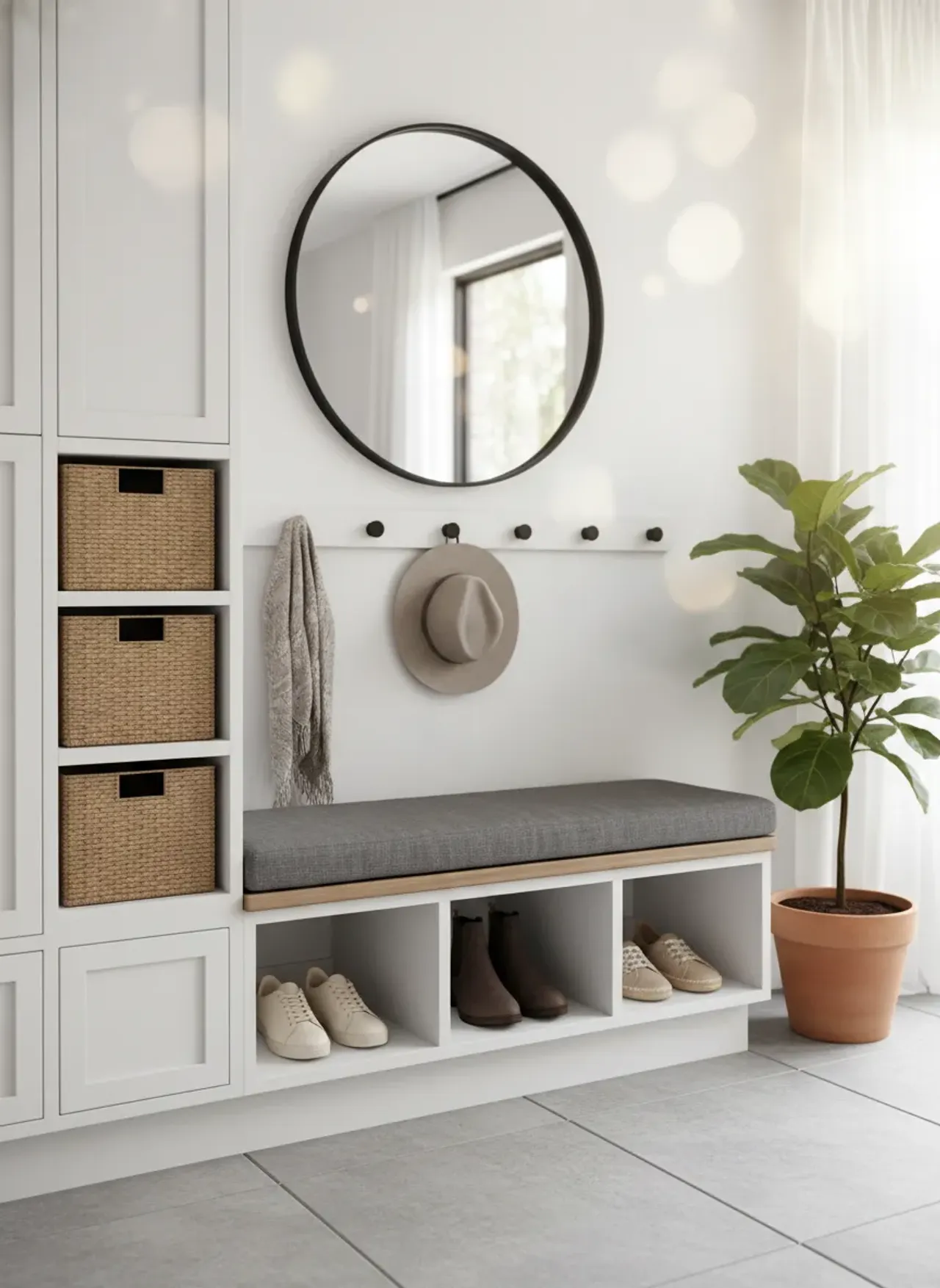
The undisputed heavyweight champion of small space organization is the hybrid mudroom bench equipped with a built-in shoe rack. This single piece of furniture forces verticality, provides immediate utility, and establishes a rigid boundary for where outdoor gear belongs. Today, we are dissecting the mechanics of foyer organization, evaluating top-tier furniture configurations, and ensuring you never trip over a stray sneaker again.
Quick Comparison: Top Picks
| Product | Rating | Check Price |
|---|---|---|
| VASAGLE Industrial Shoe Bench | ⭐⭐⭐⭐⭐ | View on Amazon |
| Prepac Narrow Hall Tree Bench | ⭐⭐⭐⭐½ | View on Amazon |
| CubiCubi Entryway Storage Bench | ⭐⭐⭐⭐ | View on Amazon |
The Anatomy of a High-Functioning Small Entryway
Creating an efficient drop zone in a micro-environment requires a deep understanding of human habits. People are fundamentally lazy when they arrive home. If putting a shoe away requires bending down to open a complex cabinet, wrestling with a drawer, or shifting other items, the shoe will inevitably end up on the floor. Frictionless utility is your primary goal.
The Psychology of the “Drop Zone”
Every home has a natural gravity well—the exact spot where keys, bags, and boots accumulate the moment you cross the threshold. Fighting this gravity well is a losing battle. Instead, you must domesticate it. By placing a structured, aesthetically pleasing bench precisely where this natural drop occurs, you intercept the mess before it scatters.
A bench serves as a visual anchor. It psychologically signals to anyone entering: this is where the transition happens. You sit. You unlace. You stow. It breaks the momentum of walking straight into the house tracking mud across your hardwood floors.
Ergonomics and Spatial Dynamics
When dealing with a tight footprint, every fraction of an inch matters. You’ll notice that standard benches often protrude too far into narrow hallways, creating a frustrating bottleneck. Before committing to a unit, you must map out your spatial limitations. If you are debating whether a built-in look is even possible in your restricted layout, I highly recommend consulting our exhaustive mudroom locker depth guide to avoid suffocating your corridor.
The ideal seating height for a shoe bench hovers around 17 to 19 inches. This mimics a standard dining chair, providing enough leverage for an adult to comfortably bend over and untie rigid boots without straining their lower back. Anything lower feels like nursery furniture; anything higher forces awkward maneuvering.
Evaluating the Best Mudroom Benches with Built-in Shoe Racks
Not all entryway furniture is created equal. The market is flooded with flimsy, particle-board nightmares that buckle under the weight of a single adult. When selecting a piece for a high-traffic area, structural integrity must take precedence over mere aesthetics.
The Minimalist Workhorse: Industrial Open-Tier Designs
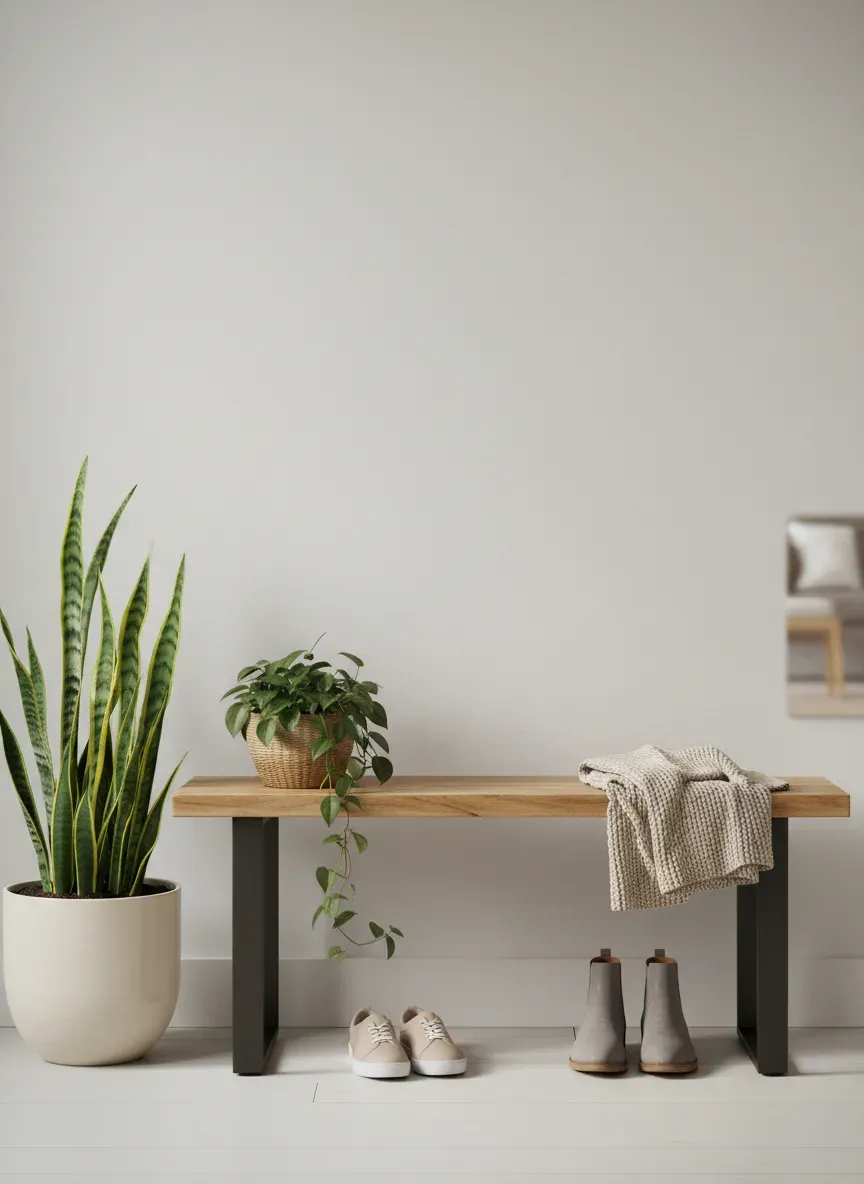
For those grappling with severely limited square footage, the open-tier industrial bench is an absolute lifesaver. Featuring a solid wood (or high-grade engineered wood) seat supported by a raw steel frame, these units thrive on visual lightness.
Why it works: The open metal grates beneath the seat allow for maximum ventilation. This is critical. Damp sneakers and wet winter boots need airflow to dry properly. A closed cabinet will simply trap the moisture, creating a potent, swampy odor that greets your guests the moment they arrive.
I constantly recommend pieces like the VASAGLE Industrial Shoe Bench to clients dealing with narrow apartment hallways. The mesh shelves prevent dirt from caking up, allowing dust to fall through to the floor where it can be easily vacuumed. They are entirely unapologetic about their function, which gives them a distinct, utilitarian charm.
The Vertical Maximizer: The Hall Tree Combo
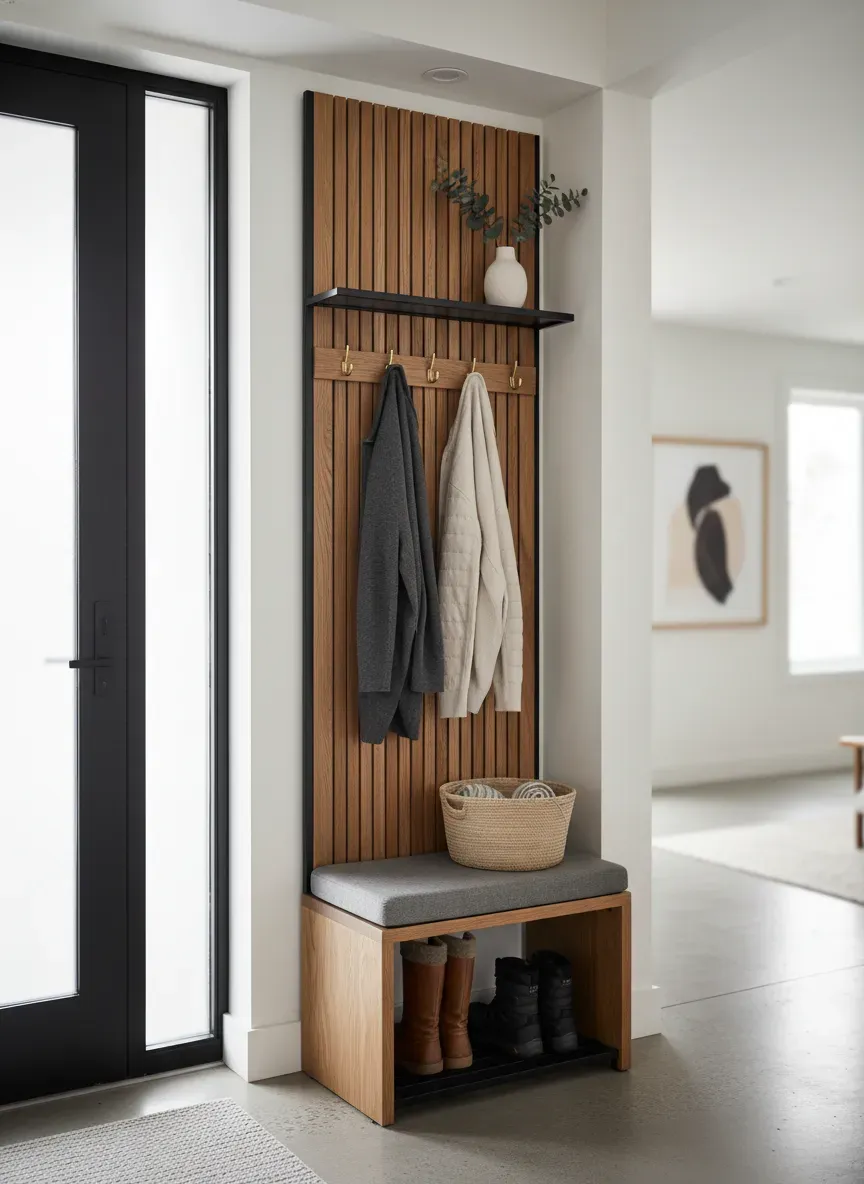
If your entryway is less of a room and more of a blank wall beside the front door, horizontal space is a luxury you cannot afford. You have to build upward. A hall tree bench combo integrates the seating area and shoe rack with a vertical backing that hosts coat hooks and upper cubbies.
Why it works: It centralizes everything. Instead of having a floating bench, a separate umbrella stand, and a random assortment of wall hooks scattered like confetti, a single Prepac Narrow Hall Tree Bench unifies the visual language of the space.
Here’s the real kicker: tall furniture draws the eye upward, making cramped ceilings feel artificially higher. However, these units require strict curation. Overloading the hooks with massive, puffy winter coats will make the unit look top-heavy and visually overwhelming. Reserve the hooks for the jackets you are wearing this week, and cycle the rest into secondary closets.
The Hidden Concealer: Upholstered Storage Ottomans
Sometimes, the primary directive is camouflage. If your entryway opens directly into a formal living room, an open rack displaying battered running shoes might ruin your carefully curated mid-century modern aesthetic. Enter the closed-storage bench.
Why it works: These pieces operate like traditional accent furniture but harbor a secret compartment. A CubiCubi Entryway Storage Bench with drop-down cabinet doors or sliding louvers hides the chaotic reality of your footwear collection.
The trade-off here is ventilation and convenience. You are introducing a barrier (a door) between the user and the storage space. To mitigate the friction, ensure the hinge mechanism is smooth and the internal shelving is adjustable to accommodate varying shoe heights.
Spatial Calculus: Measuring Your Drop Zone Correctly
Buying furniture online without rigorously mapping your physical space is a fast track to buyer’s remorse. A bench that looks perfectly proportioned in an expansive studio photoshoot will often look monstrously oversized in a 4x4 foyer.
The Baseboard and Outlet Dilemma
People rarely account for the invisible obstacles outlining their walls. Baseboards, crown molding, and wainscotting can push a flush-mount bench a half-inch away from the wall, creating an annoying gap where mail and keys will inevitably fall.
Similarly, scan your designated wall for electrical outlets and HVAC registers. Blocking a primary air vent with a solid wood bench will disrupt your home’s temperature regulation and potentially warp the furniture. If an outlet is unavoidable, select an open-back bench design so you can still utilize the plug for a smart home hub or a decorative table lamp.
Door Swing Clearance
This is the most common catastrophic failure in entryway design. You measure the wall space perfectly, but you forget the arc of the front door.
Pro Tip: Open your front door to its maximum extension. Place a piece of painter’s tape on the floor at the very edge of the door’s reach. Your bench must sit completely outside this designated arc. If the door scrapes against the bench, you will damage both pieces of hardware within a week.
When dealing with exceptionally tight corridors, understanding the nuances of finding a storage profile between 12 and 24 inches requires meticulous planning. A 12-inch depth forces shoes to be stored on an angle or completely sideways, whereas an 18-inch depth allows for standard straight-in storage. Determine your absolute maximum depth before browsing.
Material Matters: Durability vs. Aesthetics
An entryway bench endures a brutal existence. It is routinely subjected to sharp zippers, heavy denim rivets, abrasive road salt, dripping umbrellas, and the full weight of hurried humans. Delicate materials have no business here.
Solid Wood vs. Engineered Composites
Solid hardwoods—like oak, walnut, or maple—are the gold standard. They can take a beating. A scratch on solid oak just adds character and can be easily sanded out or restained decades later. However, solid wood is heavy, expensive, and susceptible to extreme moisture fluctuations if not properly sealed.
Engineered woods (MDF or particleboard with veneers) dominate the budget market. While they mimic the look of real wood beautifully, they despise water. If you live in a climate with heavy snowfall, a puddle of melted snow left sitting on a cheap veneer bench will cause the underlying MDF to bubble and warp irreversibly. If you opt for engineered wood, you must utilize a heavy-duty rubber boot tray beneath it.
The Metal Framework Advantage
Powder-coated steel frames provide incredible structural rigidity while taking up minimal visual weight. If you want a piece that feels airy and light, a steel frame paired with a wooden top is unbeatable. Ensure the metal is genuinely powder-coated rather than just painted; standard paint will chip quickly when kicked by steel-toed boots or sharp heels.
Upholstery Warnings
A plush, velvet-cushioned bench looks incredibly inviting, but think about the logistics. You are sitting on this fabric in wet raincoats or dirty jeans. If you insist on a cushioned seat, look for performance fabrics, top-grain leather, or high-quality faux leather (PU) that can be wiped down with a damp cloth in seconds. Removable, machine-washable cushion covers are an absolute godsend.
Common Pitfalls in Entryway Organization
Even with the perfect piece of furniture, user error can sabotage the setup. Avoid these frequent missteps to maintain a pristine foyer.
The Overstuffing Syndrome
A shoe rack is not a long-term archive. It is an active staging area. A standard small entryway bench holds roughly four to six pairs of adult shoes. If you try to cram twelve pairs into that same footprint by stacking them haphazardly, you defeat the entire purpose of the organizer.
Implement a strict “one in, one out” policy for the front door. Out-of-season footwear—like heavy winter boots in July or strappy sandals in December—must be relocated to a bedroom closet or under-bed storage.
Ignoring the Wet/Dry Ecosystem
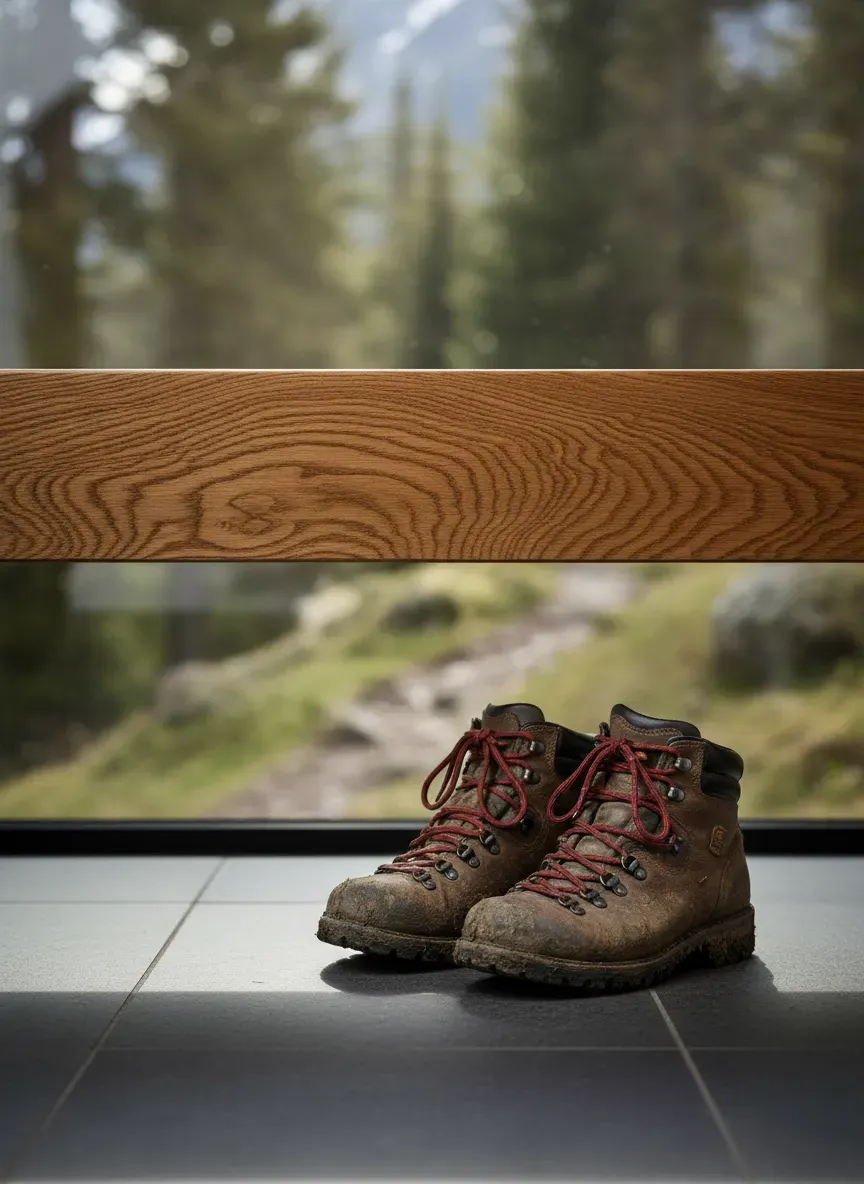
Placing wet, muddy boots on an upper tier will ensure that dirty water drips directly into your clean white sneakers on the tier below.
Organize your storage vertically by moisture level. The floor-level tier (ideally equipped with a silicone drip mat) should be reserved entirely for wet, outdoor gear. The upper shelves should house dry, indoor shoes, slippers, and delicate materials like suede.
Failing to Anchor Tall Units
If you upgrade to a vertical hall tree, you cannot skip the anti-tip hardware. It is non-negotiable. These units become incredibly top-heavy once loaded with winter coats, backpacks, and purses. A child attempting to climb the lower shelves to reach a jacket can easily pull the entire structure down. Locate the wall studs and anchor that furniture securely.
Customizing Your Setup: Styling a Cramped Foyer
Functionality does not demand a sacrifice of style. Once the structural elements are locked in, you can layer aesthetic details that elevate the bench from a mere utility object to a curated focal point.
Baskets and Bins
The negative space beneath a bench is prime real estate. If your bench features open shelving, utilize fitted woven baskets or sleek felt bins to corral visual clutter. Loose items like dog leashes, winter gloves, folded canvas tote bags, and umbrellas look incredibly messy when left exposed. Containing them in matching, textured baskets instantly neatens the profile.
Lighting and Mirrors
Small entryways are notoriously dark, often isolated from natural window light. Placing a tall, slender mirror directly above or adjacent to your mudroom bench achieves two goals. First, it gives you a crucial spot for a final outfit check before leaving. Second, it bounces whatever ambient light exists back into the room, creating an optical illusion of doubled space.
Pair this with a small battery-operated, motion-sensor LED strip mounted discreetly under the bottom lip of the bench. This provides a soft, luxurious glow that illuminates your shoes when you walk by, adding a high-end, custom-closet feel for pennies.
The Anchor Rug
Finally, slide a durable, low-pile runner rug just beneath the front legs of the bench. This defines the “zone.” A washable rug absorbs the immediate impact of wet footprints and ties the furniture into the broader design scheme of the hallway, preventing the bench from looking like it’s just floating aimlessly against the wall.
Key Takeaways
- Measure the Margins: Always account for door swings, baseboards, and heating vents before selecting your bench dimensions.
- Prioritize Ventilation: Open-tier metal or slatted wood racks prevent moisture buildup and foul odors in tight spaces.
- Enforce Limits: Treat the entryway rack as an active rotation zone, holding only 4-6 pairs of seasonal, frequently worn shoes.
- Anchor Verticality: If utilizing a hall tree combo to maximize upward space, always secure it to a wall stud to prevent tipping.
- Layer with Purpose: Use fitted baskets for loose accessories and place a durable runner rug to visually define the drop zone.
The Bottom Line Mastering your home’s entrance doesn’t require knocking down walls or spending thousands on custom millwork. By deploying a precisely measured, strategically chosen mudroom bench with integrated shoe storage, you establish an immediate, frictionless system that commands order the second you walk through the door. Measure twice, prioritize durable materials over fast-furniture trends, and reclaim your foyer from the chaos of modern life.