
Smart Entryway Benches with Storage: Charging Ports and Tech Integration
Discover how smart entryway benches combine modern technology with essential storage. Learn about charging ports, design styles, and organizing your drop zone.
Feb 4, 2026 - Written by: linda wise

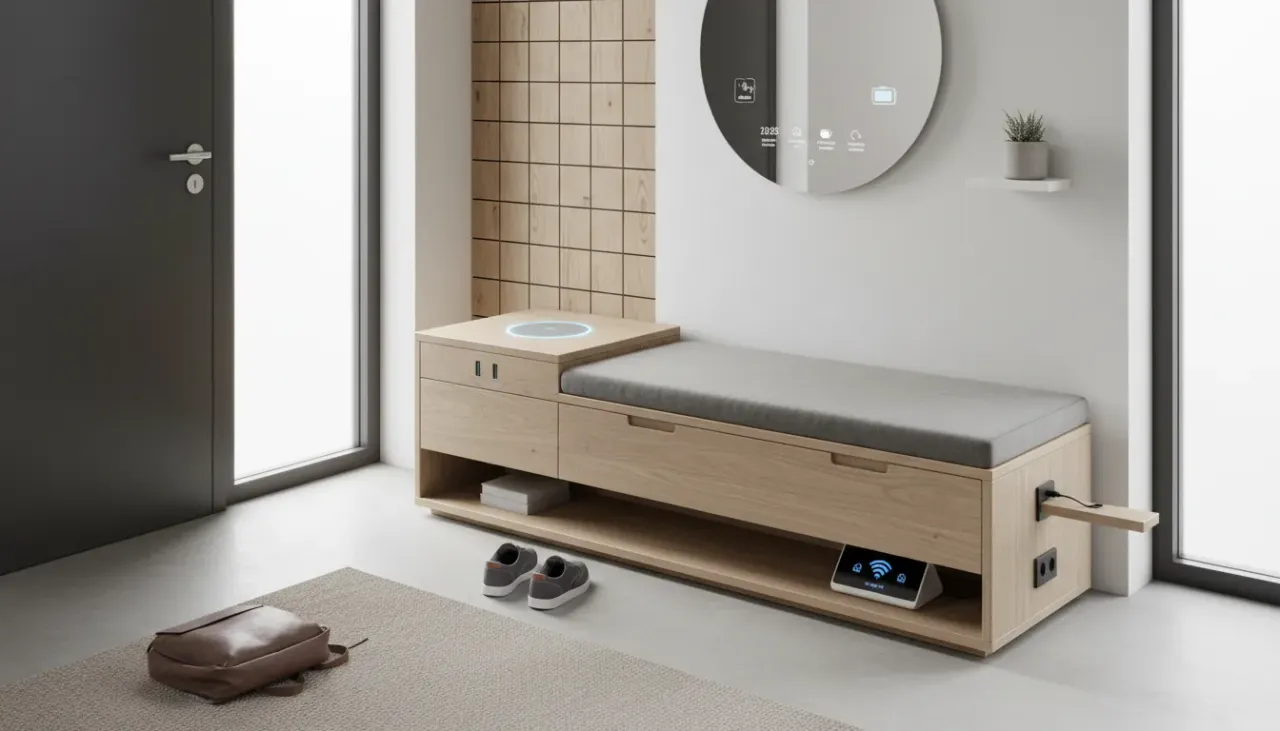
The modern entryway is no longer just a transitional space where we remove our shoes. It has evolved into a critical command center for the contemporary household. As our daily lives become increasingly tethered to technology, the furniture we use to organize our homes must adapt to meet new demands. The smart entryway bench represents the convergence of traditional furniture design and modern technological utility, offering a sophisticated solution for the connected homeowner.
For decades, the standard foyer bench served a simple purpose: providing a place to sit while putting on footwear and a hidden compartment for storing clutter. However, the habit of walking through the door and immediately looking for a place to charge a smartphone, smartwatch, or pair of wireless earbuds has necessitated a design shift. Smart entryway benches with integrated charging ports and tech-friendly features are transforming the “drop zone” into a streamlined hub of efficiency.
In this comprehensive guide, we will explore the functionality, design aesthetics, and practical benefits of integrating technology into your entryway storage solutions. From understanding the electrical specifications to selecting the right style for your interior decor, this is the definitive approach to modernizing your home entrance.
The Evolution of the “Drop Zone”
To understand the necessity of a smart bench, one must first analyze the changing behaviors of the modern family. The concept of the “landing strip” or “drop zone” refers to the specific area near the front door where keys, mail, bags, and devices are deposited upon entry.
In the past, a simple bowl for keys and a hook for a coat sufficed. Today, every family member likely carries at least one battery-powered device that requires daily charging. Without a designated charging station at the entry, these devices often migrate deep into the house, leading to the frantic morning search for a phone or a depleted battery right before a commute.
A smart entryway bench solves this logistical problem by marrying the “landing strip” with the power grid. It encourages a habit of plugging in immediately upon arrival, ensuring devices are charged and located exactly where you need them when it is time to leave. Furthermore, by integrating these technical features into the furniture itself, homeowners can avoid the visual clutter of tangled extension cords and bulky power strips that often ruin the aesthetic of a carefully curated foyer.
Core Features of Tech-Integrated Benches
When shopping for or designing a smart entryway bench, it is essential to look beyond the mere presence of a plug. The quality, placement, and type of technology integration matter significantly for long-term satisfaction.
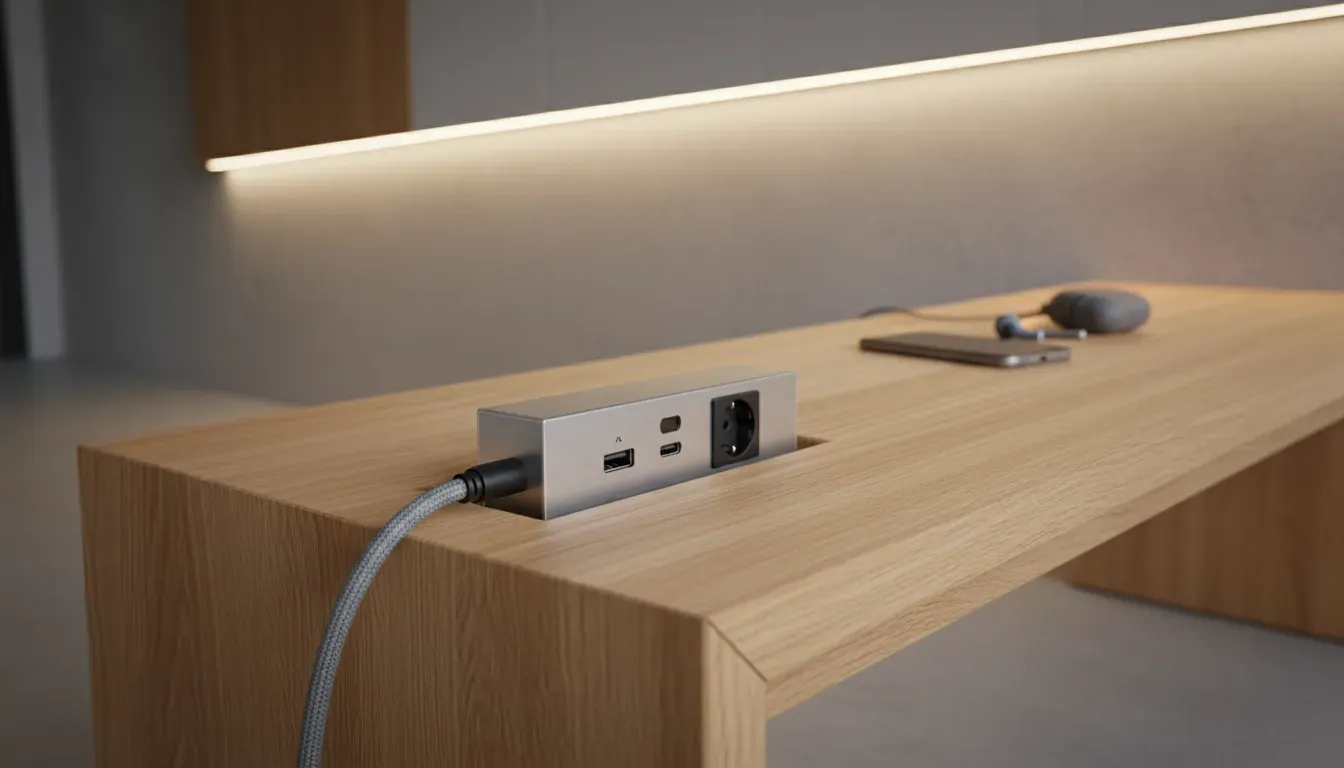
USB-A vs. USB-C and AC Outlets
The most common feature in smart furniture is the USB charging port. However, not all ports are created equal. As technology standards shift, a bench equipped only with older USB-A ports may become obsolete faster than one with varied connectivity.
Top-tier smart benches now offer a combination of connection types:
- USB-C Power Delivery (PD): Essential for fast-charging modern smartphones and tablets.
- Standard USB-A: Useful for charging legacy devices, power banks, and wireless headphones.
- Standard AC Outlets: Crucial for plugging in laptops or non-USB devices, such as boot dryers during the winter months.
Wireless Charging Capabilities
For the ultimate minimalist aesthetic, some high-end benches feature Qi-certified wireless charging pads embedded directly into the wood or laminate surface. This eliminates cables entirely for compatible devices. While this offers a cleaner look, it requires precise placement of the device and typically charges slower than a wired connection.
Integrated Lighting
Tech integration is not limited to power. Many smart benches now include built-in LED lighting. Motion-sensor lights installed beneath the bench are particularly useful for illuminating shoe racks without turning on the main overhead light. This feature adds a layer of safety and convenience during late-night returns home.
For those interested in upgrading their current setup without buying new furniture, you might explore adding lighting to existing storage to achieve a similar effect.
Balancing Aesthetics with Functionality
One of the primary concerns when introducing “tech furniture” into a home is the fear that it will look too industrial or office-like. Fortunately, furniture designers have recognized this concern and are producing pieces that hide their technological capabilities within traditional design languages.
The Mid-Century Modern Approach
Mid-century modern design focuses on clean lines, organic curves, and functionality. Smart benches in this style often feature tapered legs and walnut finishes. The charging ports are frequently discreetly mounted on the side panel or hidden inside a flip-top compartment, preserving the sleek silhouette of the piece.
Industrial and Farmhouse Styles
For homes with a rustic or industrial aesthetic, mixed materials like reclaimed wood and black metal piping are common. In these designs, the tech integration is sometimes celebrated rather than hidden, with matte black power modules that complement the metal frame. Alternatively, farmhouse styles may use sliding barn doors to conceal both the shoe storage and the charging hub when not in use.
The Minimalist Upholstered Bench
For a softer look, upholstered benches with storage offer comfort and utility. The charging station is usually located on the exterior side of the armrest or recessed into a side pocket. This style is ideal for those who want the bench to feel more like a piece of living room furniture than a utility rack.
If you are looking for a versatile option that blends comfort with connectivity, consider this recommendation:
Amazon Recommendation: Modern Upholstered Entryway Bench With USB Charging Station
Storage Configurations for the Connected Home
While the “smart” features are the highlight, the “bench” and “storage” aspects must not be overlooked. A bench that charges your phone but fails to organize your shoes is ultimately a failure in the entryway.
Flip-Top vs. Shelf Storage
There are two primary storage configurations to consider, each interacting with technology differently:
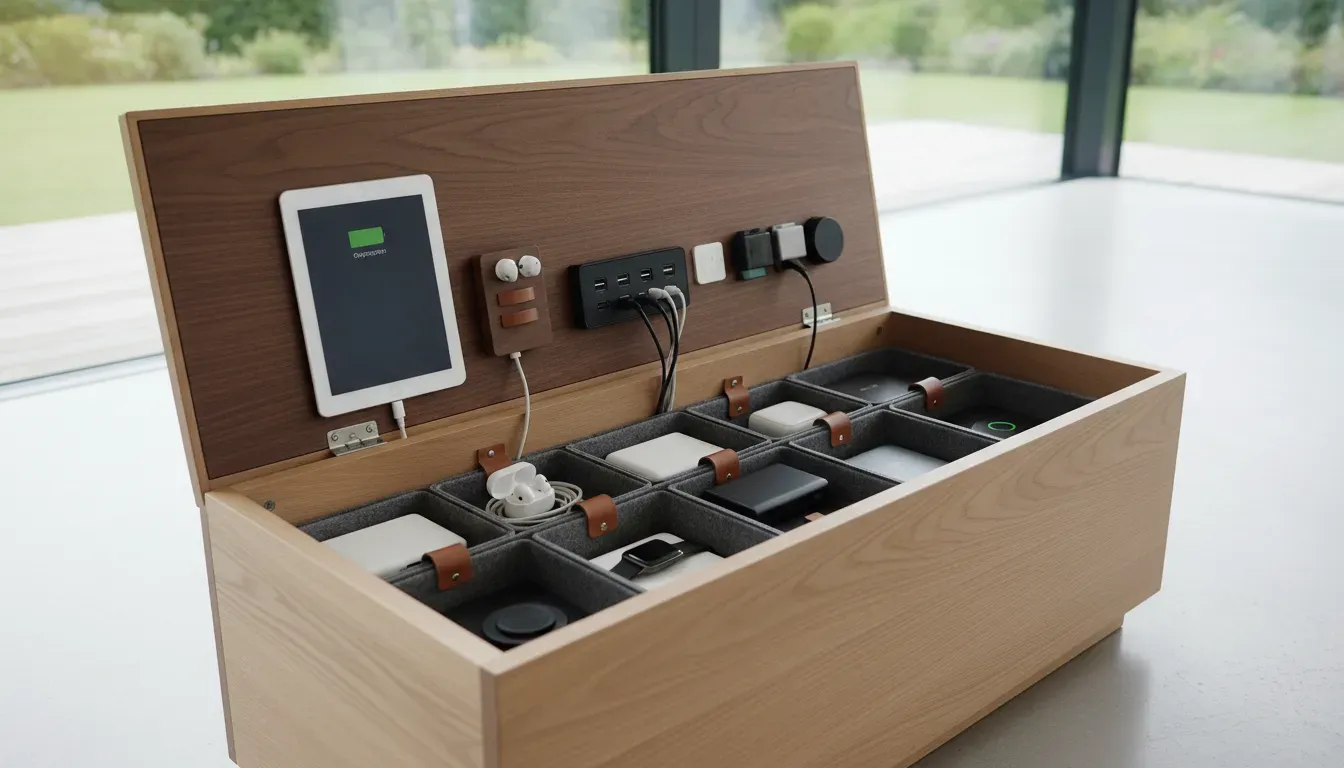
- Flip-Top Compartments: These are excellent for hiding clutter. In a smart bench, the charging hub is often located inside this compartment. This allows you to place your phone inside, plug it in, and close the lid, keeping the device secure and out of sight. This is a superior choice for households with curious toddlers or pets.
- Open Shelf/Cubby Storage: This design is preferred for shoe storage as it allows for ventilation. In these models, the charging ports are typically external. This offers easier access to screens for checking notifications but exposes the devices to dust and visual clutter.
Cable Management Systems
A truly smart bench manages the cables behind the scenes as well. Look for units that feature “mouse holes” or grommets in the back panel. These allow the main power cord of the bench to pass through to the wall outlet without pinching. Furthermore, internal cable management clips can keep the cords inside a storage compartment from becoming a tangled nest.
For a robust storage solution that leans into the industrial aesthetic while providing ample power, this product is worth investigating:
Amazon Recommendation: Industrial Shoe Bench With Power Outlet And USB
DIY Smart Bench Integration
Not every homeowner wants to replace their existing furniture. If you possess a high-quality entryway bench that fits your space perfectly but lacks technology, a DIY retrofit is a viable and often cost-effective project.
The Recessed Power Strip Method
The most professional-looking modification involves installing a recessed power grommet. These are widely available and include USB and AC ports.
The Process:
- Measure and Mark: Identify a location on the side or top of the bench where the unit will fit without interfering with drawers or structural supports.
- Cut: Use a jigsaw or hole saw to cut the specific shape required by the grommet.
- Install: Drop the power unit into the hole and secure it with the provided bracket or screws.
- Route Power: Run the main cord down the leg of the bench, using adhesive cable clips to keep it hidden, and plug it into the wall.
The Drawer Charging Station
If your bench has drawers, you can convert one into a dedicated charging station. This requires drilling a hole in the back of the drawer and the back of the bench cabinet to feed a power strip cord through. By securing a power strip to the back of the drawer interior, you create a hidden bay for devices. Note that you must leave enough slack in the cord behind the drawer to allow it to open and close fully.
For more ideas on maximizing the utility of your existing furniture, read our guide on customizing entryway storage.
Safety Considerations and Electrical Load
When introducing electricity to furniture, safety is paramount. Entryway benches are often surrounded by flammable materials like coats, scarves, and rugs.
Ventilation and Heat
Batteries generate heat when charging. If you are using a flip-top bench or a drawer for charging, ensure there is adequate ventilation. Avoid burying charging phones under piles of winter hats or scarves within the compartment. Overheating lithium-ion batteries pose a fire risk.
Surge Protection
Not all furniture-integrated power strips have built-in surge protection. If you live in an area prone to power fluctuations, it is advisable to plug your smart bench into a single-outlet surge protector at the wall. This protects both the furniture’s electrical components and the expensive devices plugged into it.
Water and Moisture
The entryway is a high-traffic area often exposed to rain, snow, and mud. Ensure that the electrical outlets on the bench are positioned well above the floor level and away from where wet boots are stored. If you use a boot tray, place it on a lower shelf or adjacent to the bench, ensuring no water can splash into low-mounted outlets.
Integrating Smart Benches into Small Spaces
In apartments or homes with narrow hallways, a multifunctional smart bench is a space-saving necessity. By combining seating, shoe storage, and a charging station into a single footprint, you eliminate the need for a separate console table or side table.
For small spaces, look for vertical orientation. A bench that is slightly taller or includes a high back with hooks can offer more utility per square foot. Wall-mounted power sources are often preferred here to keep floor space clear for shoes.
If concealment is your priority to keep a small space looking tidy, a flip-top model is the industry standard:
Amazon Recommendation: Flip Top Storage Bench With Charging Station
Future-Proofing Your Entryway
As we look toward the future of smart home integration, the capabilities of furniture will likely expand. We are already seeing prototypes of furniture with integrated Bluetooth speakers, allowing you to seamlessly transfer your podcast or music from your headphones to the room audio the moment you walk in the door.
Furthermore, integration with smart home ecosystems (like Amazon Alexa or Google Home) is becoming possible. Imagine a bench with built-in accent lighting that turns green when your commute traffic is clear or flashes red if you left the garage door open.
While these advanced features are currently niche, investing in a bench with standard, high-quality power outlets ensures you can adapt. You can always plug a smart speaker or a smart home hub into the AC outlet of your bench, effectively upgrading its “IQ” without buying new furniture.

Maintenance and Care
To keep a smart bench functioning correctly, regular maintenance is required beyond standard dusting.
- Port Cleaning: Over time, dust and lint can accumulate inside USB ports, causing poor connections. Use a can of compressed air periodically to blow out the ports.
- Cord Inspection: Regularly check the main power cord running from the bench to the wall for any signs of wear, chewing (by pets), or fraying.
- Surface Care: If your bench has a built-in wireless charging pad, avoid using abrasive cleaners on that specific spot, as scratches can interfere with the induction charging efficiency.
Conclusion
The smart entryway bench with storage is more than a trend; it is a response to the reality of modern living. We are a culture that carries technology with us, and our homes must provide a seamless transition between the connected world outside and the sanctuary inside.
By selecting a bench that offers robust charging capabilities, ample storage for footwear, and a design that complements your home, you solve multiple problems at once. You reduce cable clutter, ensure your devices are always ready for use, and maintain an organized, welcoming entryway. Whether you choose a sleek mid-century model, a rugged industrial piece, or opt to retrofit a beloved antique, the integration of power into your entryway furniture is a substantial upgrade to your daily routine.
As you plan your entryway makeover, consider how these features can streamline your departure and arrival, turning a chaotic drop zone into a refined station of organization and power.