Smart Hallway Furniture & Storage Ideas to Maximize Your Space

Discover expert-vetted smart hallway furniture and storage ideas to maximize narrow entryways, reduce spatial friction, and elevate your home's aesthetic.

Professional SEO visualization for Smart Hallway Furniture & Storage Ideas to Maximize Your Space

Jun 23, 2026 · Linda Wise

5 min read

The hallway is the handshake of your home. It represents the crucial physical transition point between the chaotic external world and your private sanctuary. Yet, in architectural design, it is frequently treated as an afterthought—a narrow conduit designed for circulation rather than utility. When neglected, these liminal zones rapidly degenerate into magnets for discarded footwear, junk mail, and loose keys, generating immediate mental friction the moment you cross the threshold.

Reclaiming this space requires a deliberate strategy that merges spatial ergonomics with high-utility furniture. By deploying intelligent storage systems, you can transform a cramped, chaotic corridor into an organized, welcoming, and highly functional asset.

Below is an expert-vetted overview of top-tier smart storage solutions designed to optimize your entry point before we unpack the precise design mechanics of spatial planning.

Quick Comparison: Top Picks

ProductRatingCheck Price
VASAGLE Industrial Hall Tree⭐⭐⭐⭐½View on Amazon
Prepac Wall Mounted Entryway Organizer⭐⭐⭐⭐View on Amazon
VASAGLE 3-Tier Shoe Bench⭐⭐⭐⭐⭐View on Amazon

The Psychology of the Entryway: Transition Zones & Cognitive Clutter

Environmental psychologists have long studied the impact of “decompressing environments.” When you walk through your front door, your brain undergoes a cognitive shift from a state of external alertness to internal relaxation. If your immediate view is met with physical clutter—a pile of shoes blocking the doorway, jackets draped precariously over a chair, or a console table buried in letters—this cognitive transition is disrupted. The brain interprets physical disorganization as unfinished business, triggering a subtle but persistent stress response.

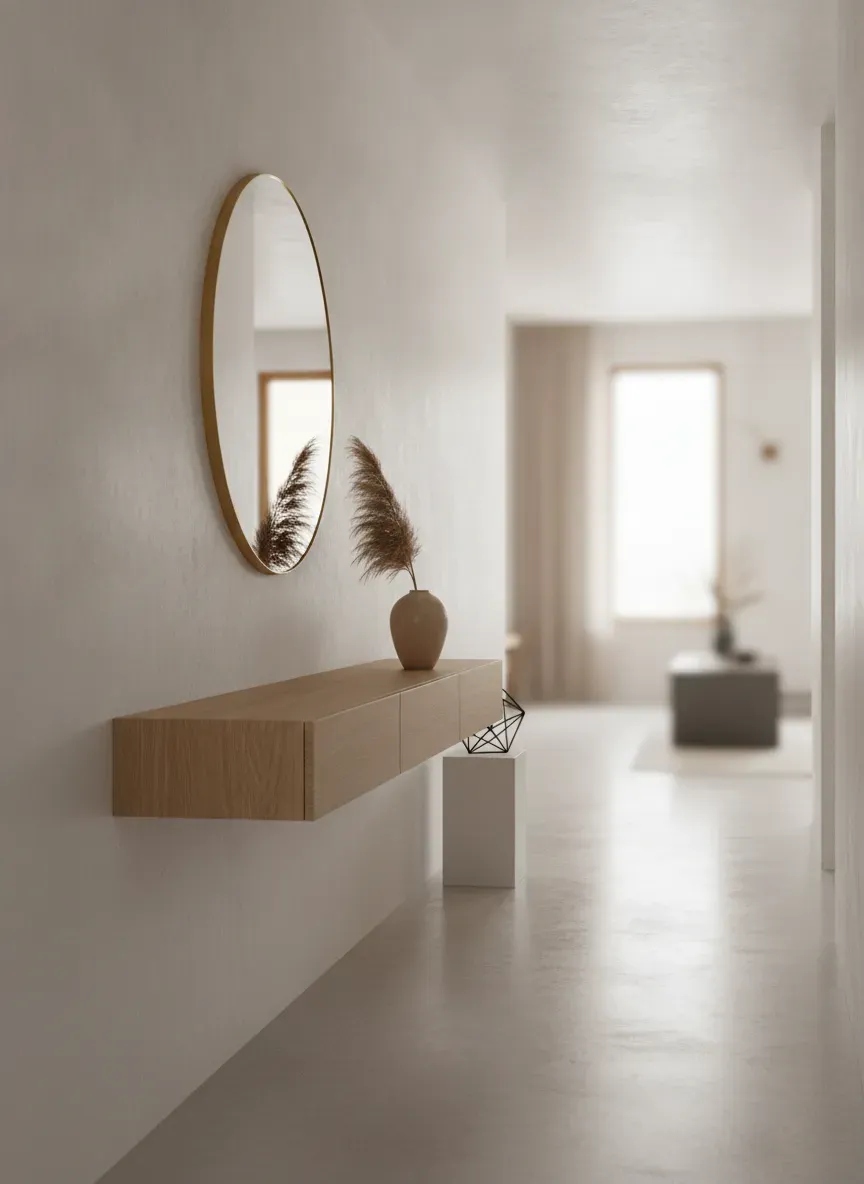
A clean and minimally styled narrow hallway with a floating console table and a round mirror

To counteract this, your hallway storage must be designed around the concept of “functional zoning.” Every item you carry across the threshold requires a designated, low-friction landing pad. If it is difficult to put an item away, you will simply drop it on the nearest flat surface.

Therefore, smart hallway design is not merely about hiding your belongings; it is about creating intuitive, ergonomic systems that align with your natural movements.


Assessing Your Architectural Constraints

Before purchasing any furniture, you must analyze the exact physical limits of your hallway. Standard residential corridors typically measure between 36 and 48 inches in width. In historical properties or urban apartments, this width can shrink to a mere 30 inches.

Every single inch matters when designing for these tight tolerances.

The Clearance Equation

To maintain safe, comfortable movement, a hallway requires a minimum clear walkway of 32 inches, though 36 inches is highly preferred. If your hallway is 36 inches wide and you purchase a beautiful, classic console table that is 14 inches deep, your remaining walking clearance is reduced to 22 inches. This forces occupants to shuffle sideways down the hall—an design failure that ruins the flow of the home.

If you are planning to build or buy built-in cabinets, referencing a comprehensive mudroom locker depth guide is essential to prevent your cabinets from choking the walkway.

Furthermore, you must account for the swing radiuses of adjacent doors, the location of baseboard heating units, electrical outlets, and light switches. Blocking any of these utilities with furniture compromises both the safety and functionality of the space.


Smart Furniture Archetypes for Narrow Spaces

When floor space is limited, design vertically. Here are the three main furniture designs that work beautifully in narrow entryways:

1. The Floating Console

Floating furniture is an excellent tool for visual expansion. By mounting a slim console table directly to the wall studs, you keep the floor underneath completely clear. This uninterrupted floor line tricks the eye into perceiving the hallway as wider than it actually is.

Additionally, it leaves a convenient opening underneath where you can park low-profile shoe baskets or pet bowls.

2. Vertical Hall Trees (The All-In-One Solution)

If you do not have the luxury of a dedicated mudroom, a compact hall tree is the ultimate compromise. It consolidates seating, hanging storage, and footwear organization into a singular, highly efficient unit.

The VASAGLE Industrial Hall Tree is a brilliant realization of this design philosophy.

With a depth of only 12.6 inches, it occupies a minimal footprint while delivering maximum utility. It features nine robust hooks arranged across two tiers, a integrated bench that supports up to 220 pounds, and two wire mesh shelves for shoe organization.

+------------------------------------------+
|          9 Robust Hanging Hooks          |  <-- High-density hanging
+------------------------------------------+
|          Sturdy Entryway Bench           |  <-- Seating & transitional surface
+------------------------------------------+
|       Dual-Tier Metal Wire Shelving      |  <-- Under-bench shoe storage
+------------------------------------------+

The matte black iron frame paired with rustic engineered wood surfaces strikes a perfect balance between industrial strength and warm, residential aesthetics. It is a fantastic option for families who need a heavy-duty drop zone without sacrificing valuable square footage.

3. Wall-Mounted Organizers

For corridors that are too narrow to accommodate any floor-based furniture, the walls must do all the heavy lifting. Overhead cubbies and floating wall shelves keep your floor completely clear while providing storage for hats, gloves, dog leashes, and mail.

A prime example of this vertical approach is the Prepac Wall Mounted Entryway Organizer.

Measuring 48 inches wide, this clever unit mounts securely to the wall, suspended entirely above the floor. It features three roomy cubbies that are perfect for baskets, alongside four large and three small hanging hooks.

The hanging system is particularly clever: it utilizes a two-piece hanging rail system that distributes weight evenly across your wall studs, preventing drywall sagging. It is an exceptional choice for anyone looking to clear up floor clutter while keeping everyday essentials organized right at eye level.


Ergonomics & Spatial Spacing Rules

Designing a functional hallway is a game of millimeters. One of the most common layout mistakes is placing functional elements too close together, which leads to physical bottlenecking during the morning rush.

When setting up your coat rack or individual wall pegs, understanding how far apart to space entryway hooks will keep your coats from overlapping into a bulky, chaotic mess. Generally, keeping hooks spaced 5 to 7 inches apart is the ideal sweet spot for heavy winter outerwear.

Similarly, mapping out the ideal spacing guidelines for hallway furniture ensures that cabinet doors and drawers can open fully without striking adjacent walls or molding.

Always measure the depth of your furniture with all drawers, cabinets, or shoe compartments fully open to ensure you still have enough room to step around them comfortably.

Pro Tip: Before buying any furniture, map out its footprint on your hallway floor using blue painter’s tape. Leave the tape in place for 48 hours. Walk through the space, carry groceries, navigate the turn at the front door, and observe whether the taped-off boundaries feel restrictive to your daily routines.


The Shoe Problem: Engineered Footwear Storage

Shoes are the absolute bane of hallway design. Left on the floor, they quickly pile up into an unsightly trip hazard. However, storing them in closed, standard cabinets is often impractical due to depth restrictions—most men’s shoes require at least 13 to 14 inches of flat shelf depth to sit straight.

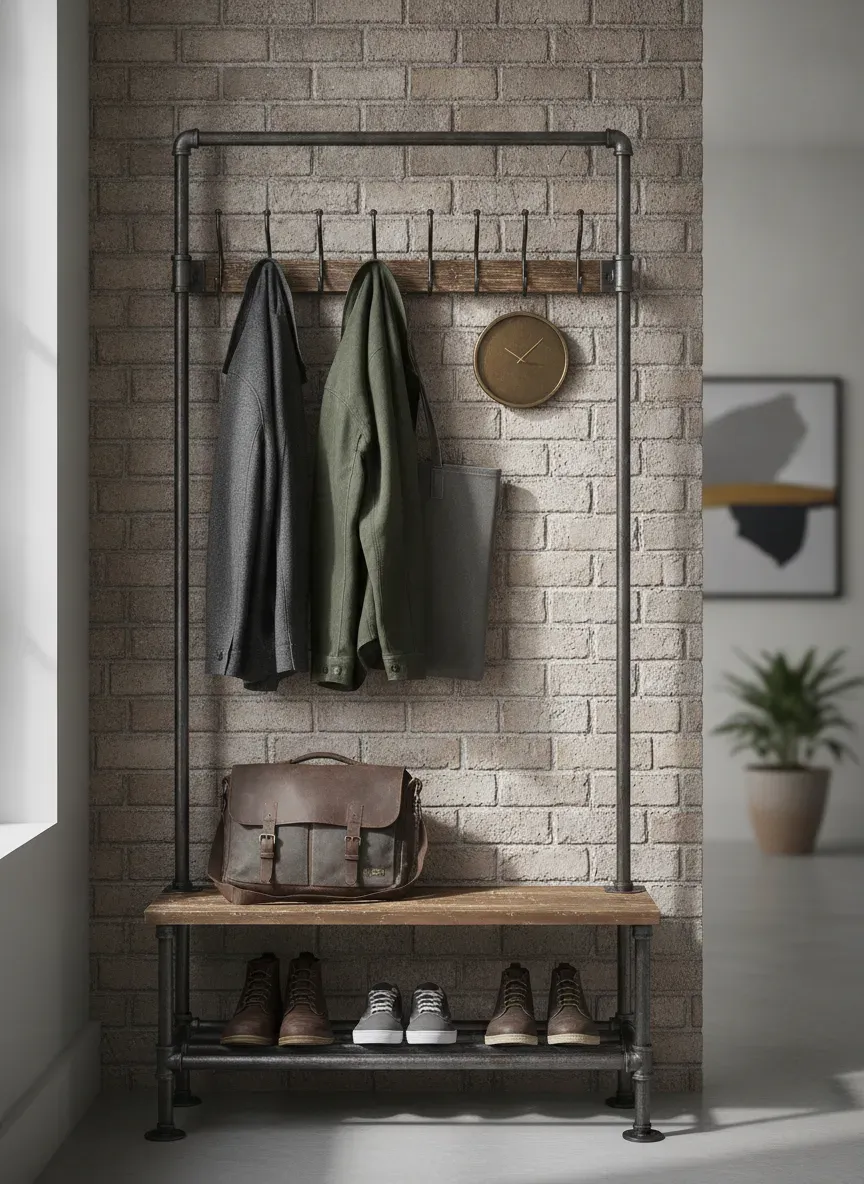
An industrial hall tree holding coats, bags, and shoes in a compact foyer

To circumvent this, look for specialized shoe storage benches with open, angled, or tiered shelving. Open shelving allows air to circulate around wet or damp shoes, preventing stagnant odors from building up in the entryway.

The VASAGLE 3-Tier Shoe Bench offers an exceptionally elegant, low-profile solution to this problem.

This bench features a beautiful faux leather padded seat on top, supported by a heavy-duty steel frame that holds up to 198 pounds. Below the comfortable seat sit two mesh shelves that can accommodate up to 6 to 8 pairs of shoes.

Because the shelves are made of flat, close-set steel mesh, even high heels and small children’s shoes sit flat without falling through or tipping over.

Its sleek, low profile makes it easy to tuck beneath hanging coats or a wall-mounted mirror, providing a comfortable place to sit and tie your shoes while keeping your daily footwear neat and off the floor.


Materiality, Lighting, and Visual Illusions

In small, narrow spaces, your choice of materials and lighting is just as important as the physical furniture layout. If you select bulky, dark wood furniture for a dim hallway, the space will immediately feel cramped and cave-like.

1. Light Reflectance Value (LRV)

When choosing furniture finishes or wall paint, pay attention to the Light Reflectance Value (LRV). LRV is measured on a scale from 0% (absolute black, absorbing all light) to 100% (pure white, reflecting all light).

To make a narrow hallway feel larger, aim for wall colors with an LRV of 70% or higher, and choose furniture with reflective surfaces, light wood veneers, or open metal frames that allow light to pass through.

Light Reflectance Value (LRV) Scale
[0%] ------------------------ [50%] ------------------------ [100%]
Absorbs All Light                                            Reflects All Light
(Dark, heavy feel)           (Mid-tones)                     (Open, airy feel)
*Aim for 70%+ LRV on hallway walls and light-toned furniture surfaces*

2. The Power of Mirroring

A large mirror is a non-negotiable addition to any hallway. Placed strategically above a console table or directly opposite a doorway, a mirror bounces light deep into the space and creates the illusion of double the depth.

For the best results, use a circular or organic-shaped mirror to break up the long, rigid horizontal lines of the corridor.

3. Layered Illumination

Do not rely on a single, harsh overhead light fixture. It casts deep shadows that make walls feel like they are closing in.

Instead, use a layered lighting scheme:

  • Ambient Light: A flush-mount or semi-flush ceiling fixture with a frosted diffuser to spread soft, general light.
  • Task Light: A small, warm lamp on a console table to create an inviting glow at eye level.
  • Accent Light: Directional spotlights or wall sconces aimed at artwork or architectural details to draw the eye down the length of the hall, creating a sense of journey and destination.

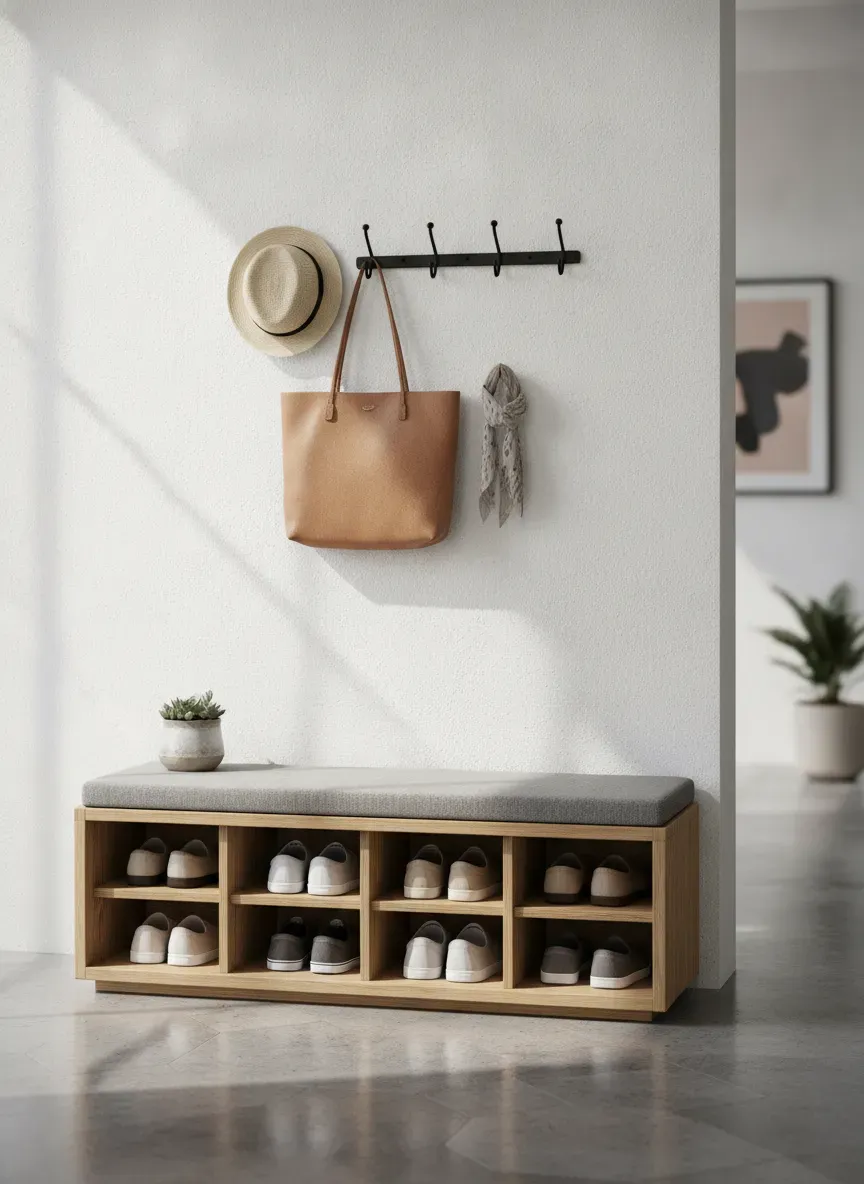
A low-profile shoe storage bench sitting neatly under hanging wall hooks in a modern entryway


Step-by-Step Implementation Strategy for Your Hallway Audit

Transforming your entryway is not just about buying new furniture; it is about building a functional routine. Here is how to execute a successful hallway makeover:

Step 1: The Daily Essential Audit

Empty your current hallway completely. Group the items into three distinct piles:

  1. Daily Essentials: Keys, wallet, work ID, immediate-use coats, current-season shoes, dog leash.
  2. Seasonal/Occasional: Winter parkas in summer, rain boots, umbrellas, sports gear.
  3. Out of Place: Junk mail, tools, shoes that belong in bedrooms, items destined for donation.

The Daily Essentials are the only items allowed to live in your primary hallway storage. Move everything else to closets, garages, or the recycling bin.

Step 2: Establish the “Drop Zone”

Set up a clear system for small items right at the entrance. Use a decorative bowl or tray on your console table for keys and loose change.

If space is tight, mount a small letter organizer next to the door. This ensures letters are sorted immediately, preventing the dreaded “paper pile-up” on your flat surfaces.

Step 3: Install High-Density Vertical Storage

Mount your wall shelves, floating organizers, or hall tree. Secure all wall-mounted pieces directly into studs, or use high-quality toggle bolts.

Entryway furniture takes a lot of daily wear and tear—cheap drywall anchors will eventually pull loose under the weight of heavy coats and bags.

Step 4: Define Footwear Boundaries

Place a durable, low-profile shoe bench or cabinet near the door. Set a strict “shoes-off” policy at the door.

To keep things tidy, limit the footwear kept on the bench to two pairs per family member. Store out-of-season shoes in bedroom closets or under-bed bins.

Step 5: Incorporate Soft Elements

Add a durable, low-profile runner rug. This helps define the hallway zone, absorbs sound, and protects your flooring from mud and grit.

Look for outdoor-rated or machine-washable rugs in busy geometric patterns, which are highly forgiving when it comes to showing dirt.


Common Pitfalls to Avoid

  • Ignoring the Baseboards: When measuring your hallway width, always measure from baseboard to baseboard, not wall to wall. Baseboard trim can shave up to an inch off your usable floor space, causing flush-mount furniture to sit at an angle.
  • Over-estimating Seating Needs: While a bench is incredibly useful for putting on shoes, you do not need a massive seat. A compact, two-person bench is more than enough. If space is tight, opt for a small, round ottoman that can easily tuck away under a console table when not in use.
  • Ignoring Natural Flow: Never place storage units directly behind the entry door swing. This prevents the door from opening fully, which restricts your entry path and makes bringing in large packages or groceries incredibly frustrating.
  • Forgetting Cable Management: If you place a table lamp or charging station on your console table, messy, exposed cords will instantly ruin the clean look of the space. Use adhesive cord clips or a sleek cable management box to keep wires neatly tucked out of sight behind the furniture legs.

Key Takeaways

  • Prioritize Vertical Real Estate: When floor space is limited, look to the walls. Floating consoles, high shelving, and wall-mounted peg rails keep your walkways open and easy to clean.
  • Enforce Strict Depth Limits: Never compromise your walking path. Keep your hallway furniture depth under 14 inches—ideally closer to 12 inches—to maintain comfortable clearance.
  • Layer Your Storage Types: A highly functional hallway combines open storage (for quick grab-and-go access) with closed storage (to hide visual clutter).
  • Maximize Light and Reflection: Use mirrors, high-LRV paint colors, and warm, layered lighting to make narrow corridors feel open, bright, and welcoming.

The Bottom Line: An organized hallway leads to an organized mind. By choosing slim, dual-purpose furniture like hall trees, floating organizers, and low-profile shoe benches, you can easily turn a chaotic, cramped entryway into a beautiful, stress-free space that welcomes you home every single day.

Top Picks: Best Entryway Essentials

Editor's shortlist with verified ratings. Prices and availability below — clicking an Amazon link earns us a small commission at no extra cost to you.

# Product Rating Reviews Tag Check Price
1 Vasagle Industrial Entryway Bench 4.5 8,420 Top Pick View on Amazon
2 Crosley Furniture Seaside Hall Tree 4.5 5,410 View on Amazon
3 Seville Classics 12-Pair Shoe Rack 4.5 6,420 Best Storage View on Amazon
4 Franklin Brass Wall Hooks (5-Pack) 4.5 9,820 View on Amazon
5 Simplihome Artisan Solid Wood Bench 4.5 3,127 Editor's Pick View on Amazon

Affiliate disclosure: As an Amazon Associate we earn from qualifying purchases. Tag: entreyway-20 — change in src/data/topPicks.ts.

Enjoyed this guide? Share it!

Share: