
Sophisticated Matte: Why Flat Finish Cubbies are the New Design Trend
Discover why ultra-matte, flat finish cubbies are dominating entryway design. Learn the psychology, maintenance, and styling secrets behind this sophisticated architectural trend.
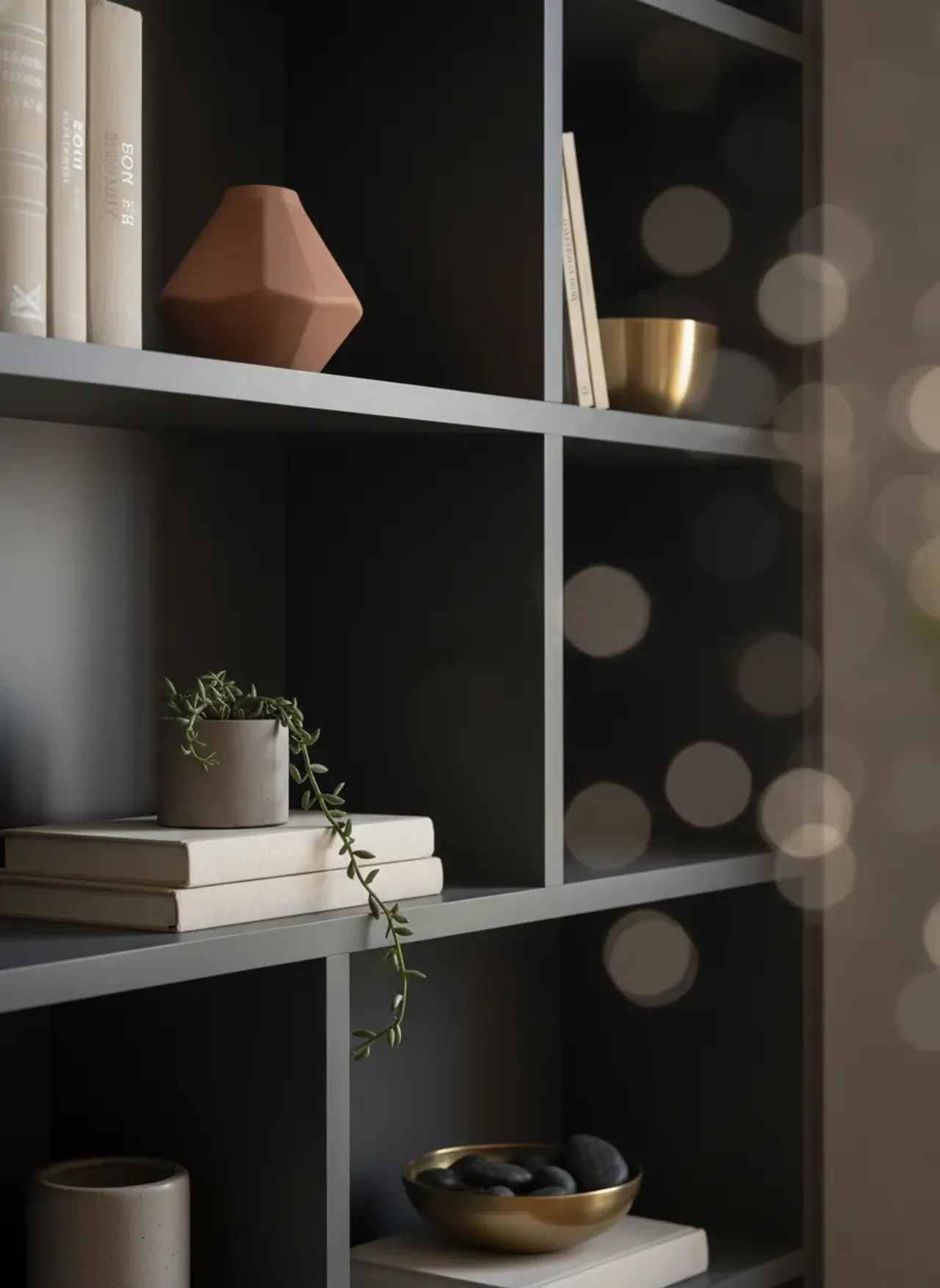
Apr 2, 2026 - Written by: Linda Wise

For decades, the interior design industry equated a high-gloss sheen with premium quality. We were taught that if a surface didn’t reflect light like a freshly polished sports car, it simply wasn’t finished. I’ve spent years watching homeowners obsess over lacquer, pouring clear coats over entryway furniture until the wood grain practically vanished behind a plastic-like barrier.
Then, the architectural tides turned.
Walk into any high-end custom home today, and you’ll notice a distinct absence of glare. The entryway—traditionally a chaotic dumping ground for boots, bags, and coats—has been transformed into a space of quiet luxury. The secret weapon driving this aesthetic revolution isn’t a new wood species or a radical structural redesign. It’s the finish. Specifically, the sophisticated, light-absorbing elegance of the flat matte.
Flat finish cubbies are completely rewriting the rules of mudroom and foyer design. By eliminating spectral reflectance, these zero-sheen surfaces create a grounding, monolithic presence that instantly elevates the perceived value of the cabinetry. They demand attention precisely because they refuse to shine.
Before we dissect the chemistry, psychology, and architectural application of this trend, let’s look at a few standout pieces that are currently getting this aesthetic right on the commercial market.
Quick Comparison: Top Picks
| Product | Rating | Check Price |
|---|---|---|
| Prepac Wide Hall Tree | ⭐⭐⭐⭐⭐ | View on Amazon |
| Bush Furniture Salinas Entryway Storage | ⭐⭐⭐⭐½ | View on Amazon |
| Crosley Furniture Seaside Hall Tree | ⭐⭐⭐⭐ | View on Amazon |
The Psychology of Matte: Why Zero-Sheen Resonates
Human beings are highly responsive to tactile and visual stimuli in their environment. A high-gloss surface triggers a subconscious warning: it is slippery, it is cold, and it is fragile. Fingerprints and smudges become glaring errors on a glossy canvas, creating a low-level, ambient anxiety about keeping the space pristine.
Conversely, a true flat finish absorbs ambient light. It diffuses harsh overhead bulbs and softens the harsh glare of direct afternoon sun pouring through a sidelight window. This optical diffusion translates to a psychological sense of calm. When you walk through your front door and drop your keys onto a flat-finished, charcoal-toned cubby bench, the furniture doesn’t visually scream back at you. It anchors the space.
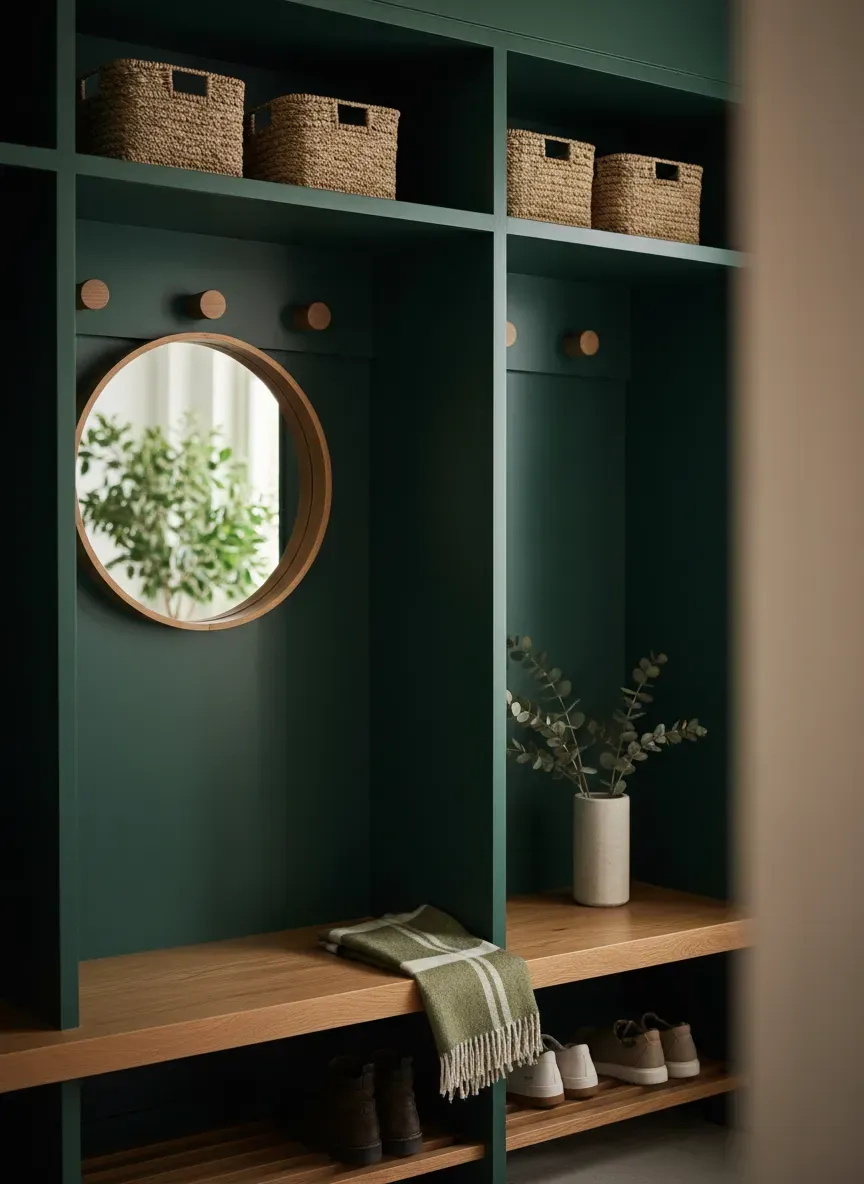
I’ve personally found that clients who switch from semi-gloss to dead-flat finishes in their utility spaces report that the rooms feel inherently cleaner, even when they aren’t. Because flat paint doesn’t bounce light, it doesn’t highlight the microscopic imperfections in the wood grain or the inevitable dents that come from heavy boots. It forgives.
Pro Tip: When specifying a true matte finish, look for products with a sheen level of 5% or less. Many mass-market paints labeled “matte” actually hover around 10-15% (technically an eggshell or satin), which will still cast a subtle, unwanted glow.
This visual quietness allows the architectural forms to take center stage. When you aren’t distracted by reflections, the actual geometry of the cabinetry becomes the focal point. This is particularly crucial when understanding the ideal spacing between units, as precise spatial gaps read much more cleanly when the edges aren’t catching erratic highlights.
Analyzing the Aesthetic Shift in Entryway Storage
To understand why sophisticated matte is dominating the current design landscape, we must trace the lineage of entryway furniture. In the early 2000s, the “McMansion” era dictated that everything be coated in heavy, amber-tinted polyurethane. It was a misguided attempt to signal wealth through shininess. Following the 2008 financial crisis, the pendulum swung violently in the opposite direction. The “modern farmhouse” trend brought us heavily distressed, chalk-painted furniture that was intentionally chipped to look rustic.
We are now in a post-rustic era. Modern homeowners want the warmth and approachability of a low-sheen finish, but without the contrived distress marks of chalk paint. We crave clean lines, flawless execution, and a velvety texture.
The sophisticated flat finish sits perfectly at this intersection. It feels organic and earthy because it lacks a synthetic plastic sheen, yet it remains impeccably modern due to its uniform, flawless surface. It is the architectural equivalent of a perfectly tailored, matte wool suit.
The Rise of “Soft Touch” Surfaces
We are also seeing the introduction of advanced nanotechnology in flat finishes. Materials like Fenix NTM (Nano Tech Matte) are being utilized in high-end cubby constructions. These surfaces are not just visually flat; they possess an incredibly soft, almost suede-like tactile feedback. They invite you to run your hand across them.
When you incorporate these advanced, low-reflectivity materials into a functional space, it completely redefines the user experience. You’ll notice that the daily ritual of hanging up your coat or sitting on the bench to tie your shoes feels distinctly more luxurious when interacting with a texture that absorbs sound and light alike.
The Chemistry of Flat: Materials and Execution
Achieving a flawless flat finish is paradoxically much harder than achieving a high gloss. With gloss, the liquid finish flows out and levels itself into a microscopic sheet of glass. Any dust nibs can simply be buffed out later.
Flat finishes, however, rely on microscopic particles—usually silica or synthetic waxes—suspended in the clear coat or paint. These “flattening agents” protrude microscopically from the surface once the finish dries, scattering light rays in a million different directions rather than bouncing them back directly to your eye.
Overcoming the “Chalky” Dilemma
Historically, adding too much flattening paste to a clear topcoat would turn the finish cloudy or milky, obscuring the beautiful wood grain underneath. This was a nightmare for custom woodworkers. Today, chemical engineering has solved this. Modern two-part catalyzed polyurethanes and conversion varnishes use advanced, ultra-fine flattening agents that remain crystal clear even at a 0% sheen level.
If you are looking at a piece like the Prepac Wide Hall Tree, you are seeing the result of factory-applied, thermally fused laminates that mimic this dead-flat look perfectly while maintaining high structural integrity. These modern composites give you the visual depth of a custom spray job at a fraction of the weight and cost.
Key Takeaways on Matte Material Science:
- Flattening Agents: Silica-based additives scatter light to kill reflection.
- Clarity: Modern finishes maintain depth without turning milky or cloudy.
- Curing: Catalyzed flat finishes are significantly harder than traditional flat wall paints.
- Laminates: High-pressure laminates now offer incredibly realistic, zero-sheen woodgrain textures.
Color Theory for Matte Surfaces
Here is the real kicker regarding flat finishes: they completely alter how we perceive color.
When you strip away the reflective glare, colors become infinitely denser and more saturated. A navy blue in high-gloss looks energetic and slightly nautical. That exact same pigment in a 2% dead-flat finish becomes a brooding, stormy, incredibly sophisticated midnight tone.
The Dominance of Moody Neutrals
Because flat finishes absorb light, they excel in deep, moody palettes. We are seeing a massive surge in entryway cubbies painted in rich forest greens, charcoal blacks, muted terracottas, and deep plum tones. These colors in a glossy finish would look cheap and plastic-like. In a matte finish, they look like rich velvet.
Dark matte cubbies also serve a highly functional purpose: they hide shadows. In an entryway, coats and bags cast erratic shadows inside the cubby bays. By painting the interior a dark, flat color, those shadows are absorbed, making the unit look much tidier than it actually is. This visual trickery is especially useful when determining the optimal mudroom locker depth, as deeper lockers inherently trap more shadows. A flat dark finish turns that dark recess into an intentional design feature rather than a gloomy cavern.
The “Greige” and Plaster Phenomenon
For those who prefer lighter entryways, the sophisticated matte trend has popularized “greige” (grey-beige) and faux-plaster finishes. Roman clay and limewash techniques are being adapted for cabinetry, providing a flat, mottled texture that brings immense warmth to a space without relying on shine. A flat white cubby can sometimes feel like primed drywall, but a flat bone or putty tone feels intentional, historical, and incredibly chic.
Practical Applications: Hardware and Lighting Pairings
A flat finish is only as successful as the elements surrounding it. Because the cabinetry itself is visually quiet, it requires strategic juxtaposition to truly pop. This is where hardware and lighting become the heroes of the mudroom.
The Art of High-Contrast Hardware
If you have a bank of dead-flat, dark green cubbies, putting flat black hardware on them will result in a monolithic, hyper-modern look. It’s stealthy and cool, but it can sometimes feel heavy.
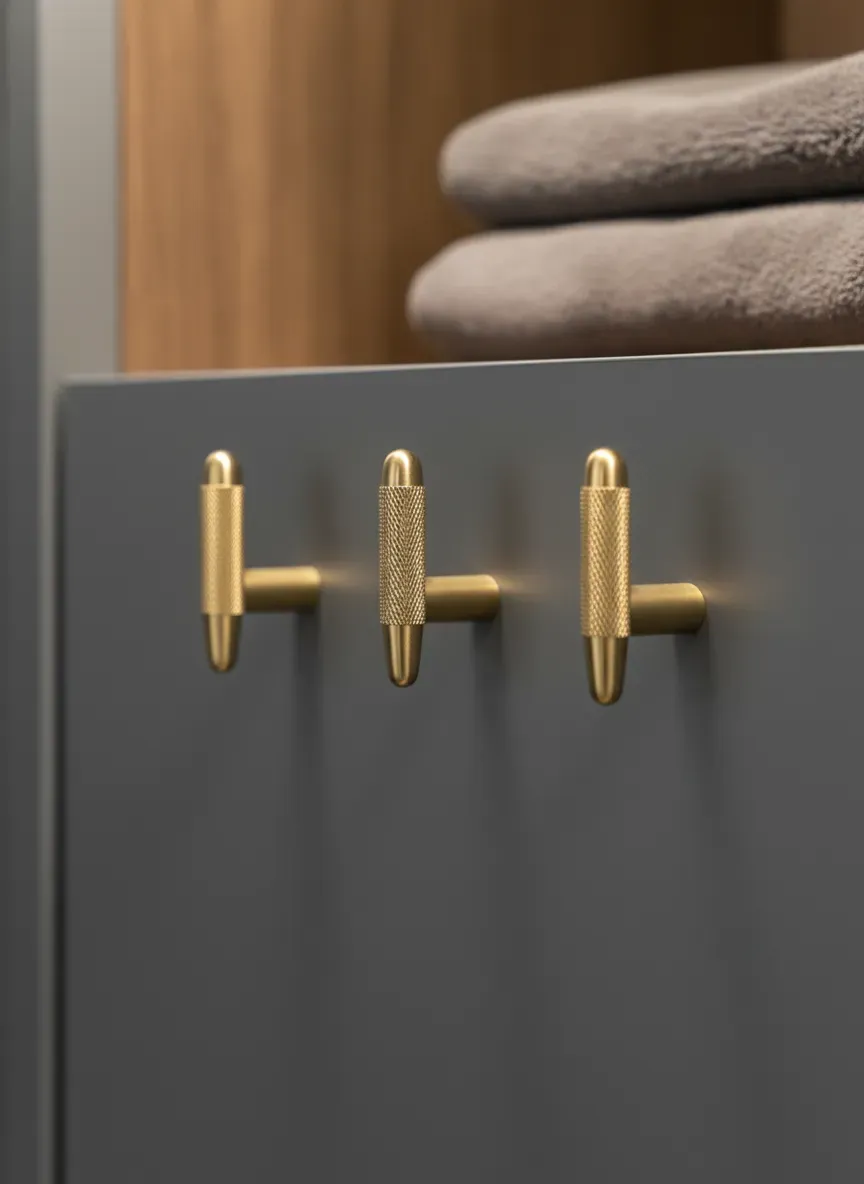
To achieve the “sophisticated” element of this trend, you need metallic contrast. Unlacquered brass, brushed nickel, or heavily knurled champagne bronze hardware creates a stunning visual dialogue with matte paint. The sharp, metallic gleam of a heavy brass coat hook sitting against a velvety flat surface provides a high-end tension that elevates the entire room. It signals that every detail was agonizingly considered.
When sourcing pre-built options, pay attention to the hardware. Units like the Bush Furniture Salinas Entryway Storage often come with hardware that matches the piece’s specific aesthetic, but swapping out factory knobs for heavy, polished brass on a matte surface is an instant, inexpensive upgrade.
Lighting the Zero-Sheen Space
Lighting a matte space requires a completely different approach than lighting a glossy one. You don’t have to worry about harsh glare bouncing off cabinet doors into someone’s eyes, which gives you much more freedom.
Pro Tip: Wall sconces are the ultimate companion to matte cubbies. By grazing the light down the flat surface of the cabinetry, you highlight the soft texture of the finish without blowing out the color.
Opt for light temperatures in the 2700K to 3000K range (warm white). Cooler light (4000K+) tends to make flat finishes look sterile and chalky. Warm light interacts beautifully with the light-absorbing qualities of the matte surface, creating an inviting, enveloping atmosphere right at your front door. It also helps visually separate the individual bays when navigating the 12 to 24 inches sweet spot for cubby sizing, creating soft, intentional shadows between compartments.
The Reality Check: Maintenance and Longevity
There is a pervasive myth in the DIY community that flat finishes are impossible to keep clean. This fear stems from people using standard flat wall paint on high-traffic furniture. Standard flat wall paint has virtually no protective resins; it acts like a sponge, soaking up hand oils and dirt immediately.
Sophisticated matte finishes on modern cabinetry, however, are an entirely different chemical beast. They are sealed with high-performance, dead-flat clear coats (like polyurethane or hard-wax oils) that provide an impervious barrier to moisture and grease.
The Danger of Burnishing
The true enemy of the flat finish is not dirt; it is friction.
If you get a scuff mark on a matte bench and scrub it aggressively with a rough sponge, you will literally polish the microscopic silica flattening agents smooth. This creates a shiny, irreversible bald spot on your furniture known as “burnishing.” Once a flat finish is burnished, you cannot make it flat again without sanding and recoating the entire surface.
How to Properly Maintain Matte Cubbies:
- Ditch the Magic Erasers: Melamine sponges act like micro-sandpaper. They will ruin a flat finish instantly.
- Use Surfactants, Not Abrasives: A simple mixture of warm water and a few drops of mild dish soap is all you need. Let the soap break down the grease; don’t rely on elbow grease.
- Microfiber Only: Always wipe down matte surfaces with a clean, high-quality microfiber cloth to avoid microscopic scratching.
- Blot, Don’t Rub: If there is a spill, blot it up immediately. Aggressive circular rubbing is the fastest way to burnish the topcoat.
For families with heavily active lifestyles, seeking out commercial-grade matte laminates might be the safest route. Pieces modeled similarly to the Crosley Furniture Seaside Hall Tree utilize tough outer layers designed to withstand daily abuse without losing their uniform sheen level.
Elevating the Space: Curating the Surroundings
A sophisticated matte cubby system shouldn’t exist in a vacuum. To fully realize the potential of this design trend, the surrounding elements of the mudroom must play along. You are building a textural landscape.
Integrating Natural Textiles
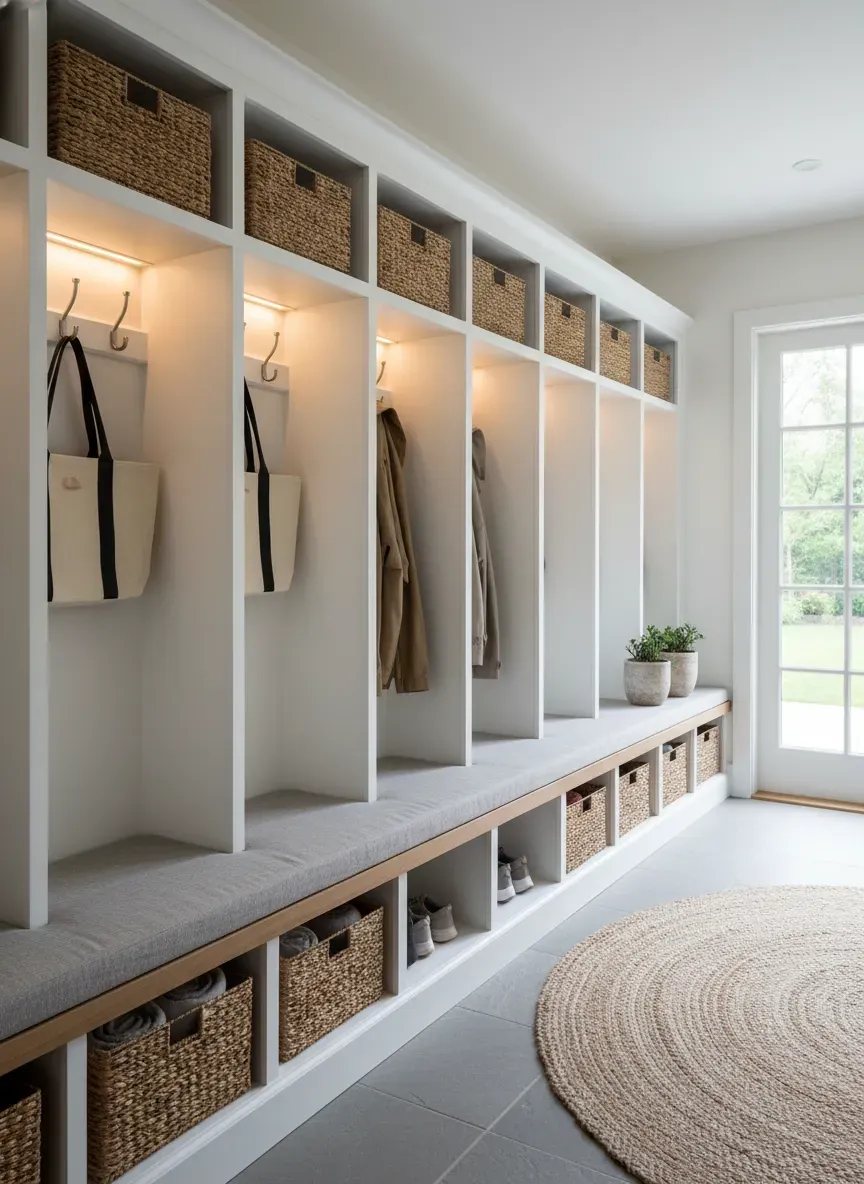
Because the flat finish lacks visual noise, you have a blank canvas to introduce heavy, organic textures. Pair your matte cubbies with chunky woven seagrass baskets, heavy linen bench cushions, or a vintage, hand-knotted wool runner on the floor.
The contrast between the flawlessly smooth, zero-sheen cabinetry and the rough, organic irregularities of natural fibers is the hallmark of professional interior design. It prevents the room from feeling like a sterile laboratory.
Natural Wood Accents
One of the most breathtaking combinations in modern carpentry is pairing a heavily pigmented, flat-painted carcass with natural, raw wood accents. Imagine a bank of flat charcoal cubbies featuring a bench seat made of solid white oak, finished in a 0% sheen hard-wax oil. The flat paint absorbs the light, while the natural wood grain provides organic movement and warmth.
This juxtaposition proves that you don’t need shiny lacquer to make wood look expensive. In fact, leaving the wood looking and feeling as close to its raw state as possible—protected only by invisible matte sealers—is the ultimate luxury. It shows a deep respect for the material.
The Bottom Line
The transition toward sophisticated, flat-finish cabinetry is not a fleeting micro-trend. It represents a fundamental maturation in how we approach residential design. We are moving away from surfaces that shout for attention and moving toward materials that exude quiet confidence. By choosing a zero-sheen finish for your entryway cubbies, you are prioritizing architectural form, deepening your color palette, and creating a space that feels inherently grounding the moment you step through the front door.
Building a truly custom, flawlessly executed flat-finish cubby system requires precise planning, the right joinery, and expert guidance. If you’re ready to stop settling for flimsy, pre-fabricated particleboard and want to build a breathtaking, architectural-grade mudroom yourself, you need the right blueprints.
I’ve personally relied on Ted’s Woodworking for years. It is an absolute goldmine. With over 16,000 step-by-step plans—including stunning, highly customizable entryway locker and cubby designs—it completely removes the guesswork from custom carpentry. Whether you want to experiment with dead-flat lacquers on a sleek modern build or apply a matte hard-wax oil to a rustic oak bench, these plans give you the exact cut lists and schematics you need to pull it off like a master craftsman. Right now, you can grab the entire archive at a massive 75% discount. It’s the ultimate secret weapon for turning that empty foyer wall into a zero-sheen masterpiece.