
Space-Saving Small Mudroom Benches: Top Picks for Apartments and Tiny Homes
Discover expertly curated space-saving mudroom benches designed specifically for apartments and tiny homes. Maximize your entryway without sacrificing style.
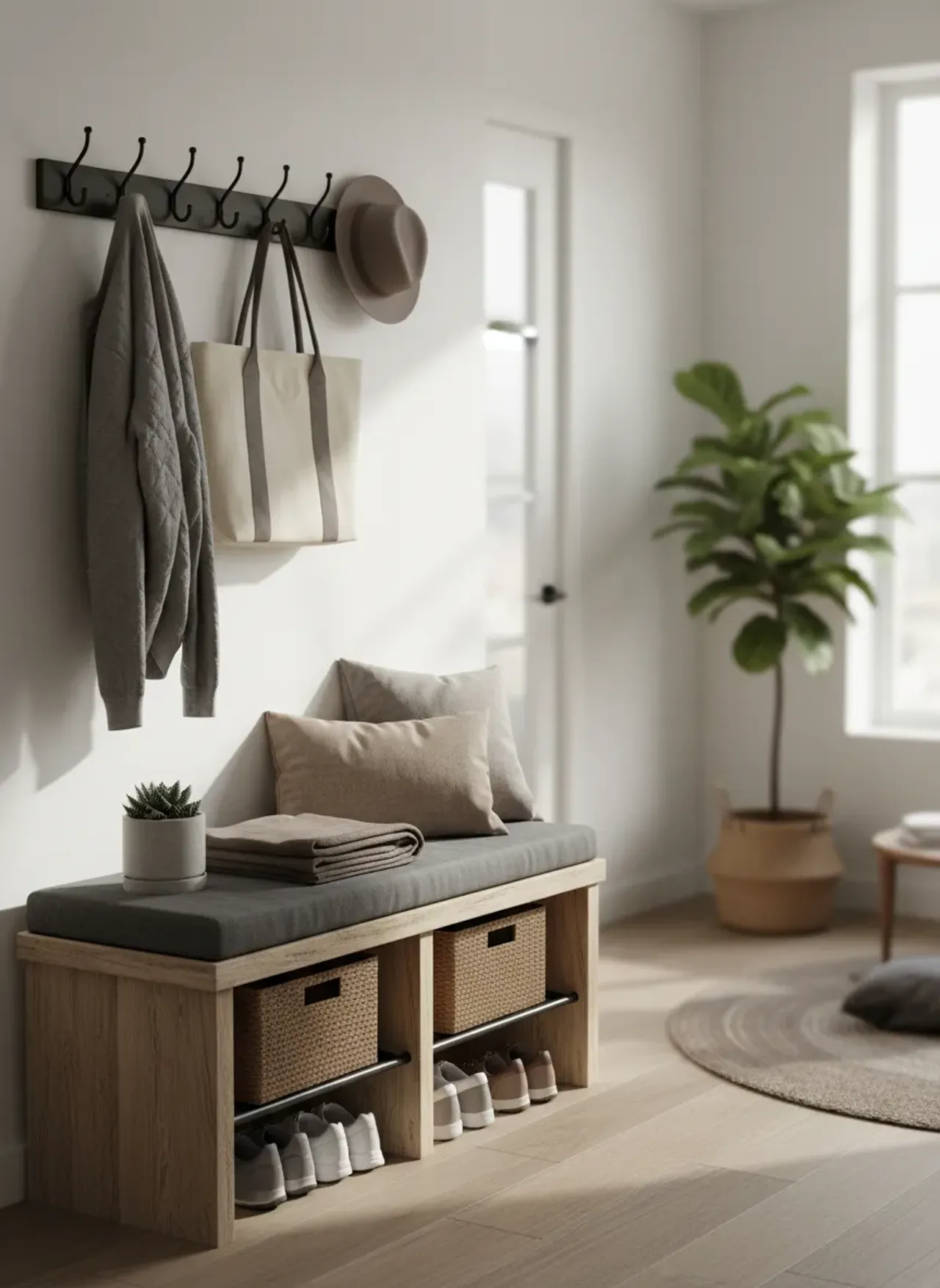
Mar 14, 2026 - Written by: Linda Wise
Stepping through the front door of a compact apartment or a meticulously designed tiny home often feels like an immediate collision with reality. You are instantly confronted by a chaotic pile of sneakers, a stray umbrella, and nowhere to sit while wrestling off winter boots. I’ve personally found that the entryway is the psychological airlock of your home. It sets the exact tone for the space within. If your drop zone is a disaster, your cortisol spikes before you even take off your coat.
But outfitting a micro-entryway requires surgical precision. You cannot simply drop a massive farmhouse hall tree into a 500-square-foot studio and expect the room to breathe. You need a space-saving small mudroom bench that acts as a multi-tool: offering seating, concealing clutter, and grounding the room’s aesthetic—all while maintaining a rigorously slim architectural footprint.
Below, I am breaking down the absolute best mudroom benches engineered for severe spatial constraints, alongside advanced strategies for integrating them seamlessly into your home.
Quick Comparison: Top Picks
| Product | Rating | Check Price |
|---|---|---|
| Vasagle Industrial Shoe Bench | ⭐⭐⭐⭐⭐ | View on Amazon |
| Prepac Space-Saving Cubby Bench | ⭐⭐⭐⭐½ | View on Amazon |
| Crosley Furniture Seaside Hall Tree | ⭐⭐⭐⭐ | View on Amazon |
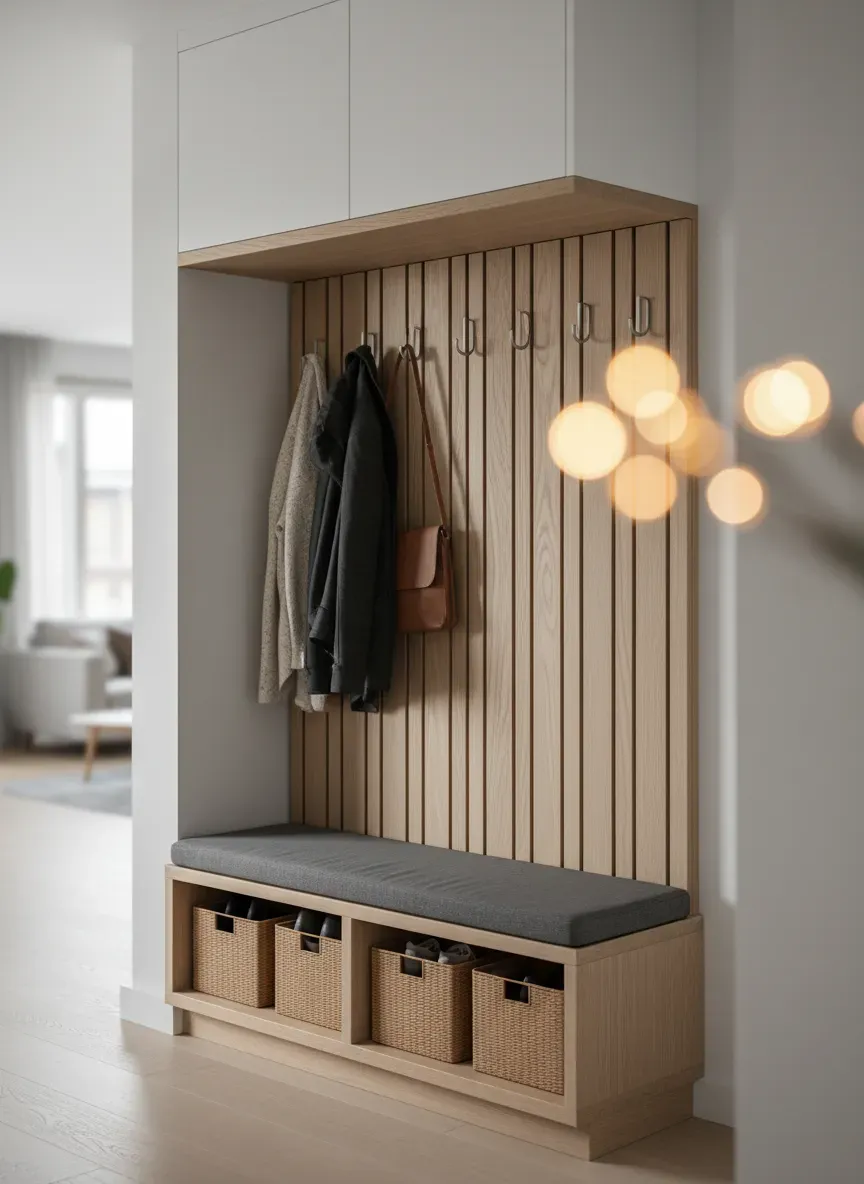
The Anatomy of a High-Performance Small Mudroom Bench
When you are dealing with a tiny home or a narrow apartment corridor, every single inch of flooring is premium real estate. You cannot afford dead space. Designing a functional drop zone requires a deep understanding of spatial economics.
Spatial Economics: Depth, Width, and Visual Weight
The most critical dimension in any tight entryway is depth. Standard benches hover around the 18-inch mark. In a hallway that is only 36 inches wide, an 18-inch bench devours half your walking clearance, creating an infuriating bottleneck.
For high-traffic micro-zones, you should target a bench depth of 11 to 14 inches. This slim profile provides just enough surface area for a quick seat without encroaching on your kinetic flow. If you are integrating this bench with vertical cabinetry or adjacent storage, determining exactly how deep your storage units should be becomes a vital preliminary step. Aligning the bench depth flush with surrounding lockers creates an uninterrupted, streamlined visual plane.
Visual weight also plays a massive role in how large a piece of furniture feels. A solid block of dark mahogany stretching to the floor will visually shrink a room. Conversely, a bench elevated on hairpin legs allows light to pass underneath, tricking the eye into perceiving more square footage than actually exists.
Material Selection for Micro-Zones
Small entryways take a disproportionate amount of physical abuse. Every piece of grit, road salt, and moisture from the outside world makes its initial impact right where you sit.
- Powder-Coated Steel: Exceptional for structural integrity in incredibly slim profiles. Steel frames allow for the thinnest possible support structures.
- Engineered Wood (MDF) with Melamine Veneers: While solid wood is beautiful, high-quality melamine resists water pooling from wet boots far better than a standard wood stain.
- Bamboo: A highly sustainable, ultra-dense grass that naturally resists moisture and warping, making it ideal for minimalist setups.
Pro Tip: If your tiny home entryway opens directly into your living room, choose a bench material that echoes your existing coffee table or media console. This visual continuity blurs the line between the “mudroom” and the “living space,” making the entire apartment feel significantly larger.
Top Picks: Curated Space-Saving Mudroom Benches
Finding the perfect balance between diminutive proportions and maximum utility is a tall order. After evaluating dozens of models for structural rigidity, storage capacity, and aesthetic versatility, here are the standout performers.
1. The Minimalist Workhorse: Vasagle Industrial Shoe Bench
When you are outfitting a Brooklyn loft or an industrial-chic tiny home, the Vasagle Industrial Shoe Bench consistently outperforms its price point.
Why it works for small spaces: This unit masters the art of negative space. The frame is constructed from rigid iron piping, supporting a rustic, engineered wood top. Beneath the seat, two tiers of steel mesh shelving offer ample ventilation for damp footwear.
Because the shelving is mesh rather than solid wood, the piece feels incredibly airy. It doesn’t trap dirt, meaning dust and dried mud simply fall to the floor where they can be quickly vacuumed up, rather than festering in dark cubby corners.
Dimensional advantages: Clocking in at roughly 11.8 inches deep, this bench is a masterclass in slim-profile design. It hugs the wall tightly. You’ll notice that despite the narrow seat, the 28-inch width easily accommodates up to six pairs of adult shoes.
Potential Drawbacks: The industrial aesthetic is highly specific. If your apartment leans heavily toward mid-century modern or coastal grandmother, the stark black metal will clash aggressively.
2. The Concealed Storage Master: Prepac Space-Saving Cubby Bench
For those who find visual clutter deeply distressing, open shelving is a nightmare. If you prefer your chaotic pile of running shoes hidden from sight, the Prepac Space-Saving Cubby Bench is an exceptional architectural solution.
Why it works for small spaces: Prepac designed this unit with apartments explicitly in mind. It features an array of internal cubbies sized specifically for standard footwear. The brilliance here lies in the compartmentalization. When every shoe has a dedicated geometric slot, you completely eliminate the “shoe mountain” effect that plagues small entryways.
Dimensional advantages: This unit utilizes a slightly deeper profile—around 15.5 inches—but compensates by offering hyper-dense storage. The grid layout maximizes the Y-axis (vertical space) directly beneath the seat, allowing you to store up to 18 pairs of shoes depending on the model size you select.
Potential Drawbacks: Cubby dimensions are rigid. If you own heavily insulated winter boots or tall rain wellies, they simply will not fit into the standard square slots. You will need an alternative strategy for high-top footwear, which requires strategic planning during the winter months.
3. The Vertical All-in-One: Crosley Furniture Seaside Hall Tree
In a truly constrained tiny home, horizontal floor space is a luxury you do not possess. When you cannot build out, you absolutely must build up. The Crosley Furniture Seaside Hall Tree merges a seating bench, shoe storage, and a coat rack into one cohesive vertical monolith.
Why it works for small spaces: This piece acts as a self-contained mudroom. It bypasses the need to mount separate wall hooks or floating shelves, making it a godsend for renters who cannot drill heavily into their apartment walls. The beadboard backing provides a subtle, coastal texture that elevates the piece from basic utilitarian furniture to a deliberate design statement.
Dimensional advantages: The footprint is remarkably tight, but the unit leverages the full height of your wall. The bench seat opens on hinges to reveal a deep, hidden storage trunk—perfect for stashing bulky scarves, dog leashes, or even out-of-season gear.
Potential Drawbacks: Because it relies on a tall, narrow frame, top-heaviness is a genuine concern, especially in homes with active pets or toddlers. You MUST utilize the included anti-tip hardware to secure this piece directly to a wall stud.
Designing Around Your Bench: Vertical and Horizontal Strategies
Purchasing the bench is merely the first phase of the operation. A bench sitting in isolation is just a seat. To forge a true “mudroom” out of thin air, you have to engineer the space surrounding it.
Maximizing the Y-Axis: Floating Shelves and Hooks
The wall space directly above your small bench is the most valuable real estate in your entryway. By installing a row of heavy-duty coat hooks and a floating shelf, you instantly multiply the functionality of your drop zone.
Here’s the real kicker: spacing matters immensely. If you cram too many hooks together, bulky winter coats will overlap, pushing each other off the wall and creating a frustrating, tangled mess. Conversely, spacing them too far apart wastes your limited wall span. When figuring out the optimal hook spacing, aim for a minimum of 8 to 10 inches between the center points of each hook. This provides adequate breathing room for thick parkas and wide-brimmed hats without visually overcrowding the area.
Above the hooks, install a floating shelf. This serves as a tertiary storage plane. Use it for items you need to grab on your way out but don’t want cluttering the bench: sunglasses, outgoing mail, or small decorative woven baskets holding keys and wallets.
The Geometry of Rug Integration
Do not let your bench float awkwardly on bare flooring. Ground the space with an entryway runner or a highly durable accent rug. A rug serves two vital purposes in a tiny space:
- Zoning: It visually demarcates the “mudroom” area from the rest of the hallway or living room, creating a psychological boundary.
- Floor Protection: It acts as a primary defense line, catching abrasive dirt and moisture before it tracks into your main living area.
Ensure the rug extends slightly beyond the width of the bench. If the bench is 30 inches wide, a 36-inch or 48-inch runner creates a balanced, aesthetically pleasing frame.
Common Pitfalls in Micro-Entryway Design
Even with the perfect furniture, it is remarkably easy to sabotage a small space. Avoid these critical errors.
The “Overstuffing” Illusion
There is a psychological trap in small space design: because you have limited storage, you try to utilize every available cubic millimeter. This inevitably leads to the “overstuffing” illusion.
If your open-shelf bench holds exactly six pairs of shoes, do not wedge eight pairs onto it. The moment footwear starts spilling over the edges or piling on top of one another, the entire entryway feels chaotic and significantly smaller.
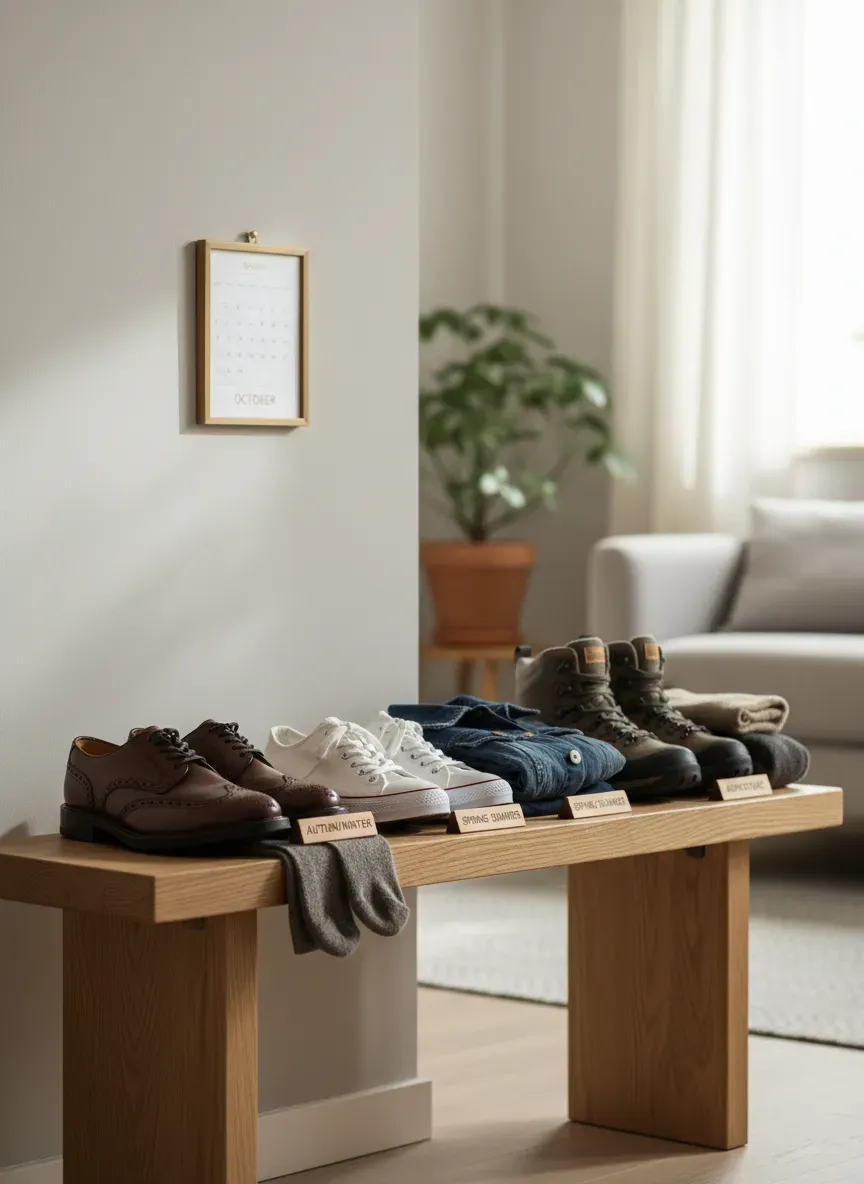
The Solution: Implement a strict “one in, one out” seasonal rotation policy. Keep only the shoes you wear this week on the bench. Everything else goes into under-bed storage or a primary closet.
Ignoring Boot Clearance
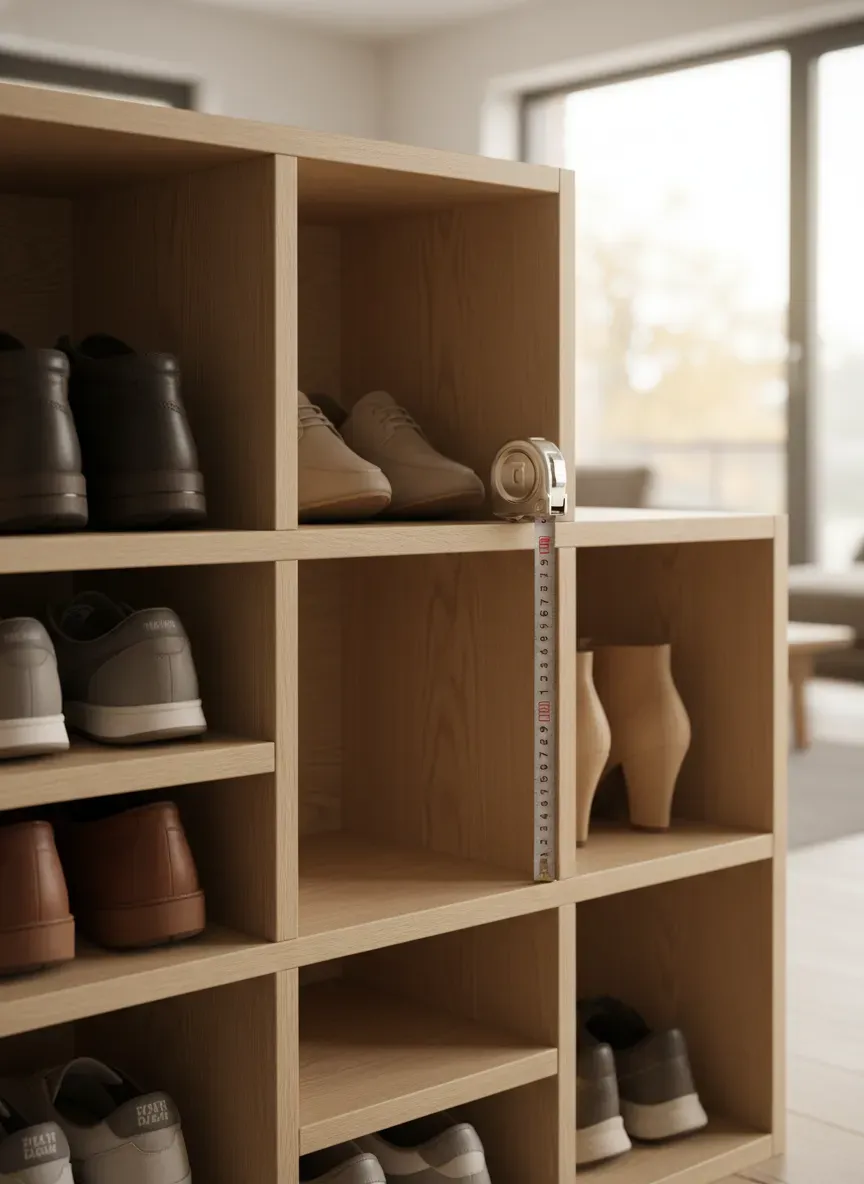
I’ve seen countless apartment dwellers purchase a sleek, low-profile bench, only to realize in November that their calf-high snow boots physically cannot fit underneath the bottom shelf.
Before purchasing, measure the height of your tallest frequently worn shoes. If you live in a climate with harsh winters, you need a bench that offers at least one section with 14 to 18 inches of vertical clearance beneath the seat. Alternatively, select a bench with an open side or an asymmetrical shelving design that accommodates taller items.
Disregarding Baseboards and Wall Trim
Tiny home and apartment walls are rarely perfectly flat. Baseboards, quarter-round trim, and heating radiators protrude. If you buy a bench assuming it will sit perfectly flush against the drywall, a thick baseboard might push it an inch out into your hallway.
Always subtract the depth of your baseboards from your total available hallway width when calculating how much clearance you will have left for walking.
Customizing Off-the-Shelf Benches for Tiny Homes
Sometimes, a mass-market piece of furniture is almost perfect, but it lacks the specific character or nuanced functionality your unique space demands. You can easily elevate a budget-friendly bench with a few tactical modifications.
Hardware Swaps
If you opt for a piece with cabinet doors or drawers, the factory-installed hardware is usually generic and uninspiring. Swapping out standard plastic knobs for brushed brass pulls, matte black knurled handles, or even vintage leather loops completely changes the visual narrative of the piece. It makes a $100 bench look like a bespoke, custom-built installation.
Upholstery and Cushion Upgrades
A hard wooden or metal seat is utilitarian, but it isn’t welcoming. Adding a custom-cut high-density foam cushion wrapped in performance fabric softens the harsh lines of a narrow bench.
For high-traffic apartments, choose a fabric designed for heavy wear:
- Crypton or Sunbrella: These outdoor-rated fabrics resist moisture and stains miraculously well.
- Faux Leather: Incredibly easy to wipe down when wet umbrellas or dirty bags are casually tossed onto the seat.
- Heavy Canvas: Offers a rugged, textured look that hides minor scuffs and can often be unzipped and thrown in the washing machine.
Integrating Hidden Lighting
Small apartments often suffer from poor lighting in transitional spaces like hallways. By applying a motion-sensor LED light strip to the underside of your bench’s top tier, you create an ambient, highly functional nightlight.
When you walk through the front door late at night, the floor softly illuminates, allowing you to easily kick off your shoes without fumbling for a harsh overhead light switch. It is a minor, inexpensive tweak that radically enhances the luxury feel of your entryway.
Key Takeaways
- Measure Aggressively: In tiny homes and apartments, a bench depth of 11 to 14 inches is the sweet spot for maintaining walkway clearance.
- Material Matters: Prioritize moisture-resistant materials like powder-coated steel, melamine-veneered MDF, or bamboo over untreated softwoods.
- Build Up, Not Out: Leverage your vertical wall space with appropriately spaced hooks and floating shelves to keep the bench surface clear.
- Embrace Compartmentalization: Choose internal cubbies if you despise visual clutter, but ensure you account for the height of your winter boots.
- Rotate Seasonally: A small bench cannot hold a year’s worth of footwear. Keep only the current season’s essentials in the entryway to prevent visual claustrophobia.
The Bottom Line: You do not need a sprawling, dedicated mudroom to create a highly efficient, beautiful drop zone. By selecting a meticulously proportioned bench and treating the surrounding vertical space as an extension of your storage, you can transform the most cramped apartment hallway into a welcoming, organized architectural feature. It requires discipline, precise measurements, and a refusal to let clutter dictate your home’s narrative.