
Utilizing the Side Wall: Maximizing Entryway Storage in Long, Thin Apartment Layouts
Discover expert strategies for transforming narrow hallways into high-functioning storage zones without sacrificing style or flow.
Feb 3, 2026 - Written by: linda wise

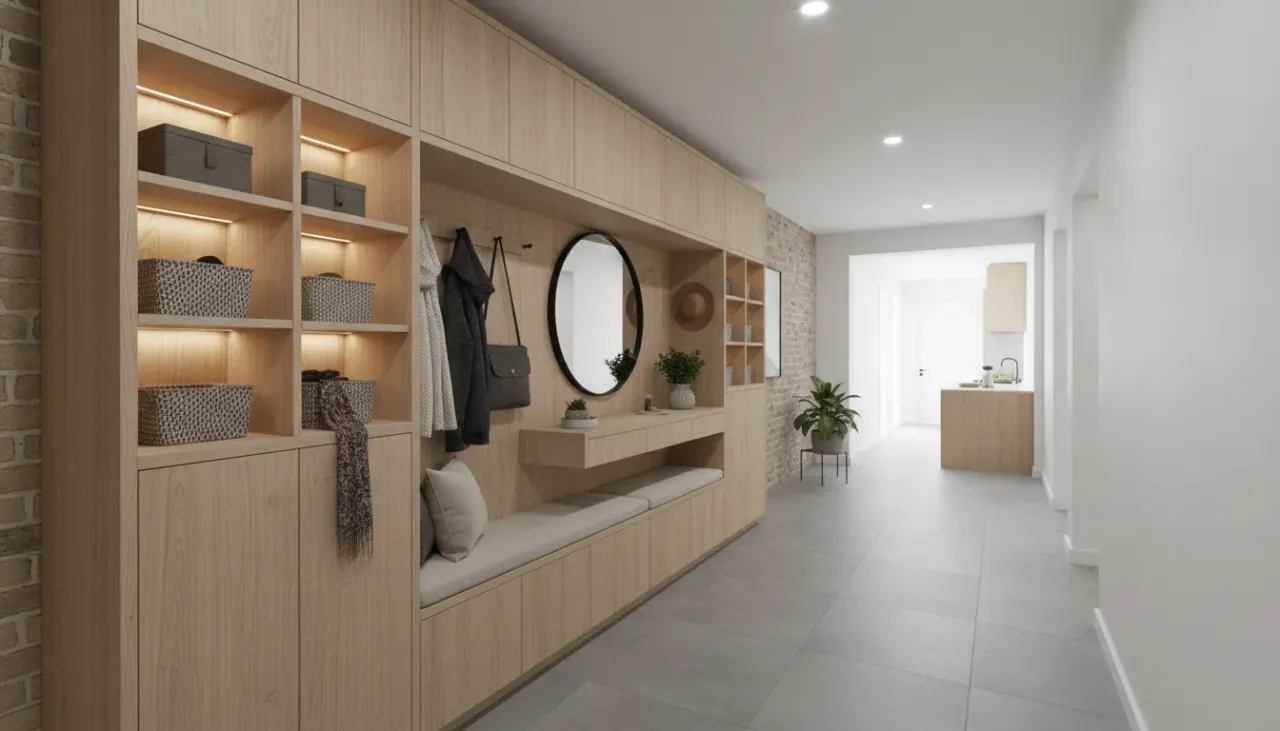
In urban architecture, particularly in converted lofts and modern apartment complexes, the entryway is frequently reduced to a mere corridor. These long, thin layouts—often referred to as “bowling alley” entryways—present a unique spatial paradox. You possess considerable wall length, yet the floor width is so restrictive that standard furniture renders the passage unnavigable.
For the design-conscious tenant or homeowner, this creates a significant friction point. The entryway is the home’s “handshake,” setting the tone for the rest of the interior, yet it is also the primary utility zone for outerwear, footwear, and daily carry items. When floor space is at a premium, the solution lies not on the ground, but on the vertical plane. Mastering the side wall is the key to unlocking the latent potential of a narrow apartment layout.
This comprehensive guide explores the ergonomic and aesthetic principles of utilizing side walls in narrow entryways, transforming a transient corridor into a fully functional room.
The Ergonomics of the Narrow Passage
Before purchasing hardware or furniture, it is imperative to understand the geometry of your space. In interior design, traffic flow is paramount. The standard recommendation for a comfortable walkway is 36 inches (approximately 91 cm). In tighter urban apartments, one can sometimes compromise down to 30 inches, but anything less begins to feel claustrophobic and increases the likelihood of bumping into fixtures.
If your hallway is 42 inches wide, you realistically have a depth allowance of 6 to 12 inches for storage solutions. This constraint eliminates standard console tables and traditional shoe racks, which typically range from 14 to 18 inches in depth. Therefore, the strategy must shift toward “ultra-slim” profiles and wall-mounted systems that lack a footprint altogether.
Visual Weight vs. Physical Footprint
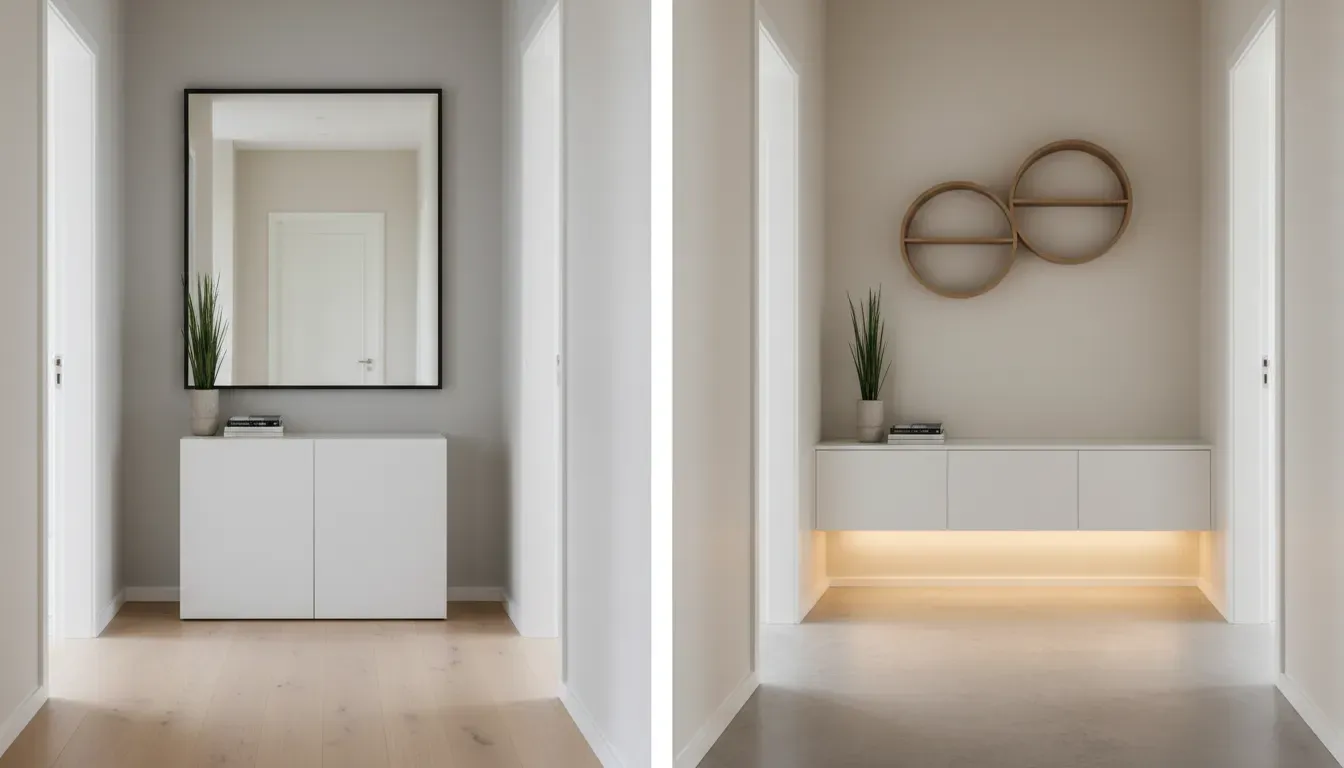
In narrow spaces, perception is as important as reality. A solid oak chest that is 10 inches deep will feel significantly heavier and more obstructive than a metal and glass floating shelf of the same dimensions. This is the concept of visual weight.
To maintain an airy, welcoming atmosphere in a long, thin layout, prioritize floating furniture. By keeping the floor visible beneath your storage units, you trick the eye into perceiving the floor area as continuous, which mentally expands the width of the hall.
The Foundation: Ultra-Slim Shoe Storage
The primary source of clutter in any entryway is footwear. In a narrow hall, a pile of shoes is a tripping hazard. Traditional horizontal racks are often too deep. The solution is the tip-out shoe cabinet.
Tip-out cabinets utilize vertical mechanics to store shoes at an angle. This engineering allows the cabinet depth to be drastically reduced—often to as little as 6 or 7 inches—while still accommodating men’s size 12 footwear. These units usually feature a flat top surface, doubling as a landing strip for keys and mail.
When selecting a unit, look for clean lines and hardware that does not protrude excessively, as catching a coat pocket on a drawer pull is a common annoyance in tight quarters. If you are unable to mount items directly to the wall due to rental restrictions, these slim cabinets are stable enough to stand on the floor while hugging the baseboard tightly.
For those seeking a high-utility solution that blends with modern decor, I recommend investigating specific slim-profile furniture.
Check out this Ultra Slim Tip-Out Shoe Cabinet on Amazon
The “Landing Strip” Concept
Every home requires a “landing strip”—a designated zone where you unburden yourself immediately upon entering. In a wide foyer, this is usually a console table. In a long, thin hallway, we must deconstruct the console table into its functional components: a surface for small items and vertical storage for hanging items.
Floating Shelves and Picture Ledges
Replacing a table with a floating shelf allows you to choose the exact depth you need. A simple lumber shelf cut to 6 inches deep is sufficient for a wallet, a phone, and a small decorative bowl for keys.
For even tighter spaces, consider using picture ledges. Typically only 3 to 4 inches deep, picture ledges are perfect for propping up mail, holding sunglasses, or displaying artwork to break up the utilitarian feel of the space. Installing two or three ledges at varying heights creates a dynamic visual rhythm that draws the eye upward, distracting from the narrowness of the floor.
The Vertical Rail System
Rather than using bulky coat trees which devour floor space, utilize the length of the hallway with a continuous peg rail or a shaker-style rail system. A rail running the entire length of the wall offers infinite flexibility.
- High Rails: Install a rail at 60-70 inches high for long coats, scarves, and adult outerwear.
- Low Rails: Install a secondary rail at 36-40 inches for bags, backpacks, and umbrellas. This is particularly useful for households with children, promoting autonomy in tidying up.
The beauty of the rail system is its low profile. Without coats, it protrudes only an inch or two. It adds architectural interest, mimicking wainscoting, which can elevate the perceived value of the apartment.
For a more integrated approach, read our guide on Permanent vs. Modular Entryway Systems to decide which installation method suits your tenure in the home.
Maximizing Height: Floor-to-Ceiling Strategy
In a long, thin apartment, you likely cannot build out, so you must build up. The space above the doorframe and the upper quartile of the wall are often “dead zones” in interior design, yet they offer prime real estate for long-term storage.
Over-the-Door Shelving
The wall space directly above the entry door is an ideal location for a deep shelf. Because it is above head height, it can be deeper (12-14 inches) without encroaching on the walkway. Use this space for:
- Seasonal rotation (winter boots in summer, beach gear in winter).
- Bulk supplies (paper goods, emergency kits).
- Luggage storage.
To keep this from looking cluttered, use uniform storage bins that match the wall color. This “camouflages” the storage, making it feel like part of the architecture rather than a pile of boxes.
Wall Grids and Pegboards
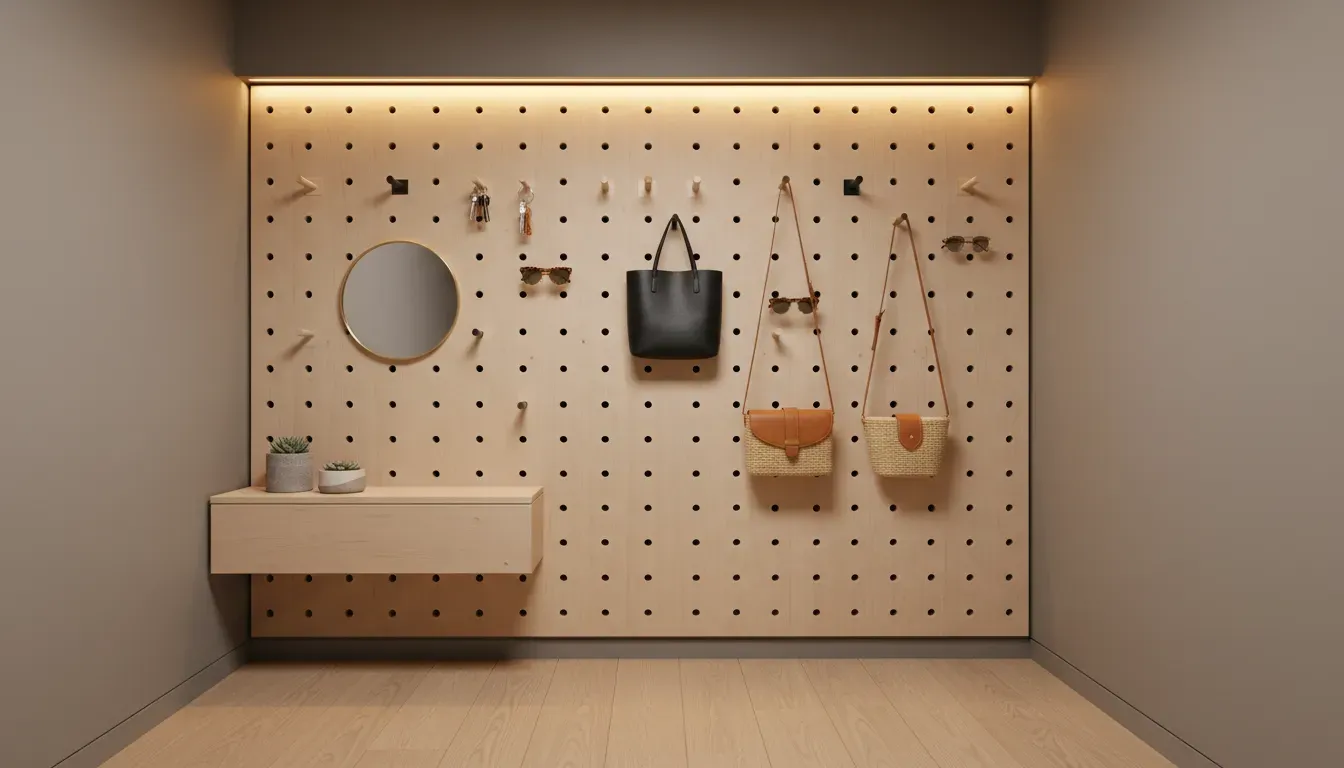
Borrowed from garage and retail design, pegboards have found a sophisticated home in modern residential interiors. A large pegboard panel mounted flush to the side wall offers arguably the highest customization-to-depth ratio of any storage solution.
With a total depth of less than one inch, a pegboard allows you to arrange hooks, small baskets, and shelves in a configuration that evolves with your needs. It is particularly effective for oddly shaped items like cycling gear, dog leashes, or oversized tote bags.
Reflective Surfaces and Lighting
While not strictly storage, mirrors are a functional necessity in an entryway that also serves a spatial purpose. A large mirror on the side wall of a narrow hall acts like a window, bouncing light and virtually doubling the width of the corridor.
The Mirror Cabinet
For the ultimate efficiency, combine the mirror with storage. A shallow, wall-mounted medicine cabinet or jewelry cabinet can be repurposed for the entryway. These units are typically only 4 inches deep but can conceal keys, sunglasses, lint rollers, and spare change behind a full-length mirrored door. This keeps the visual clutter completely hidden while providing a check-your-look station before leaving.
Lighting the Corridor
Darkness compresses space. Long, windowless hallways often suffer from the “tunnel effect.” Avoid relying solely on a single overhead fixture, which casts shadows and highlights the narrowness.
Instead, utilize wall sconces. Sconces draw the eye to the side walls, emphasizing the width. If hardwiring is not an option, modern rechargeable battery-operated sconces offer a tenant-friendly alternative. Place them intermittently along the storage wall to illuminate the “stations” (the shoe cabinet, the coat rack) you have created.
Textural Elements: Hooks and Hardware
The choice of hardware defines the style of your storage. In a narrow space, you want hardware that is robust but retractable or flush.
- Flip-Down Hooks: These are excellent for narrow, high-traffic zones. When not in use, the hooks flip up flush into their casing, removing any snagging hazard.
- Architectural Knobs: Instead of standard hooks, consider using large, round architectural knobs or “dots” screwed directly into the wall. Their rounded shape is gentler on clothes and safer for passersby than sharp metal hooks.
For a highly versatile solution that combines a shelf with retractable hooks, consider a hybrid wall organizer.
View this Wall Mounted Coat Rack with Shelf on Amazon
Integrating Decor with Utility
A purely utilitarian hallway can feel sterile. The goal is to weave functionality into a design narrative.
The Runner Rug
A runner rug is essential in a long hallway. It guides the eye, dampens the sound of footsteps (crucial in apartment living), and adds texture. Ensure the rug is secured with a high-quality pad to prevent slipping. Choose a pattern with horizontal stripes to visually widen the floor, or a vintage Persian style to hide dirt and wear.
Color Theory for Narrow Halls
Conventional wisdom suggests painting small spaces white to make them feel larger. However, in a long, thin hallway, white can sometimes feel institutional.
Consider a two-tone approach. Paint the bottom half of the wall (up to a chair rail or the height of your shoe cabinet) a darker, grounding color like charcoal, navy, or forest green. Paint the upper half and the ceiling a bright white. This anchors the storage furniture while keeping the upper atmosphere airy. Alternatively, painting the far end of the hallway a dark accent color can visually “shorten” the tunnel, correcting the proportions.
Organizational Systems for the “Drop Zone”
Even the best hardware fails without a system. The “Side Wall” approach requires discipline because horizontal surfaces are scarce.
- One-In, One-Out: A narrow hallway cannot serve as a closet. Only currently used coats should be on the hooks. Off-season items must move to the bedroom or deep storage.
- The Mail Flow: Without a large table to dump mail on, you need a vertical sorter. Install a wall pocket for incoming mail and a shredder or recycling bin nearby to process paper immediately.
- Key Discipline: Install a specific hook or magnetic strip for keys. In a narrow space, searching for lost keys is compounded by the lack of room to maneuver.
For more insights on maintaining order in small spaces, refer to our article on Minimalist Entryway Habits.
Choosing the Right Narrow Console
If you have slightly more width—perhaps a 45-inch hallway—you might be able to accommodate a console table. However, you must be rigorous about the dimensions. Look for “sofa tables” or “radiator covers” rather than standard foyer tables. These are designed to be long and skinny.
A metal frame with a wood top or a clear acrylic console works best. Acrylic (Lucite) furniture is nearly invisible, providing surface area without visual bulk.
Discover this Narrow Console Table on Amazon
Implementation: A Step-by-Step Plan
Transforming your hallway requires planning to avoid a cluttered result.
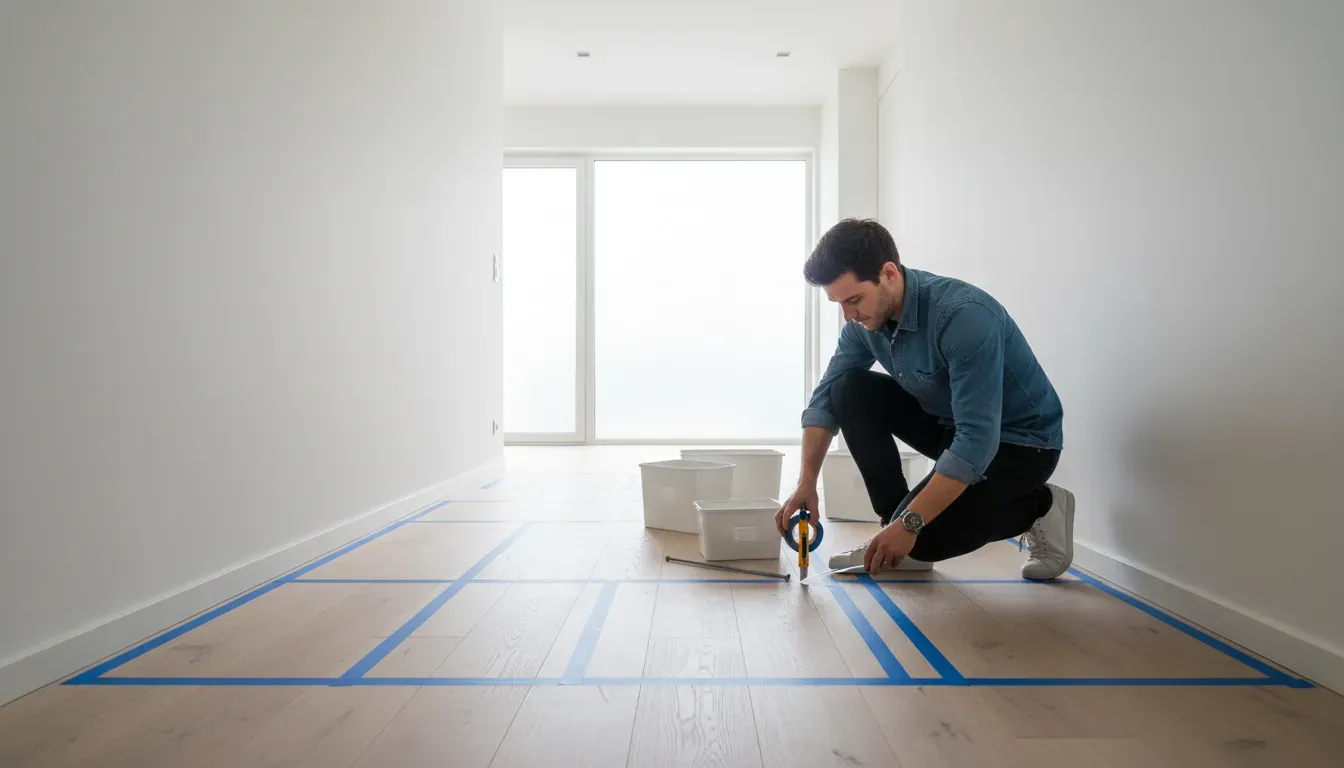
- Measure and Mark: Use blue painter’s tape to mark the outline of potential furniture on the floor and wall. Walk past it carrying a grocery bag. If you brush against the tape, the furniture is too deep.
- Locate Studs: Because you are relying on wall-mounted storage, anchoring into studs is non-negotiable. Heavy winter coats and bags can rip drywall anchors out over time. Use a magnetic stud finder to map your support beams.
- Zone the Wall: Divide the length of the wall into zones.
- Zone 1 (Closest to door): Keys, mail, dog leash.
- Zone 2 (Middle): Shoes and mirror.
- Zone 3 (Further in): Coats and bags.
- This prevents a bottleneck right at the front door.
Conclusion
The long, thin apartment layout is a challenge, but it is also an opportunity to exercise design ingenuity. By shifting your focus from the floor to the side wall, you reclaim the vertical volume of your home. The secret lies in depth management—utilizing ultra-slim cabinets, recessed hooks, and floating shelves to provide maximum utility with minimum encroachment.
A well-designed narrow entryway does more than store shoes; it guides you into your sanctuary. It transforms a pass-through into a destination, proving that square footage matters less than how you use it. With the right combination of vertical mechanics and aesthetic restraint, your “bowling alley” can become one of the most efficient and stylish features of your home.