
Wood Vs. Metal: Which Material for Your Hall Tree?
Wood vs metal: which material wins for your hall tree? Compare solid wood hall tree vs MDF by weight, fasteners, and longevity, plus MDF vs metal on a budget.

Feb 5, 2026 · Linda Wise
15 min readWood or metal for your hall tree? The material question is really a weight question, a wobble question, and a ‘will I hate this in 5 years’ question — answered in order.
Nobody asks “wood or metal” because they love material science. They ask because they’ve seen a wooden hall tree wobble under coats and a metal one rust by the door, and they want to skip that lesson. The good news is the answer is stable and repeatable: choose by what the piece carries, where it lives, and who loads it. This page gives the decision; our companion guide on wood vs. metal as a full materials comparison gives the deep-dive on the same contest from the other side.
Straight to the point: solid wood is the default choice for a hall tree that will be loaded daily and kept for years — it holds its screw hinges indefinitely and can be sanded back to life — while metal wins when you need a slim, moisture-proof, drop-dead-sturdy frame and are willing to accept its finished-for-good surface.
Wood vs. Metal: Which Material Wins by Use (comparison table)
First, the whole contest in one table, scored per use:
| Use | Wood | Metal | Winner |
|---|---|---|---|
| Daily heavy coats | Excellent, repairable over decades | Excellent, near indestructible | Tie |
| Wet climates / mudrooms | Needs sealed finish, swells if abused | Rusts only if coating chips; stainless is immune | Metal |
| Slim profile & narrow halls | Adds visual warmth and bulk | Thin silhouette, high strength per inch | Metal |
| Hiding scratches over time | Scratches age into patina | Scratches carry dents and can’t be sanded | Wood |
| Installation on drywall | Lighter, flexible mounting, larger backplates | Heavy, fixed mount points, needs studs | Wood |
| Budget | Huge spread: cheap engineered to expensive solid | Generally affordable mid-tier | Tie |
| Refinishing & repair | Sand, stain, seal, forever | Coating damage is mostly permanent | Wood |
| 5-year ownership | Ages gracefully, patina | Looks factory-new, holds stiffness | Tie |
If you sort by your actual use — coats, boots, kids, seasons — the tie between wood and metal almost always breaks on one question: will wet things touch its bottom foot? Wet floor, rainy coats, snowy boots: metal with a powder-coat or stainless finish shrugs it off; wood demands sealed edges and prompt wipe-downs. That single answer resolves a surprising number of entryway arguments.
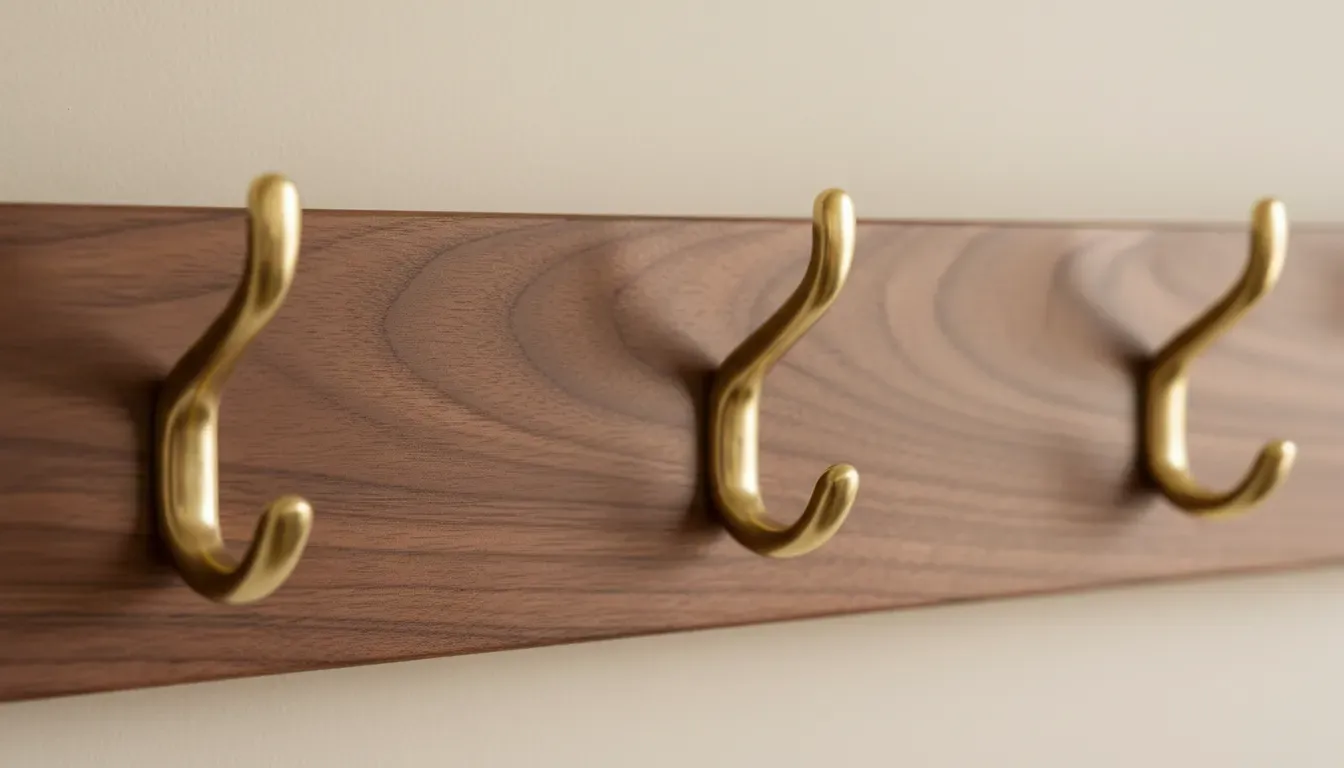
Solid Wood vs. MDF: Weight, Fasteners, Longevity
Here is the sneaky comparison nobody does at the store, and it matters more than any style debate:
Solid wood vs. MDF — the direct answer: solid wood is heavier for the same size, grips fasteners permanently, and lasts decades with refinishing; MDF is lighter on paper but denser per cubic foot, strips fasteners faster after a few reassemblies, and dies the moment it gets soaked. Weight for weight, MDF feels heavier and dead; fasteners in solid wood stay tight for years; longevity goes to solid wood unless the MDF is sealed perfectly and kept perfectly dry.
| Factor | Solid Wood (oak, birch, rubberwood, pine) | MDF (medium-density fiberboard) |
|---|---|---|
| Weight | Dense but light per structural strength | Heavy for its size; denser than poly-resin wood |
| Fasteners | Screws bite deep, re-tightenable for decades | Strips after 2–3 assemblies; needs threaded inserts to hold |
| Longevity | 20+ years with sanding and refinishing | 6–10 years sealed; swells and crumbles when wet |
| Wet exposure | Swells if unsealed; recoverable with sanding | Swells permanently; separates at edges past repair |
| Repair | Sand, stain, seal — looks new again | Fill and paint; the core damage is permanent |
| Initial cost | $450–1,200 hall trees | $180–350 hall trees |
The practical translation: for a hall tree by a front door, solid wood’s fastener retention is the stat that matters. Hall trees take repeated dynamic loads — a backpack yanked off a hook, a kid bouncing on a bench. Each yank strains the screw. Solid wood re-grips; MDF widens its hole a little more every year until the hook wobbles.
And MDF isn’t cheap wood failing to be wood; it’s a composite doing its one real job: staying flat and cheap. Flat, sealed, dry, and never re-assembled, MDF is a perfectly good material — it is only a bad wood. If you buy MDF, buy it once, assemble it once, keep it dry, and never, ever let a wet umbrella rest against the shelf edge.
MDF vs. Metal: The Budget Bench
At the budget end of the market, the real choice is not wood vs. metal — it is MDF vs. metal.
- The $100–180 MDF hall tree. Thick melamine-faced boards, warm wood-tone finishes, generous shelves. It looks substantial and photographs beautifully. Its weaknesses are edges (they swell where laminate meets fiberboard) and fasteners (cam-locks loosen over years of use).
- The $100–180 metal hall tree. Thin steel tube frames, powder-coated, open shelves. Indestructible under normal use and it breathes — wet boots air-dry instead of stewing on fiberboard. Its weaknesses are the opposite of MDF’s: any scratch that reaches bare steel will rust, and the aesthetic runs industrial, never “cozy.”
MDF wins when the piece must read as furniture in a warm room. Metal wins when the door sees wet snow, muddy paws, and children who treat the rack as a gym — and the powder-coat chip, when it happens, is touched up with appliance paint and forgotten. On a budget bench both are honest choices; they just belong to different households.
The Decision Tree (3 questions)
If you want the fastest path from “I can’t decide” to checkout:
Question 1 — How wet is your doorway? If boots, umbrellas, and dog paws touch this corner every wet season: metal (stainless or fully powder-coated). If the entry is dry under normal use and wet gear arrives already stripped of snow: continue to Question 2.
Question 2 — Will it ever be loaded, yanked, and pulled on by kids? Kids using hooks as monkey bars, backpacks swung off by the strap, benches bounced on: solid wood holds its fasteners and survives a decade of this; MDF will wobble before the kids leave elementary school. Metal also survives this, so if your style runs industrial, metal is still on the table here.
Question 3 — What should it look like in 8 years? Solid wood picks up dents and scratches that age into patina, and it can be sanded and refinished when you redecorate. Powder-coated metal stays as stiff as day one, but its surface wears its dents forever and its finish is what it is — no refreshing, no resurfacing, and any correction requires repainting the visible frame. Wood rewards patience; metal rewards consistency.
Answer those three questions in order and the material decision stops being a taste debate entirely.
Style Notes: Both Can Be Gorgeous
One point the table can’t capture: wood and metal are both fully capable of being beautiful, and neither is “the cheap material” in a well-made piece.
- Wood’s beauty is warmth, grain, and age. A solid oak hall tree darkens a half-shade over the years, develops a patina at the touch points, and gently announces the house’s history every time someone hangs a coat.
- Metal’s beauty is precision. A clean powder-coated frame in matte black or bronze has a confidence that wood can’t fake, and it pairs brilliantly with the wood you already own — metal frames with wood shelves are the fastest-growing style in entryway furniture for exactly that reason.
- Mixed materials are the honest answer for most homes: a wooden hall tree with metal hooks brings wood’s repairability and metal’s hook strength together, and a metal frame with wood shelves gives you both silhouettes in one piece.
Choose the material by wet, wobble, and wear — then trust the finish: a sealed hardwood or a fully powder-coated frame, both staying out of the “weekend ugly” zone. The full side-by-side breakdown of wood versus metal, with the same contest scored from the other direction, lives in our wood vs. metal materials comparison.
Conclusion
Wood or metal for the hall tree? The decision is a physical one before it is an aesthetic one. Wet corner: metal. Repairable-with-age: solid wood. Budget and tidy interiors: sealed MDF, or metal if the door is humid. Slim silhouettes in tight halls: metal. Warmth and family history: wood.
What is almost never the right answer is particleboard pretending to be wood or steel pretending to be warm — buy the material that matches the room’s weather and the household’s handling, and the “which material” question answers itself. For a wider look at the whole furniture family, our best hall trees roundup shows what each material looks like in practice.
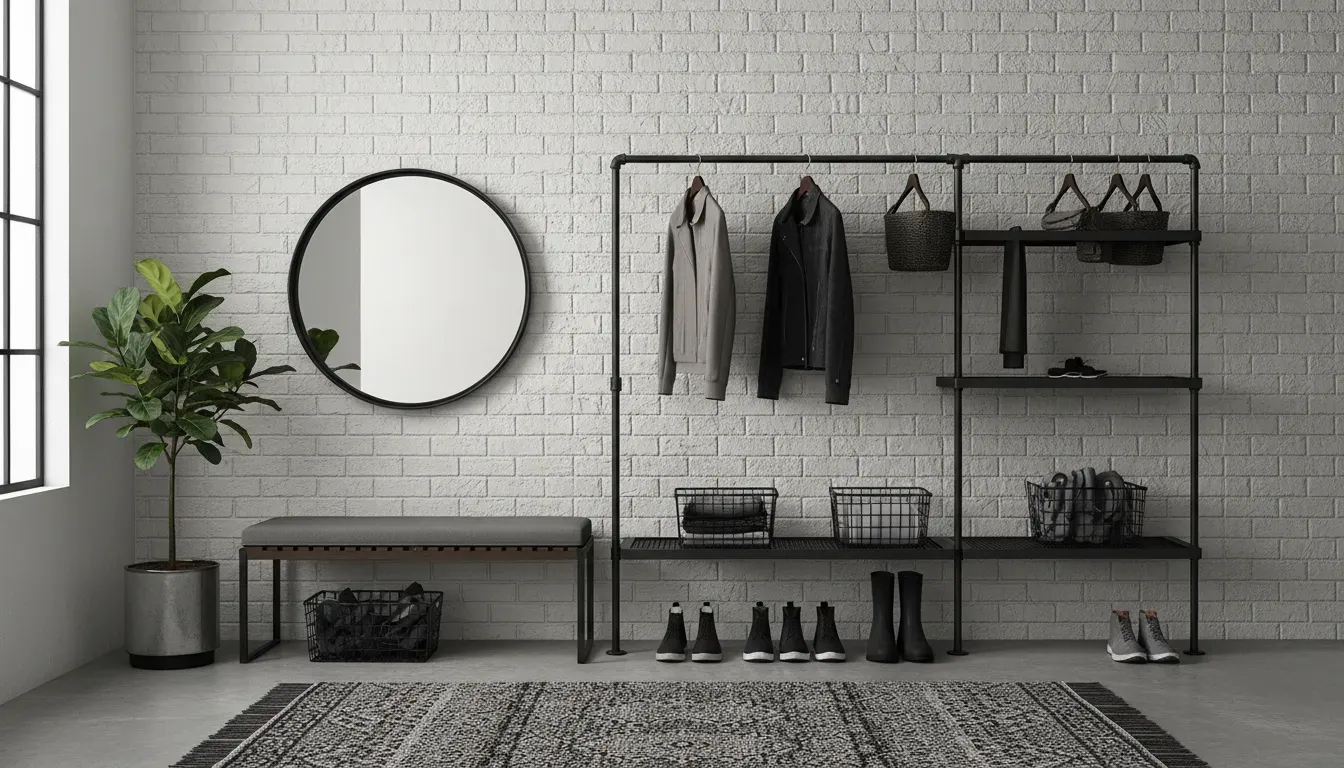

Stop Guessing Measurements. Build Your Dream Entryway with Confidence.
Transform awkward hallways, cramped foyers, and cluttered mudrooms into organized sanctuaries. Includes 20 CAD floor plans, facing real-home photo spreads, the 36-Inch Clearance Rule, the Shoe Pairs Formula, and 7 printable worksheets.
Core Edition ($17.99) · Flagship Photo Edition v5 ($39.99)
