
15 Best Sofa Tables: Design, Shelves & Styling Guide
The 15 best sofa tables for the space behind your couch — design proportions, height rules, lower-shelf options, and styling that ends the whole dead zone.
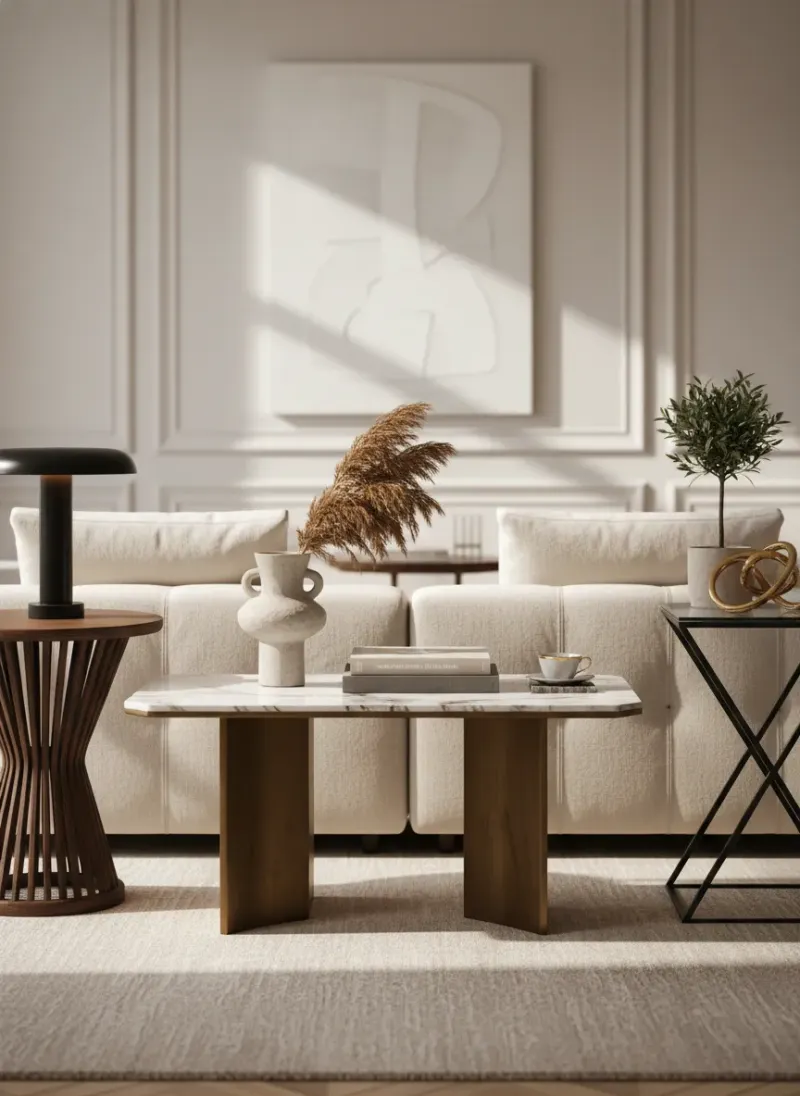
May 25, 2026 · Linda Wise
15 min readThe best sofa table is the one that ends the behind-the-sofa dead zone — 26 to 30 inches tall, an inch or two shorter than the sofa back.
That strip of floor behind the couch is the most underrated real estate in the living room. It’s too narrow for armchairs and too visible to ignore, quietly collecting everything you never see: dog toys, dust, and the remote that’s been missing since March. The right sofa table turns it into the room’s most useful surface — a landing spot for lamps at seating height, books, and plants.
The wrong sofa table makes things worse, and the mistake is almost always size. Too tall and it looms; too deep and it turns the walkway into a hip-bruising obstacle course; too low and it disappears, holding nothing at a useful height. So the rules come first: 26 to 30 inches tall, an inch or two below the sofa’s back frame, 10 to 14 inches deep, and at least 36 inches of walking clearance beyond it. Get those numbers right, and everything else — style, shelves, storage — falls into place.
Here are the 15 best sofa tables I’d put behind a sofa, grouped by style and budget.
The 15 Best Sofa Tables (by style and budget)
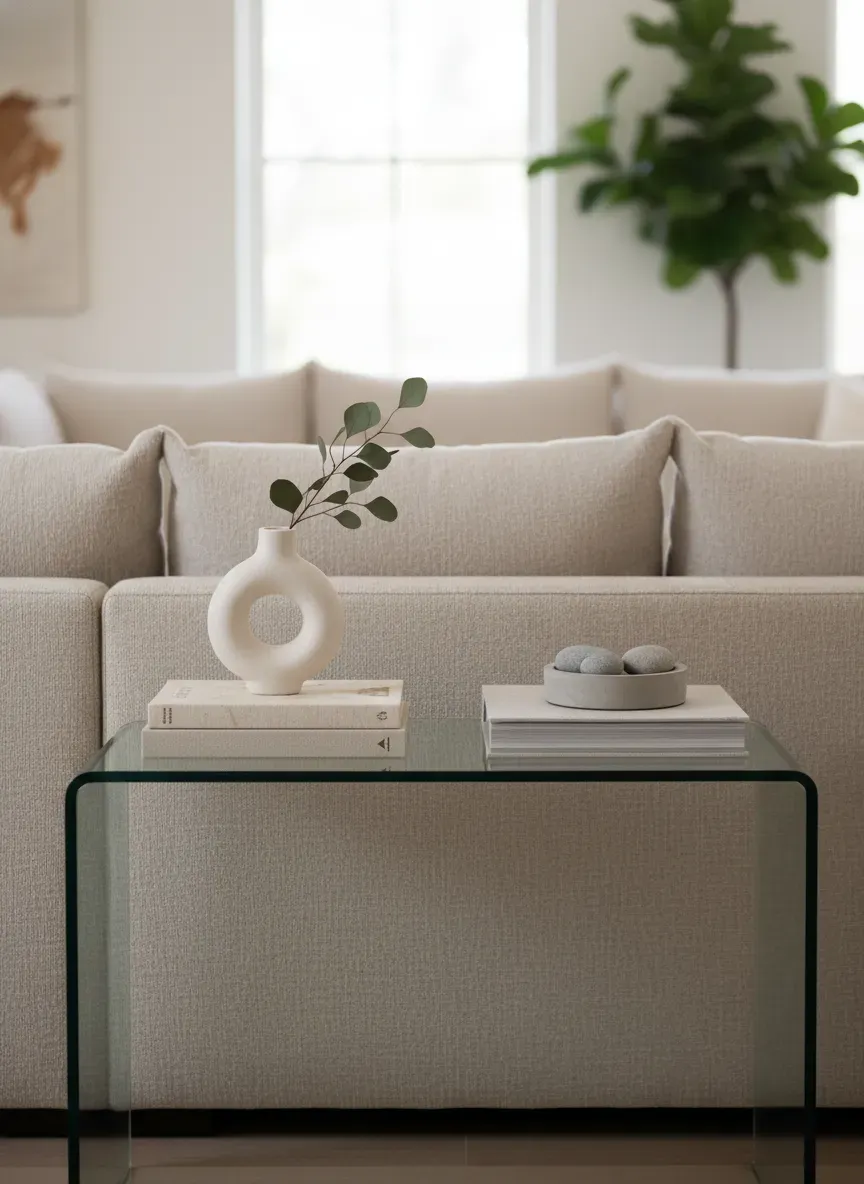
1. The Invisible Glass Console (budget)
Tempered glass on a whisper-thin metal frame, 10 to 12 inches deep. It vanishes, which makes it the best sofa table for small rooms where the sofa is already the star. Route lamp cords down a leg on install day — glass shows everything.
2. The Live-Edge Slab (mid-range)
Raw walnut with the bark edge left intact, set on matte black legs. It brings organic texture against the straight lines of a modern sofa. Keep the slab no more than 2 inches wider than the sofa back.
3. The Industrial Walnut Workhorse (mid-range)
Powder-coated steel frame, walnut top, optional lower shelf — the sofa table for households where things actually happen. The steel kills the wobble and the finish shrugs off pets.
4. The Fluted Oak Pill (premium)
Fluted oak columns under a pill-shaped top with no sharp corners — a real gift in a family traffic lane. The ribbing catches side light and reads as quiet luxury.
5. The Brutalist Faux-Concrete Slab (premium)
Thick, heavy, unapologetically architectural. For big sectionals, the platform grounds the couch in a way a delicate table never can — treat it as architecture, not furniture.
6. The Coastal Rattan Weaver (budget)
Woven cane on a slim frame that doesn’t block light, keeping the space behind the sofa bright. Perfect pairing: slipcovered linen sofa, jute rug, rattan table, done.
7. The Farmhouse Trestle (mid-range)
Reclaimed wood on heavy trestle bases, distressed within an inch of its life. Every nick adds patina, which makes it the zero-stress choice for kids, dogs, and wine nights.
8. The Travertine Waterfall (investment)
Stone that flows from the top down the sides with no visible joint. Expensive, porous, and worth every penny in adult-only spaces — with a coaster rule in place.
9. The Counter-Height Bar Table (mid-range)
The deliberate exception to the 26-to-30 rule: a 36- to 40-inch counter-height table turns the back of the sofa into a snack rail. Two barstools tuck underneath, and the dead zone becomes a second seating area on game day.
10. The Hairpin Mid-Century (budget)
A slim walnut top on iron hairpin legs. Airy, retro, and it lifts visual weight off the floor — the right call for low-slung mid-century sofas. Tighten all eight bolts before it holds anything heavy.
11. The Multi-Tier Display Shelf (mid-range)
Two or three staggered levels turn the sofa table into a low-profile bookshelf. Books, ceramics, and trailing plants each get their own stage — there’s always something worth looking at from every seat.
12. The Tech-Integrated Hub (premium)
A flip-up panel with built-in AC outlets and USB-C, plus a discreet cable tray. Phones and laptops charge behind the couch with zero cords on the floor — the best sofa table for living rooms that double as home offices.
13. The Leather-Wrapped Library Console (investment)
Saddle leather with brass stud detailing and stitching. Moody, tactile, and made for deep green walls and a reading chair. Keep sharp objects away from it — leather remembers everything.
14. The Antiqued Mirror (mid-range)
A mirrored table that bounces whatever light you have around a dark room, with an antiqued finish that keeps it from reading as dressing-room glam. It visually doubles the space behind the sofa.
15. The Modular Nesting Unit (mid-range)
Two or three tables that nest compactly behind the sofa and spread out as display when you host — a buffet line at parties, a console before bedtime.
Sofa Table Design: Proportions, Access, and Lamp Height
Sofa table design is a proportions problem with three variables: height, depth, and access.
Height. 26 to 30 inches, an inch or two below the sofa’s back frame. Measure your couch’s hard back — not the cushions — before you hit checkout. A table taller than the sofa looms; one more than four inches lower disappears and makes its lamps useless.
Depth. 10 to 14 inches is the working range. Anything deeper eats walkway, and anything shallower can’t hold a real lamp base. In a tight room, an 8- to 10-inch ultra-slim console still works if you skip the lamps and go with sconces.
Access. The lampshade’s bottom edge should sit at eye level when you’re seated — the whole point of a table behind the sofa. Plan power before you buy: route cords tight down a leg, choose a solid-back panel, or buy rechargeable lamps. Solid-back panels hide wiring but block the airy look; open designs feel lighter and need cord discipline.
Sofa Tables With Shelves (what fits on the lower levels)
The shelf version is the storage upgrade: the top holds the lamp, and the lower levels do the real work. What actually belongs down there:
- Baskets — two or three covered baskets absorb remotes, cords, and kids’ toys in eight seconds flat. This is the single most useful thing on any sofa table.
- Books and magazines — stacked horizontally for a library look, or standing upright with visible spines.
- Media and gaming consoles — open-shelf tables ventilate better than closed cabinets; just confirm the shelf pitch fits your hardware.
- Records and board games — housed in matched boxes or crates so the lower level reads as design, not garage.
Keep the bottom shelf 12 to 16 inches off the floor so you can vacuum under it, and respect the load limits: sofa tables are not storage furniture. Decorative weight plus a basket or two, never twelve pairs of shoes. If storage is the mission, treat the shelves as staging, not archives.
Sofa Table vs. Console Table vs. Entryway Table (the family reunion)
They’re one family with three addresses. A console table is the umbrella term: narrow, long, and wall-hugging, usually 30 to 34 inches tall. An entryway table is a console doing drop-zone duty by the front door — built for keys, mail, and the boot bench underneath. The sofa table is the console placed behind seating, which is why its height rules follow the sofa, not the table.
Hall trees are the wall-mounted branch of the same family — hook and shoe storage that works vertically, a smart pairing with a slim console in narrow foyers; see our walkthrough of the best hall trees.
But the distinction matters less than the mission. The sofa table’s only job is to make the space behind the sofa feel intentional. Once you treat it as a designed surface rather than leftover furniture, the whole room reads differently.
Styling a Sofa Table (lamps, plants, baskets)
The styling rules are simple, and they’re the same ones I use on entryway tables: build a triangle, vary the heights, and never line things up like soldiers.
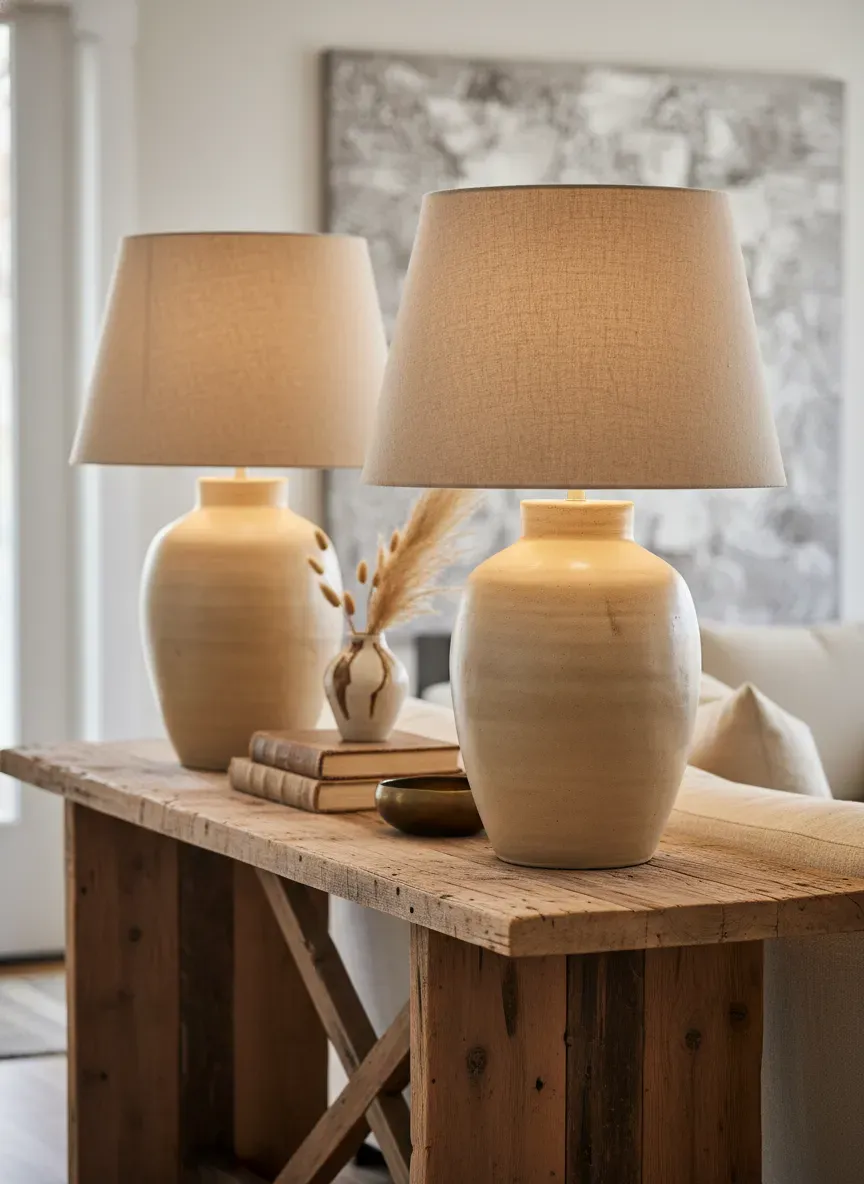
Start with light. Two matching lamps on either end frame the sofa symmetrically and fix the harsh glare of recessed lighting. One lamp plus a tall vase on the other end is the asymmetrical version — and often the more interesting one.
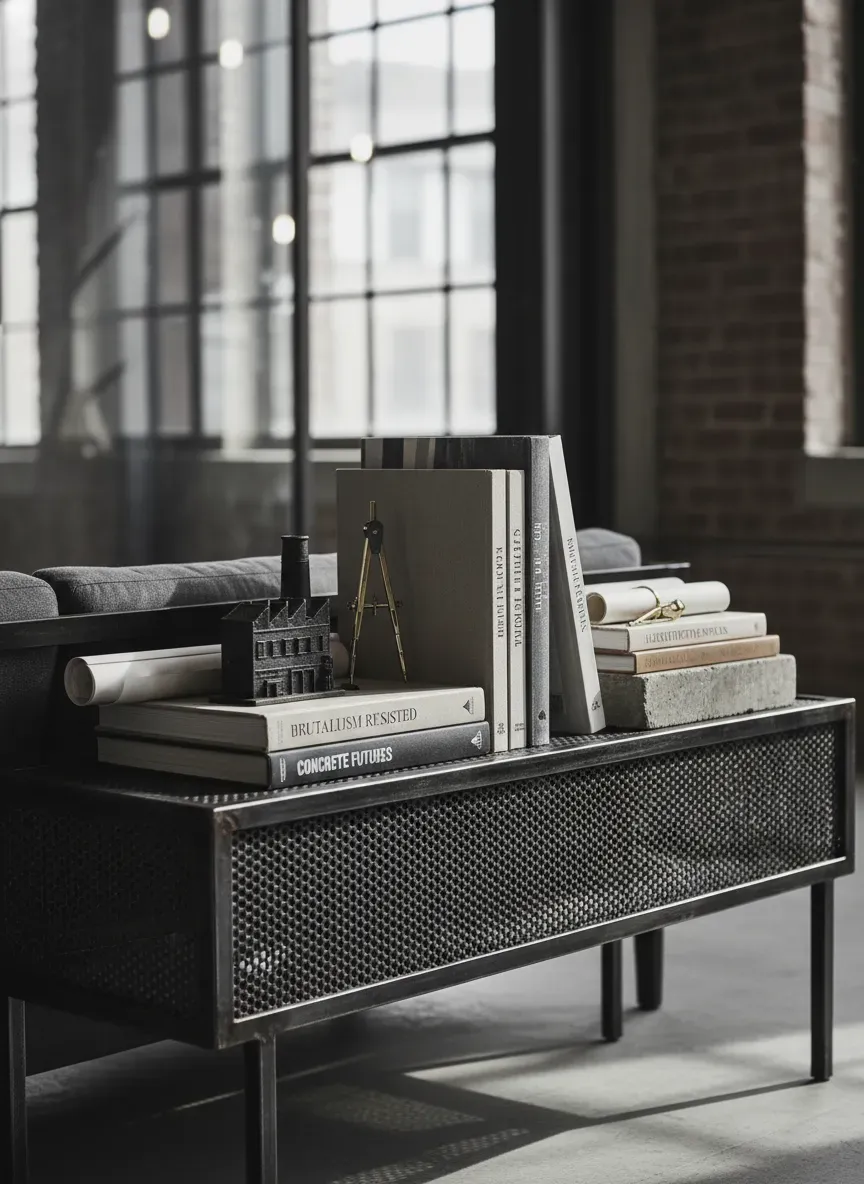
Layer the heights. Stack two or three large coffee table books and set a sculptural object on top — a brass figure, a ceramic bowl, a piece of coral. That vertical lift keeps small objects from getting lost against the bulk of the couch.
Add something alive. A trailing pothos spilling off the corner softens the table’s hard lines, and a vase of structural branches (dried eucalyptus, cherry blossom) adds height without upkeep.
Basket the bottom. On shelf versions, matched baskets on the lower level keep the styling line clean while absorbing daily clutter — the same basket trick that makes entryway benches work at the front door.
When the styling is done right, you notice the room — not the table. That’s the sign of a correct sofa table: it makes the space behind the sofa feel like a decision, not an accident.
— Linda Wise, professional home organizer and residential storage designer

Stop Guessing Measurements. Build Your Dream Entryway with Confidence.
Transform awkward hallways, cramped foyers, and cluttered mudrooms into organized sanctuaries. Includes 20 CAD floor plans, facing real-home photo spreads, the 36-Inch Clearance Rule, the Shoe Pairs Formula, and 7 printable worksheets.
Core Edition ($17.99) · Flagship Photo Edition v5 ($39.99)
