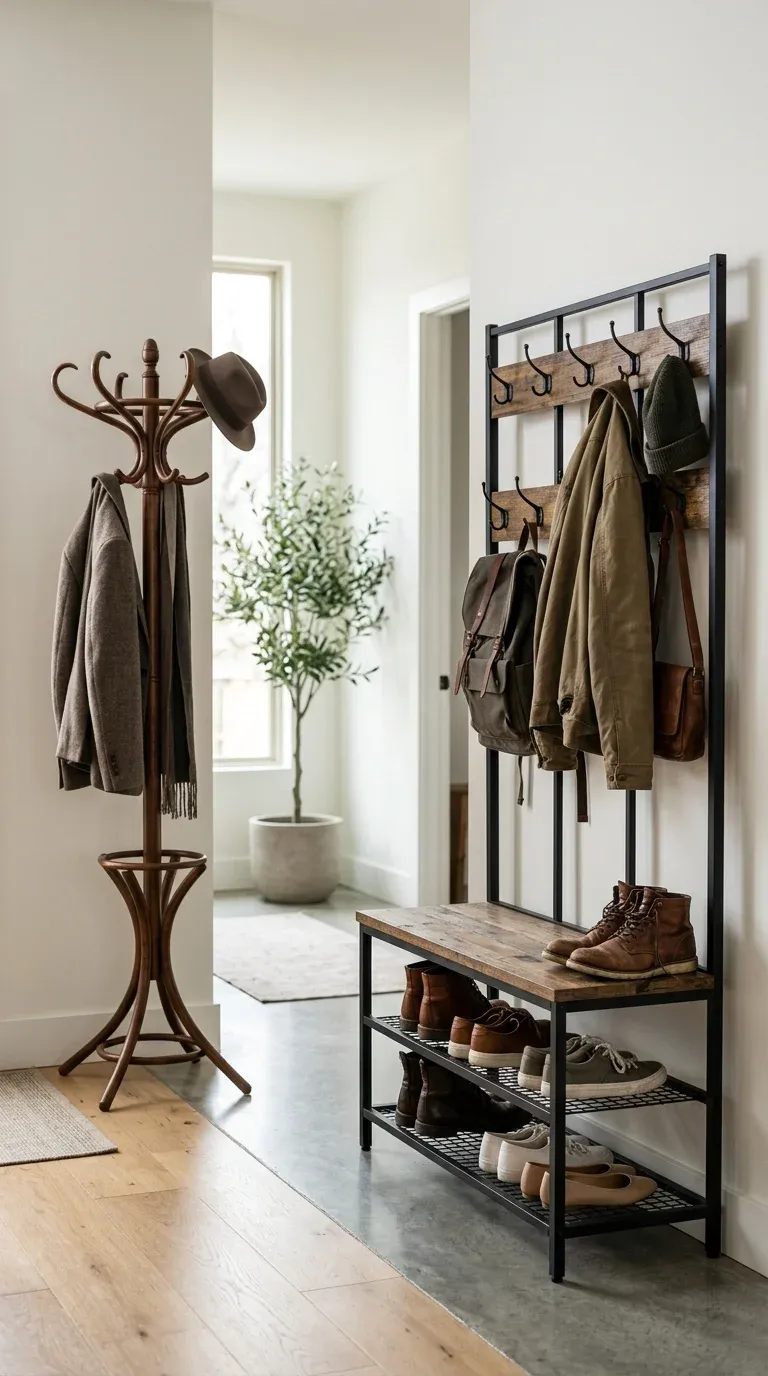
Best Industrial Hall Trees
Discover the ultimate industrial hall trees analyzed by structural integrity, material quality, and spatial efficiency. Find the perfect metal-and-wood entryway organizer.
Jul 31, 2026 · Linda Wise
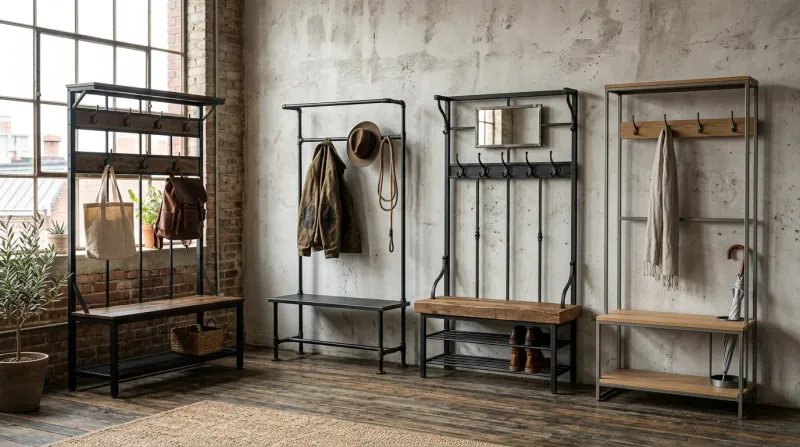
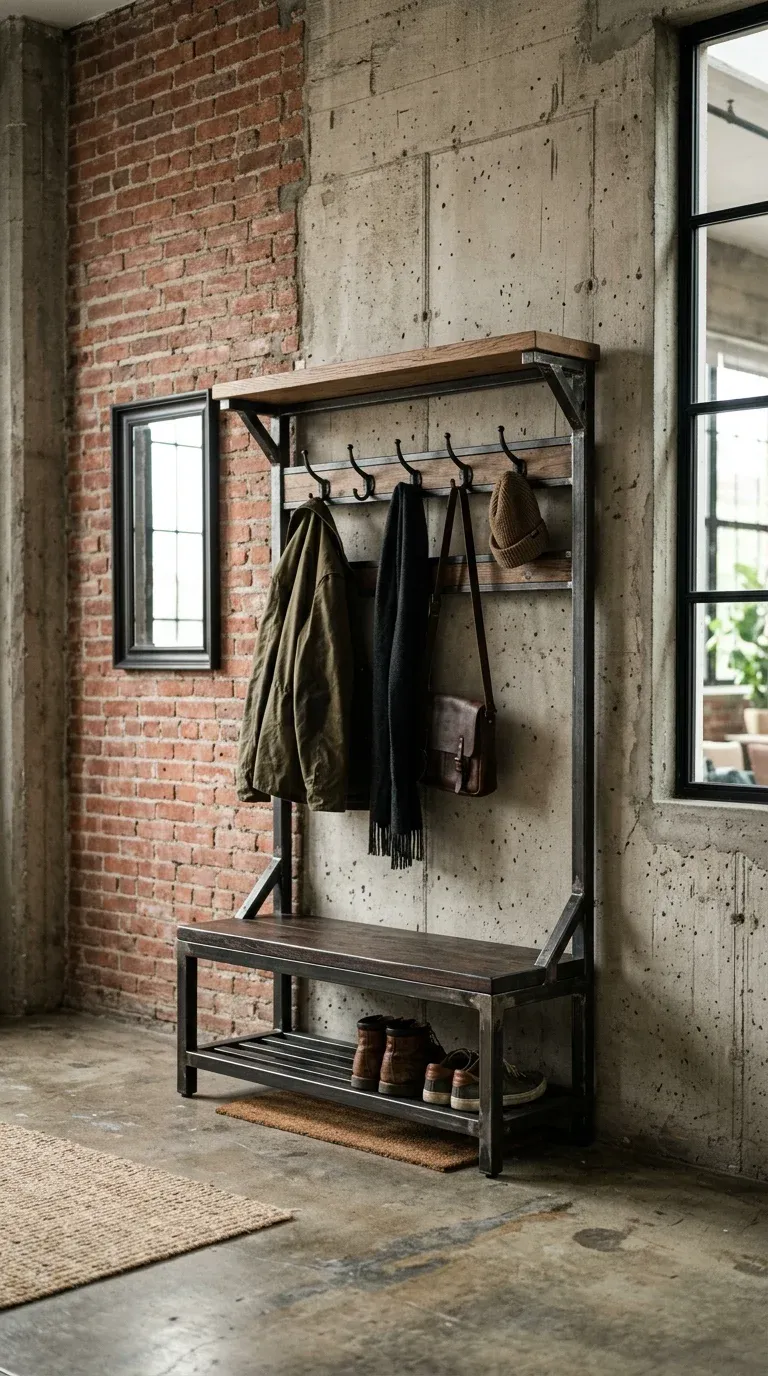
5 min readIndustrial hall trees are the workhorses of the modern foyer. They do not coddle your garments or hide behind delicate trim. Instead, they expose their welds, celebrate raw wood grain, and leverage heavy-gauge steel to manage the daily chaos of boots, backpacks, and heavy winter coats.
What makes an industrial hall tree truly exceptional is not just its look, but its physical build. Many cheap imitations use thin, hollow-core sheet metal and low-density fiberboard that bows under the weight of three winter parkas. A true industrial hall tree relies on rigid structural iron, dense timber or high-grade engineered substrates, and heavy-duty, through-bolted hardware.
If you are tired of wobbly coat racks and cluttered entryways, choosing a heavy-duty, metal-and-wood storage hub is the most practical upgrade you can make.

Quick Comparison: Top Picks & Benchmarks
Below is a quick reference table showing how today’s top-rated industrial hall trees compare across key structural metrics, load capacities, and overall value.
| Product | Frame Material | Bench Capacity | Key Highlight | Check Price |
|---|---|---|---|---|
| VASAGLE Industrial Hall Tree (H95) | 18-Gauge Powder-Coated Steel | 220 lbs (100 kg) | Unmatched value-to-weight ratio with adjustable feet | Check Price on Amazon |
| Tribesigns Heavy Duty 3-in-1 Entryway Organizer | 1.18” x 1.18” Heavy-Duty Steel Tube | 350 lbs (158 kg) | Massive load-bearing design with extra-thick wooden top shelf | Check Price on Amazon |
| IRONCK Industrial Hall Tree with Drawer Storage | 16-Gauge Iron Frame | 300 lbs (136 kg) | Closed fabric drawers combined with wire-mesh shoe shelves | Check Price on Amazon |
Section 1: Anatomy of a True Industrial Hall Tree
To understand why some hall trees last for decades while others sag within six months, we must look closely at their materials and engineering.
Steel Frame Thickness: Gauge and Profile
The backbone of any industrial hall tree is its metal frame. Most budget manufacturers use 20-gauge or even 22-gauge steel tubes. These thin walls crimp easily under high bolt torque and warp under heavy loads.
Look for frames made of 16-gauge or 18-gauge carbon steel.
- 16-gauge steel is approximately 1.5mm thick. It provides exceptional rigidity, making it ideal for busy family homes where kids might climb or pull on the unit.
- 18-gauge steel is approximately 1.2mm thick. It strikes a great balance between weight, cost, and structural integrity.
The profile shape also matters. Square or rectangular tubing (e.g., 30mm x 30mm) offers superior resistance to bending and twisting compared to thin, round metal rods.

Wood Substrates: Solid Timber vs. High-Density MDF
The wood components of your hall tree act as both structural tension panels and primary touchpoints.
- Solid Reclaimed Timber: The gold standard for authentic industrial style. Usually made from pine, fir, or oak. It features natural knots, saw marks, and variations that hide wear and tear. It can be sanded and refinished if damaged.
- Medium-Density Fiberboard (MDF) with Melamine/Veneer: High-quality MDF (density of $700\text{–}800\text{ kg/m}^3$) is highly stable and does not warp with changes in humidity. When finished with a high-pressure laminate or natural wood veneer, it resists scratches and water rings from wet umbrellas. Avoid low-density particleboard, which crumbles around screw holes under shear force.
Weld Quality and Joint Connections
A sturdy frame is only as strong as its joints. Industrial furniture relies on two main connection methods:
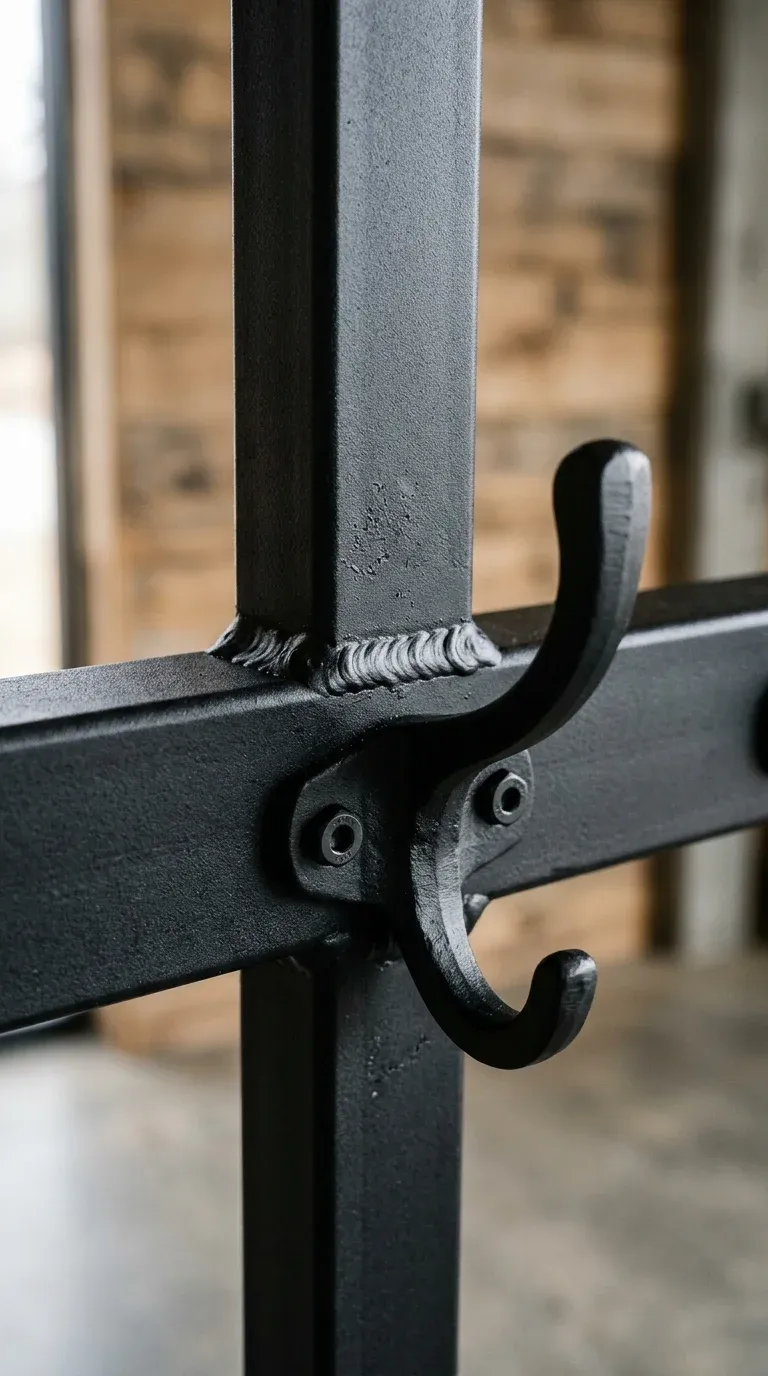
- MIG/TIG Welds: Found on pre-assembled or semi-welded side frames. Welds should be ground smooth and free of pitting or pinholes. Continuous welds offer the best strength against lateral swaying.
- Through-Bolt Connections: Used on flat-pack furniture. High-quality units feature threaded metal inserts embedded directly into the wood or welded inside the steel tubes. This prevents screws from stripping when you tighten them.
[Through-Bolt with Threaded Insert] (High Strength)
Bolt -> [Steel Tube Wall] -> [Threaded Metal Insert] -> [Deep Wood Core]
[Direct Wood Screw] (Low Strength - Prone to Stripping)
Screw -> [Steel Tube Wall] -> [Bare MDF/Particleboard]
Hook Engineering and Load Ratings
Coat hooks on an industrial hall tree take a beating. Cheap cast-zinc hooks snap under the weight of wet leather jackets or heavy backpacks.
Choose forged iron or thick steel alloy hooks that are secured to the frame with dual-point mounting. Every individual hook should have a rated load capacity of at least 11 lbs (5 kg), while heavy-duty options can handle up to 33 lbs (15 kg) per hook.
Section 2: Deep Dive: The Top 3 Industrial Hall Trees Reviewed
To help you find the perfect model, let’s look at three outstanding options that exemplify top-tier industrial design, durability, and practical storage.
1. VASAGLE Industrial Hall Tree (H95) — Best Overall Value
For entryways that need a smart, reliable storage solution without breaking the bank, this model is a standout choice. It blends a matte-black iron frame with rich, rustic-brown shelving to deliver an authentic industrial look.

- Frame & Hardware: The structure features a sturdy square-steel tube frame. The dual-tiered coat rack includes 9 adjustable, robust hooks that you can slide along the crossbars to fit bulkier coats.
- Storage Capacity: It features a spacious bench that supports up to 220 lbs, plus two open wire-mesh shoe shelves below. The open mesh allows air to circulate, helping damp shoes dry faster.
- Key Dimensions: 12.6” D x 28.3” W x 72” H.
Field Notes: “During setup, do not tighten the bolts all the way until the entire frame is aligned. This keeps everything square and prevents wobbling on slightly uneven floors. The included adjustable leveling feet are a life-saver for older wood floors or slate entryways.”
- Pros: Highly adjustable hooks, excellent price-to-performance ratio, compact footprint fits narrow hallways.
- Cons: The bench depth of 12.6” can feel a bit narrow for larger adults sitting down to lace up boots.
2. Tribesigns Heavy Duty 3-in-1 Entryway Organizer — Best Heavy-Duty Option
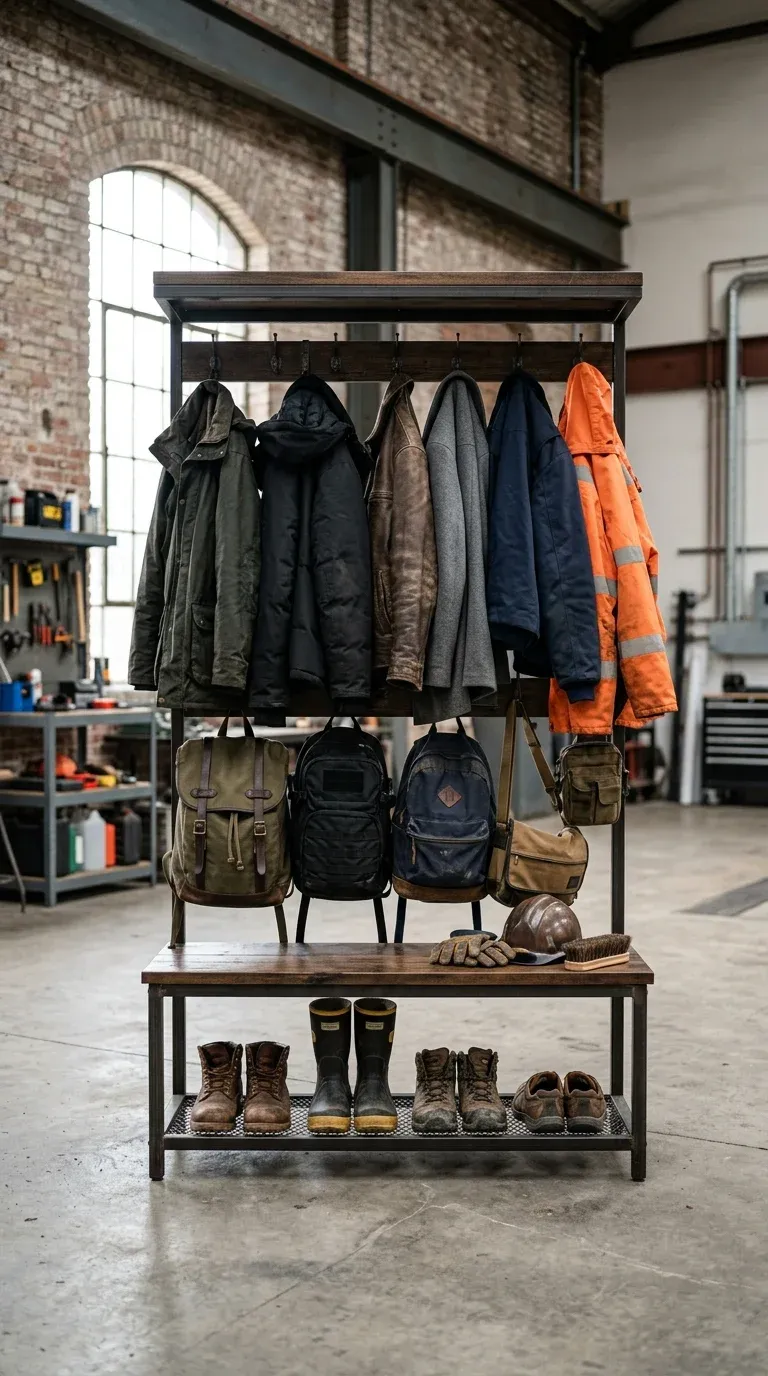
If you need to store heavy gear like motorcycle helmets, heavy work boots, or filled backpacks, this high-capacity unit from Tribesigns is built to handle the load.

-
Frame & Hardware: Constructed with a thick 1.18” square iron frame. It is reinforced with a rear X-brace that virtually eliminates lateral sway, even when loaded to maximum capacity.
-
Storage Capacity: The extra-thick seating bench easily supports up to 350 lbs. It includes a spacious upper storage shelf, ideal for storage baskets, alongside a large lower boot shelf with 10” of vertical clearance.
-
Key Dimensions: 15.7” D x 40” W x 72” H.
-
Pros: Incredible weight capacity, excellent depth for comfortable seating, rear X-brace ensures top-tier stability.
-
Cons: Assembly takes longer due to the extra structural supports and heavier materials.
3. IRONCK Industrial Hall Tree with Drawer Storage — Best for Hidden Storage
If you prefer a clean, organized look where keys, dog leashes, and winter accessories are kept out of sight, this model from IRONCK offers the perfect balance of open hanging space and neat, closed storage.

-
Frame & Hardware: Built with a durable, anti-rust powder-coated iron frame and thick MDF board (P2 grade) finished in a vintage brown woodgrain laminate.
-
Storage Capacity: Features a comfortable bench, two open wire shelves for shoes, and several pull-out drawers. These drawers are perfect for stashing keys, mail, and winter gloves.
-
Key Dimensions: 15.7” D x 39.4” W x 70.9” H.
-
Pros: Fabric drawers keep clutter out of sight, deep seating bench, highly durable vintage-finish laminate.
-
Cons: Fabric drawers are not suitable for heavy, sharp metal tools or wet items.
Section 3: Architectural & Material Comparisons
When designing your entryway, it is helpful to look at how an industrial hall tree compares to other styles. This helps you choose the right balance of form and function.

Industrial vs. Farmhouse, Traditional, and Minimalist Styles
The table below highlights the differences in materials, structural strength, and aesthetics across common furniture styles:
| Feature | Industrial | Farmhouse | Traditional | Minimalist |
|---|---|---|---|---|
| Primary Materials | Raw iron/steel, distressed wood | Painted pine, beadboard, cup pulls | Hardwood, crown molding, brass | Slim aluminum, wire, monochrome polymers |
| Structural Jointing | Exposed bolts, welds, X-braces | Pocket holes, wood glue, dowels | Mortise and tenon, tongue-and-groove | Hidden brackets, friction-fit tabs |
| Visual Footprint | Airy, skeletal, high-contrast | Solid, blocky, cozy rustic | Large, heavy, furniture-grade | Ultra-thin, barely-there lines |
| Scuff & Scratch Resistance | Extremely high (distressed finishes hide wear) | Medium (painted surfaces can chip) | Low (polished finishes show scratches easily) | High (anodized metals, powder coatings) |
Choosing between these styles depends on your home’s layout and traffic. While a traditional hall tree looks elegant in a formal foyer, its polished surfaces scratch easily under daily wear.
An industrial unit handles wet boots, muddy dog leashes, and metal zippers without losing its charm. If you are comparing different setups, you might also consider a hall tree vs coat rack or look at a hall tree vs entryway bench to see which configuration suits your daily routine.
Additionally, understanding how a hall tree vs shoe bench functions can help you decide if you need full vertical hanging space or just a simple, low-profile seating spot.
Section 4: The Buyer’s Evaluation Framework (Sizing & Layout)
Before buying an industrial hall tree, it is crucial to measure your space carefully. A unit that is too large will crowd your entryway, while one that is too small can look lost and quickly overflow with clutter.
[ ENTRYWAY WALL ]
|<----- Total Wall Width ----->|
================================
| [Industrial Hall Tree] | <-- Ensure at least 6-12" of buffer
| +--------------------+ | space on either side for clearance.
| | | |
| | Hanging Zone | | <-- Check height clearance for long
| | | | overcoats (needs 50"+ from hooks).
| +--------------------+ |
| | Seating Bench | | <-- Standard bench height: 18" - 20"
| +--------------------+ | for comfortable sitting.
| | Shoe Storage | |
| +--------------------+ |
================================
1. Height and Vertical Clearance
Most standard hall trees stand between 70 and 74 inches tall (177 to 188 cm).
- Make sure you have at least 6 to 12 inches of clearance below your ceiling or any crown molding.
- If you plan to hang long overcoats or trench coats, measure the distance from the top hooks to the bench surface. You will want at least 50 inches of vertical space to keep your coats from bunching up on the seat.
To get a complete breakdown of vertical and horizontal clearances, check out our guide on hall tree dimensions explained.
2. Depth and Traffic Flow
Depth is a key factor in keeping your entryway safe and easy to walk through.
- Narrow Hallways (10” to 13” deep): Best for tight corridors where every inch counts. These slim units keep walkways clear but offer less seating space. If you are working with a tight layout, you can find great options in our round-up of compact hall trees designed for small spaces.
- Standard Entryways (14” to 18” deep): This is the sweet spot. It provides a comfortable, deep bench for sitting down while leaving plenty of room for shoe storage underneath.
For a broader look at different layouts, our comprehensive hall tree buying guide offers practical tips to help you choose the right hall tree for your home’s unique layout.
3. Width and Hanging Capacity
The width of your hall tree determines how many coats, bags, and shoes it can hold.
- 24” to 30” Width: Typically features 5 to 7 hooks. Ideal for single occupants or couples.
- 32” to 40” Width: Typically features 9 to 12 hooks. Great for small families.
- 48”+ Width: Often designed as double-wide or modular units. Perfect for busy, high-traffic homes.
If you are open to exploring other design aesthetics, we have curated a collection of hall trees for every entryway type to help you find the perfect match.
Section 5: Bench Strength & Shoe Storage Engineering
An industrial hall tree is more than just a place to hang coats. It is also a seat and a shoe organizer, meaning its lower half needs to be built for heavy daily use.
Deflection and Seating Stability
When you sit down to put on your shoes, your full body weight is concentrated on a small area of the bench.
Cheap benches made of thin, unsupported MDF will bend or crack over time. This bowing is called deflection.
$$\text{Deflection} \propto \frac{\text{Load} \times \text{Span}^3}{\text{Elastic Modulus} \times \text{Thickness}^3}$$
To prevent bowing:
- Under-Bench Support Bars: High-quality industrial hall trees feature steel support tubes running directly underneath the wooden seat. This distributes your weight evenly across the metal frame.
- Static Weight Ratings: Look for a static weight capacity of at least 220 lbs (100 kg). For multi-person use, go for a heavy-duty model rated for 300 to 350 lbs.
If having a comfortable, reliable place to sit is your top priority, you can browse our top picks for a hall tree with a built-in bench.

Shoe Rack Engineering: Wire Mesh vs. Solid Wood Shelving
The bottom shelves of your hall tree endure dirt, water, and road salt.
- Wire Mesh Shelves: Highly functional. They allow dirt and water to fall through to the floor, where it can be easily swept or mopped up. They also allow air to circulate around damp shoes, preventing musty odors.
- Solid Shelves: These offer a cleaner look and keep dirt from falling onto the shoes below. However, they can collect puddles of water and mud, requiring more regular cleaning.
If you have a large shoe collection, you can find units with specialized shelving in our guide to integrated shoe storage units.
Section 6: Installation, Structural Assembly & Safety
Many people overlook assembly and safety when choosing a hall tree. However, because these units are tall and carry heavy loads at the top, proper installation is essential to keep your home safe.
The Physics of Tipping Hazards
A tall hall tree loaded with heavy coats at the top is naturally top-heavy. If a child climbs on the bench or pulls on a coat, the entire unit can tip forward.
$$\text{Tipping Moment} = \text{Pulling Force} \times \text{Height of Hook}$$
$$\text{Restoring Moment} = \text{Weight of Hall Tree} \times \left(\frac{\text{Depth of Bench}}{2}\right)$$
If the tipping force is greater than the stabilizing weight of the base, the unit will tip over. This is why wall anchoring is absolutely essential.

Step-by-Step Wall Anchoring
Most quality hall trees come with wall-mounting hardware. For the safest installation, follow these steps:
- Locate a Wall Stud: Use a stud finder to locate a wood or metal stud behind your hall tree. Securing your anchor directly into a stud provides the strongest hold.
- Use Heavy-Duty Anchors for Drywall: If a stud is not available, do not use the cheap plastic anchors that come in the box. Instead, buy high-quality metal toggle bolts or self-drilling drywall anchors rated for at least 50 lbs.
- Attach the Anti-Tip Strap: Secure the safety strap or metal bracket to the top back of the hall tree frame, then screw it firmly into your wall anchor. Ensure there is no slack in the strap.
Leveling the Frame
Uneven floors can cause your hall tree to wobble, putting extra stress on its joints.
- Choose a unit with adjustable leveling feet.
- Place a spirit level on the bench seat.
- Screw the feet in or out until the bench is perfectly level from front to back and side to side.
Section 7: Maintenance, Longevity & Rust Prevention
True industrial furniture is low-maintenance, but a little regular care will keep it looking great and performing well for years to come.
Caring for Powder-Coated Steel
The matte black finish on industrial steel frames is typically a baked-on powder coating. While highly durable, it can chip if struck by sharp metal objects like keys or heavy belt buckles.
- Cleaning: Wipe the frame down with a damp microfiber cloth. Avoid harsh abrasive cleaners or steel wool, which can dull or scratch the finish.
- Fixing Scratches: If you spot a small scratch or chip, dab a tiny amount of matte black rust-preventative paint (such as Rust-Oleum) onto the area to prevent moisture from reaching the steel beneath.

Caring for the Wood Bench and Shelves
Whether your hall tree features solid wood or high-density engineered wood, it needs protection from damp coats and wet boots.
- Moisture Protection: Never let standing water sit on the wood surface. Wipe away puddles from wet umbrellas or snowy gloves immediately.
- Re-sealing Solid Wood: If your hall tree has a solid, unvarnished wood bench, apply a coat of furniture wax or penetrating oil (like tung oil or linseed oil) once a year. This keeps the wood hydrated and helps it naturally repel water.
Section 8: Comprehensive FAQ
How much weight can an industrial hall tree really hold?
A quality industrial hall tree can support a significant amount of weight. Typically, the seating bench can hold between 220 and 350 lbs (100 to 158 kg), while individual coat hooks are rated for 11 to 33 lbs (5 to 15 kg). Always check the manufacturer’s specifications and distribute heavy items evenly across the frame.
Can I assemble an industrial hall tree by myself?
Yes, most flat-pack industrial hall trees can be assembled by one person in about 45 to 90 minutes. However, having a second person makes it much easier to lift, align, and safely anchor the tall metal frame to the wall.
Are wire mesh shelves bad for high heels or small shoes?
Wire mesh shelves are excellent for ventilation, but thin high heels can sometimes slip through the gaps. If you wear heels often, look for a hall tree with flat wooden shelves, or place a solid decorative tray on top of one of the wire shelves to create a flat surface.
How do I prevent my hall tree from scratching my hardwood floors?
Always use the adjustable leveling feet that come with your hall tree. Most of these feet feature hard plastic bottoms. For extra protection on delicate hardwood floors, stick heavy-duty felt pads to the bottom of each leveling foot.
What should I do if my wall studs do not line up with the hall tree’s anchor points?
If the pre-drilled holes on your hall tree do not line up with your wall studs, you can use high-strength drywall toggle bolts (such as Snaptoggle anchors). These expand behind the drywall to provide a highly secure hold without needing to screw directly into a stud.
The Verdict: Selecting Your Storage Centerpiece
An industrial hall tree is a smart investment that brings order, safety, and style to your entryway. By choosing a unit with a thick steel frame, a high-density wood bench, and a secure wall anchor, you create a reliable storage hub that easily handles the daily hustle of your home.

Take a moment to measure your entryway, think about your daily storage needs, and choose the model that fits your space. A well-chosen, heavy-duty hall tree will keep your home organized and welcoming for years to come.
Top Picks: Best Entryway Essentials
Editor's shortlist with verified ratings. Prices and availability below — clicking an Amazon link earns us a small commission at no extra cost to you.
| # | Product | Rating | Reviews | Tag | Check Price |
|---|---|---|---|---|---|
| 1 | Vasagle Industrial Entryway Bench | 8,420 | Top Pick | View on Amazon | |
| 2 | Crosley Furniture Seaside Hall Tree | 5,410 | — | View on Amazon | |
| 3 | Seville Classics 12-Pair Shoe Rack | 6,420 | Best Storage | View on Amazon | |
| 4 | Franklin Brass Wall Hooks (5-Pack) | 9,820 | — | View on Amazon | |
| 5 | Simplihome Artisan Solid Wood Bench | 3,127 | Editor's Pick | View on Amazon |
Affiliate disclosure: As an Amazon Associate we earn from qualifying purchases.
Tag: entryway09-20 — change in src/data/topPicks.ts.