
How to Hide Shoes in an Entryway: 9 Hidden Shoe Storage Solutions
How to hide shoes in an entryway with 9 hidden shoe storage solutions: benches with doors, pull-outs, hidden shoe compartments, and rental-friendly hacks.
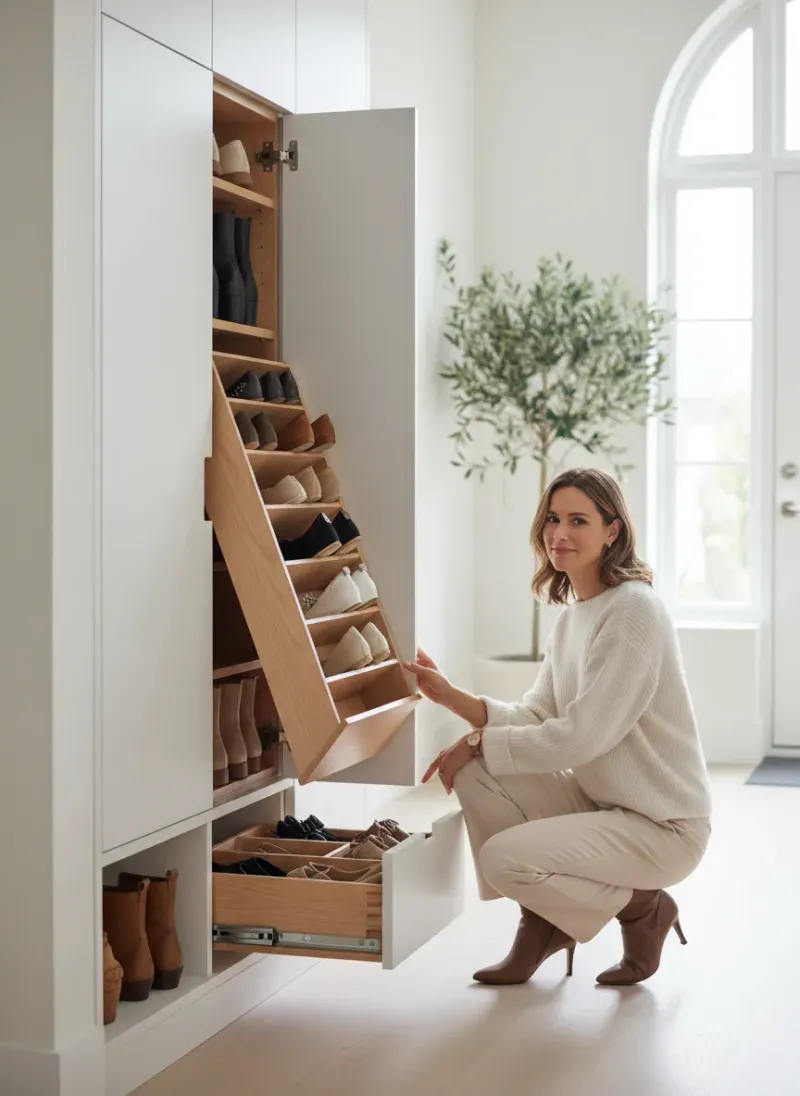
Feb 20, 2026 · Linda Wise
15 min readHow to hide shoes in an entryway without hiding them from yourself? That’s the whole craft of hidden shoe storage: out of sight, never out of reach.
The entryway shoe pile is a silent tax every household pays: a fumbling reach under the bench, a one-shoe search at 7:40 a.m., a guest’s sneaker politely nudged aside so the door can close. A closed door or lid fixes the mess that open racks never do — but only if you can still find the right pair fast. If you can’t find your shoes in five seconds, the hiding has failed — visible-in-a-second, hidden-at-a-glance is the goal.
Below are nine hidden shoe storage solutions, from the classic to the clever, each one with the retrieval math explained. Whichever you choose, hold the same standard: hidden does not mean buried, and every pair still deserves its five-second find.
9 Hidden Shoe Storage Solutions (bench with doors, cabinets, pull-outs, curtains, baskets-with-lids, under-stair, ottoman, wall unit, banquette)
1. Bench With Doors
The bench with doors is the workhorse of hidden shoe storage: a lift lid or tilt front hides up to eight pairs in the same footprint as plain seating. Sit down to tie, swing the door open, and the daily rotation sits right at floor level. Choose doors that open fully — half-open hinges turn the last pair into a spelunking expedition. For more on making a bench earn its keep through the seasons, see how the best entryway benches with storage keep clutter beatable.
2. Cabinets
The closed-door shoe cabinet is the classic answer, and for good reason: a slim unit just 9 to 11 inches deep holds 16 to 30 pairs behind a flat, furniture-grade facade.
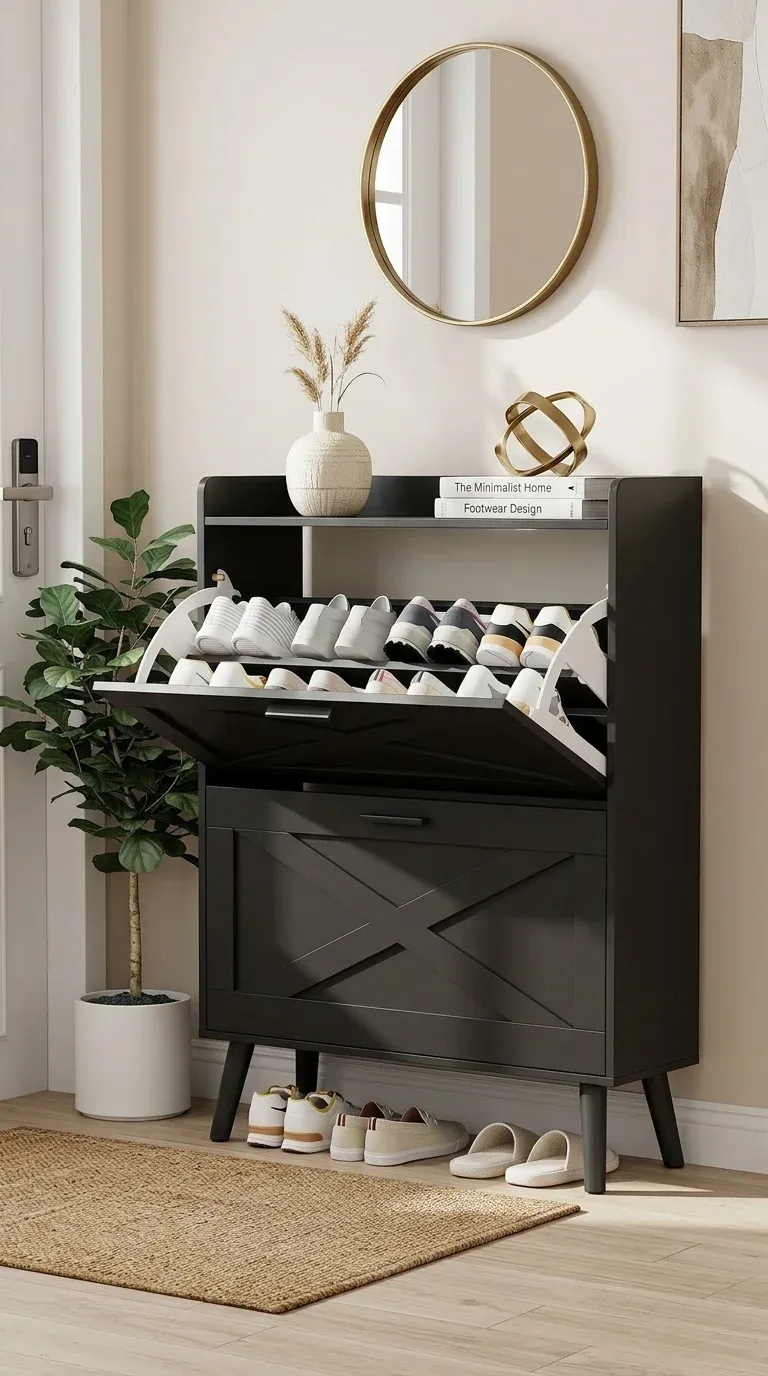
Louvered doors let air move so the cabinet never becomes a stale-smell box, while solid doors read cleaner. Look for fully adjustable shelves so a boot column can stand beside flats, and confirm the interior front shelf tilts or slides — an elevator-style front row makes the whole thing a shoe valet instead of a shoe cave.
3. Pull-Outs
Pull-out trays are the quiet genius of hidden shoe storage: a shallow drawer slides out at thigh height, and suddenly every pair is visible in one glance. Angle the tray at 15 degrees so heels sit slightly higher than toes, and you fit the same count in two inches less depth. Mount them under a bench, inside a cabinet, or in the toe-kick void beneath a console — the space you were sweeping anyway.

4. Curtains
When furniture is out of budget, buy fabric. A curtain rod across a console’s open base or a wire shelving unit transforms ten pairs of shoes and two pairs of boots into a single soft sweep of color. Use opaque linen or a tight weave — the point is a wall of calm, not a hint of what’s behind it. This is the cheapest hidden shoe storage on this list, and often the prettiest.
5. Baskets-With-Lids
One lidded basket per person is the family-system answer. Each household member’s daily shoes live in their own basket, so retrieval is grab-the-lid, not sort-the-pile. Seagrass and rattan lids breathe, and the baskets tuck under a bench or stack on a shelf. Pair them with the best storage bins for the accessories that ride along.
6. Under-Stair
The under-stair wedge is usually wasted space, and it is the best you will ever have. Fit a swing-out cart or a toe-push drawer into the shallow end and tall cubbies at the deep end, and the entire family rotation disappears into architecture. No doors even needed — full extension slides mean reaching the back pair is a one-hand motion.
7. Ottoman
A hollow ottoman hides shoes inside the seat you are already sitting on. Add a wooden divider grid so pairs stay upright instead of nesting, and keep the lid weight-friendly — a gas piston turns a heavy top into an easy lift. Two adults can sit on it; the whole family’s flats fit inside.
8. Wall Unit
When the floor is precious, the wall holds the shoes. A tall, wall-mounted cabinet keeps every pair at chest height — bend-free retrieval, which is exactly why hallway wall units outperform floor racks for anyone with back complaints. Hang it with a floating bracket so the floor beneath is easy to sweep, and keep the bottom shelf free for wide boots.
9. Banquette
The banquette is the built-in look for people who will not commit to a build: a run of low bench seating with flip seats and shallow pull shelves underneath. Sitters face the room, guests get their shoes hidden behind the skirt, and the long seat doubles as a bag and coat staging zone. It is the most architectural of the nine — and the most impressive.
Hidden Shoe Compartments: When Built-In Is Worth It
If you are renovating, a built-in hidden shoe compartment pays for itself in daily life. In a custom cabinet or bench, give each shelf 7 to 9 inches of height for everyday pairs, 12 to 14 inches for the boot column, and a pull tray angled at 15 degrees. Vent the front with a louvered or wire panel so moisture moves out instead of cycling through your footwear.
Built-ins earn their keep when the entryway is the first impression: the shoe wall disappears into the millwork, matching the baseboards and shadow gaps of the rest of the house. They fail when they are shallow — 6 inches of depth saves space today and fits nothing by autumn. Measure the longest boot you own first, then build around it.

Rental-Friendly Hidden Storage
Renters get the same vanishing act without a single stud screw. Over-door canvas shoe pockets with a fabric cover flap hide a dozen pairs in five seconds of undoing. The curtain trick works flawlessly behind a door or under existing furniture. Storage ottomans and tilt-door cabinets are freestanding by design, and even a tension rod across a shoe shelf does the concealed job.
The one rule that changes for renters: everything must come down in under an hour. Choose hardware with adhesive strips rated for the load, keep the packaging, and the security deposit never sees the shoes at all.
The One Hidden-Shoe Mistake (you’ll never find them)
The mistake is hiding everything at once. Fifty pairs behind closed doors — a lifetime of sneakers, hiking boots, and the sandals that might come back in fashion — turns the cleanest cabinet into a black hole. You cannot find anything, so the door stays open, and the pile returns.
Fix it with the active rotation: keep only the five to eight pairs your household actually wears in the entryway, label one row per person, and make every pair reachable without moving another. Seasonal footwear goes to secondary storage every spring and fall. That is the whole discipline — and it is the difference between a hiding system and a hoarding system.

The best hidden shoe storage looks like nothing happened. The shoes are gone, the entryway is calm, and everything you need is still five seconds from your feet. If your entryway needs hiding help beyond footwear, the rest of the drop zone has its own set of tricks — start with these 15 genius entryway storage ideas and then circle back to the shoes.

Stop Guessing Measurements. Build Your Dream Entryway with Confidence.
Transform awkward hallways, cramped foyers, and cluttered mudrooms into organized sanctuaries. Includes 20 CAD floor plans, facing real-home photo spreads, the 36-Inch Clearance Rule, the Shoe Pairs Formula, and 7 printable worksheets.
Core Edition ($17.99) · Flagship Photo Edition v5 ($39.99)
Frequently Asked Questions
What is the easiest way to hide shoes in an entryway?
A closed-door shoe cabinet is the fastest win — shoes vanish behind a flat facade in the same footprint as an open rack. If you cannot fit a cabinet, a bench with doors or a curtain under a console gives you the same out-of-sight effect for less money.
How do I hide shoes without any furniture?
Use the space where the wall meets the floor. A curtain rod over a shoe shelf, tilt-out compartments under existing furniture, or a slim wall unit hides shoes using structure you already own. The goal is visible-in-a-second, hidden-at-a-glance.
How deep does a hidden shoe compartment need to be?
A shoe laid on its side needs about 9 to 11 inches of interior depth for most adult sizes. Heels and boots need 12 to 14 inches, or a pull-out tray angled at 15 degrees so the heel sits slightly higher than the toe.
Why do my shoes keep ending up in a pile even with hidden storage?
Because the hiding is slower than the finding. If a shoe takes more than five seconds to retrieve or return, the system gets abandoned. Keep the daily pairs at the front of each compartment and rotate seasonal shoes out of the entryway entirely.
