
How Can I Keep My Shoe Storage Bench Clean and Looking New? a 10-minute Plan
How can I keep my shoe storage bench clean and looking new? A 10-minute weekly routine, a material-by-material deep-clean playbook, and prevention first.
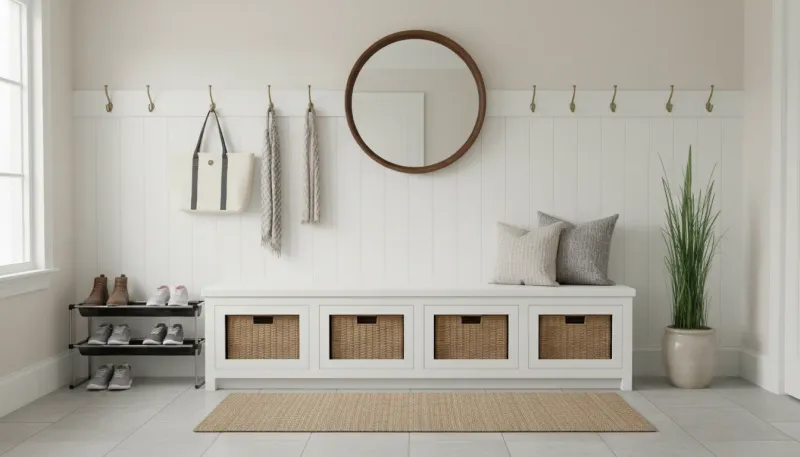
Feb 3, 2026 · Linda Wise
15 min readKeep your storage bench looking new with a 10-minute weekly routine: vacuum the seat, wipe the frame, and air the shoe compartment — that’s honestly most of it.
Cleaning guides for entryway furniture love to promise Pinterest-worthy transformations. The truth about a shoe storage bench is more boring and more useful: dirt accumulates in three places — the seat, the frame, and the shoe compartment — and an honest 10 minutes a week handles all three. You don’t need a Pinterest method. You need a doormat and a 10-minute timer.
This is an answer-first guide. The routine comes first, then materials, then the deep-clean playbook for stains and smells, then the prevention that makes most of the cleaning unnecessary.
The Weekly Routine (10 minutes)
Set a timer and run this order. It follows the path of dirt — top down:
- Vacuum the seat and frame (3 minutes). Use the brush attachment on upholstery and the crevice tool on seams, corners, and cubby edges.
- Wipe the frame (3 minutes). Damp microfiber cloth for wood, metal, or laminate; skip the soap on a normal week, and dry everything immediately afterward.
- Air the shoe compartment (4 minutes). Open the door or lift the lid, pull out the tray or baskets, and let it breathe. Ten minutes of airflow three or four times a week beats any deodorizer.
Do this on the same day every week and the bench never reaches the crisis-clean stage. Miss a week? Fine — the routine self-heals the following Sunday. That consistency is what keeps a bench looking new for years, and it is the same principle that keeps a hall tree in good shape over time.
How to Clean a Storage Bench by Material (wood, upholstery, metal, wicker)
Each material needs a slightly different toolkit. Match the cleaner to the surface and the bench repays you:
| Material | Weekly | Monthly / quarterly | Never |
|---|---|---|---|
| Wood | Dry microfiber dust; damp wipe, dry immediately | Mild wood soap; re-wax twice a year | Bleach, ammonia, standing water |
| Upholstery | Vacuum with brush attachment | Blot spills; fabric-safe spray test | Scrubbing stains, soaking the cushion |
| Metal | Damp cloth, dry well | Check for rust; touch up powder coat | Abrasive scrubbers |
| Wicker / rattan | Vacuum, barely-damp wipe | Full air dry after any moisture | Soaking in water |
Wood. Dust with a dry microfiber cloth so grit doesn’t scratch the finish. Once a month, clean with a mild wood soap diluted in water, then dry the surface immediately. Re-wax the seat twice a year. Never leave standing water, bleach, or ammonia on the surface — water is the thing that actually kills wooden furniture.
Upholstery. Vacuum weekly with the brush attachment to pull grit out of the weave. Blot spills immediately with a clean white cloth — blot, never rub, because rubbing works the stain deeper. Once a quarter, clean with a fabric-safe product matched to the fabric code (W for water-based, S for solvent-based) after testing on a hidden patch. If the cushion cover has a zipper, machine-wash it on a cold, gentle cycle per the label.
Metal. Wipe with mild soap and water, then dry thoroughly. Rust spots get a gentle rub with a soft cloth and a dab of mineral oil; check the powder coat for chips and touch them up before they spread.
Wicker and rattan. Vacuum with the brush attachment, wipe with a barely damp cloth, and let it dry completely. Never soak wicker — it warps and strands crack. A quick wipe with a dryer sheet between cleans cuts static dust.
Stains & Smells: The Deep-Clean Playbook
When the weekly routine loses, go deeper — in this order:
Mud and salt residue on wood or laminate. Let it dry first. Brush off the grit, wipe with one part white vinegar to four parts water, and dry the surface immediately. If the seat needs it, re-apply a thin coat of furniture wax afterward.
Odors in the shoe compartment. Remove every shoe. Vacuum the interior, wipe with the vinegar mix, then leave the compartment open for a full day. Activated charcoal bags or cedar blocks keep it neutral afterward; baking soda in an open tray works too but needs replacing monthly. Never store damp shoes in a closed compartment — that is where “bench smell” starts.
Stains on upholstery. Blot, treat with the cleaner matched to the fabric code, and rinse with a barely damp cloth. Two light passes beat one heavy soak, which can leave a ring.
White rings on wood. Lay a dry cloth over the ring and press with a warm iron for ten seconds so the trapped moisture evaporates. Let the wood dry, then re-wax the spot.
Smells from the bench itself. Leave the whole bench unloaded and open for 24 hours once or twice a year. Most odor problems are airflow problems, not cleaning problems.
Prevention Beats Cleaning (doormats, tray liners, boot trays)
Every minute you spend on prevention saves four minutes of cleaning. This is the layer that keeps a storage bench looking new:
- A doormat outside and one inside. Two mats stop most of the dirt before it reaches the bench at all.
- Boot trays under wet shoes. A cheap waterproof tray under the shoe compartment catches melt, salt, and mud before they touch the wood.
- Tray liners inside the compartment. Silicone or bamboo liners lift shoes off the floor of the bench and rinse clean in seconds.
- A washable cushion cover. Zippered covers launder in the machine, and that one piece keeps the seat looking new for years.
- Shoes dry before storage. The single rule that fixes both smells and water damage at the source — no damp footwear in a closed compartment, ever.
What Maintenance Tips Keep Furniture Looking Good Over Time (the one-paragraph answer)
Here is the whole answer in one paragraph: protect the surface before it is damaged with doormats, boot trays, cushion covers, and felt pads on the feet; clean on a fixed 10-minute weekly timer rather than on mood; match the cleaner to the material instead of reaching for one all-purpose spray; dry everything the moment it gets wet; and re-wax or re-treat wood twice a year. Furniture fails from neglect and moisture, not from use — keep those two away and the bench still looks new a decade from now, whether it’s a storage bench or a hall tree that gets the same treatment.
Start tonight: vacuum the seat, wipe the frame, open the shoe compartment. Ten minutes. Set the timer.
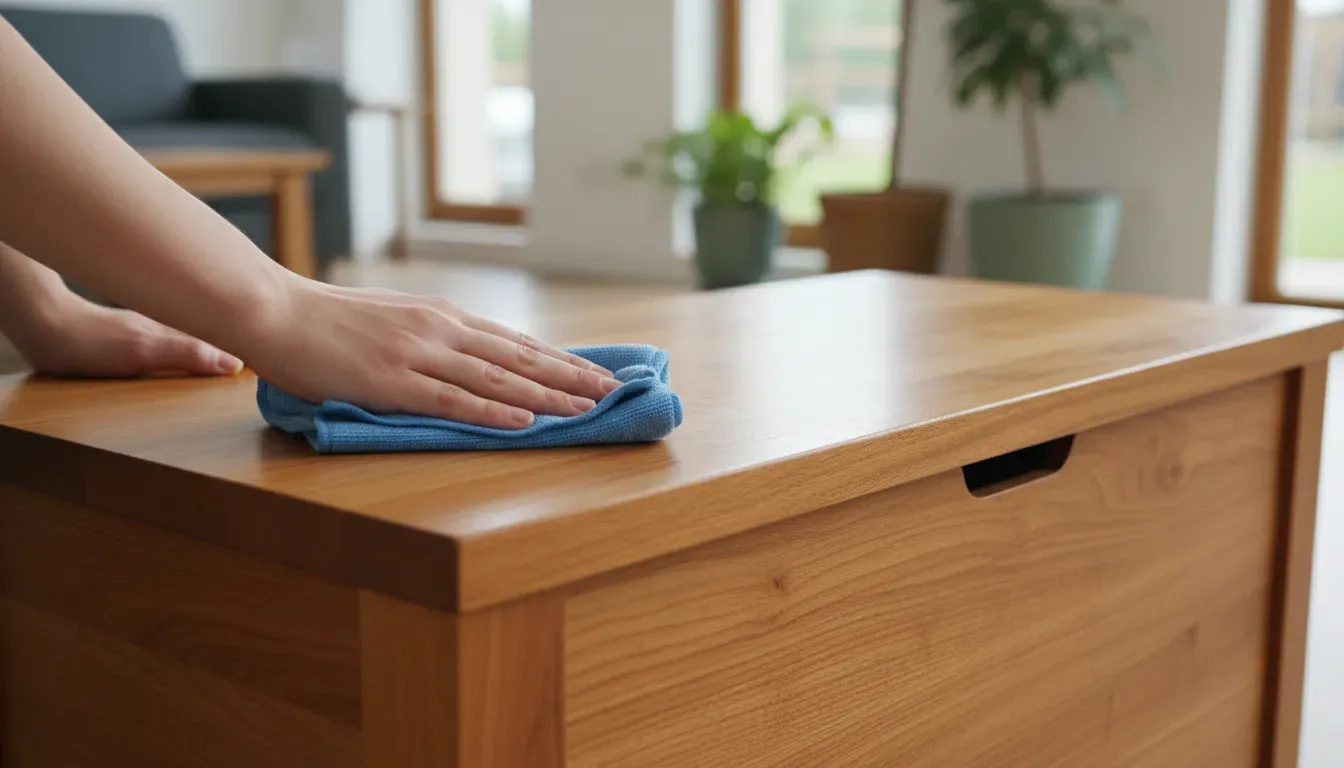
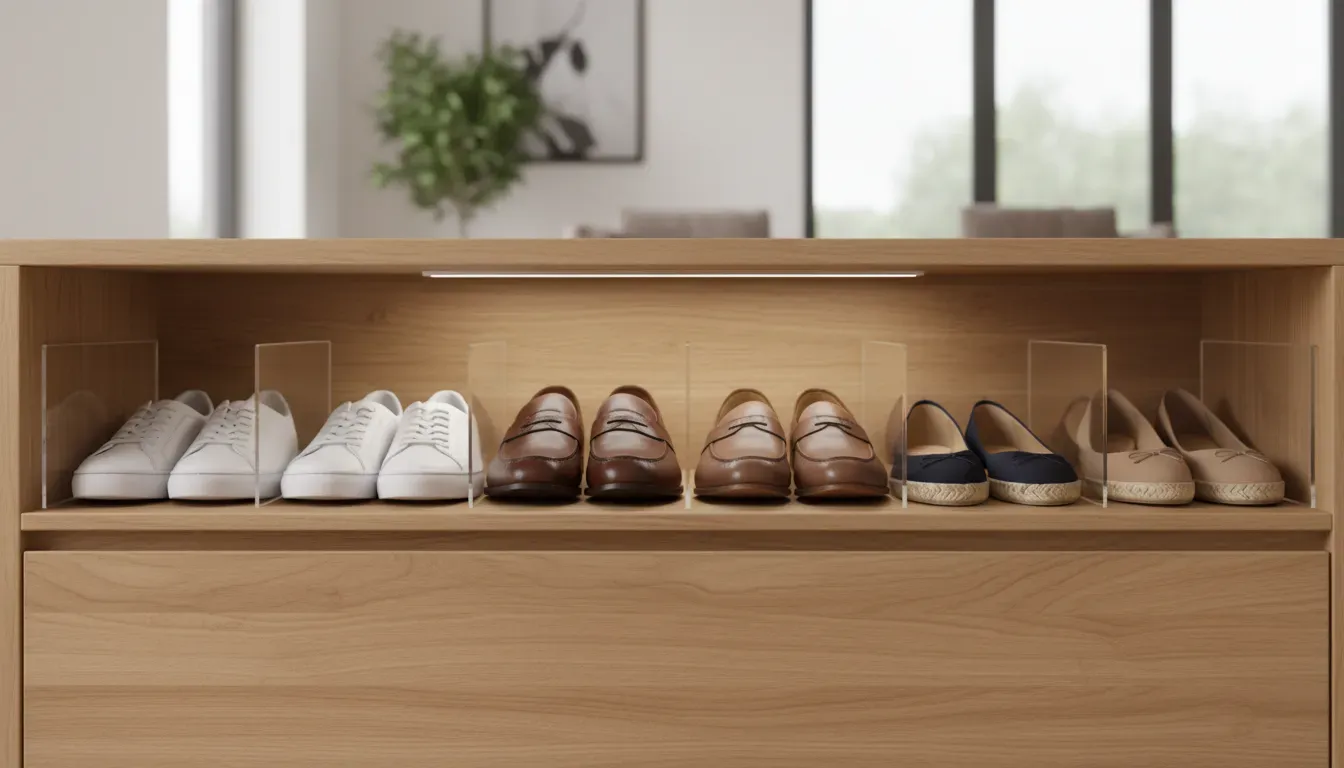
That first pass takes one Sunday afternoon for a full refresh: pull everything out, clean the interior, wash the liners (the compartment above shows the payoff — shoes separated by dividers, baskets lined up, nothing piled), then restock only what’s in rotation.
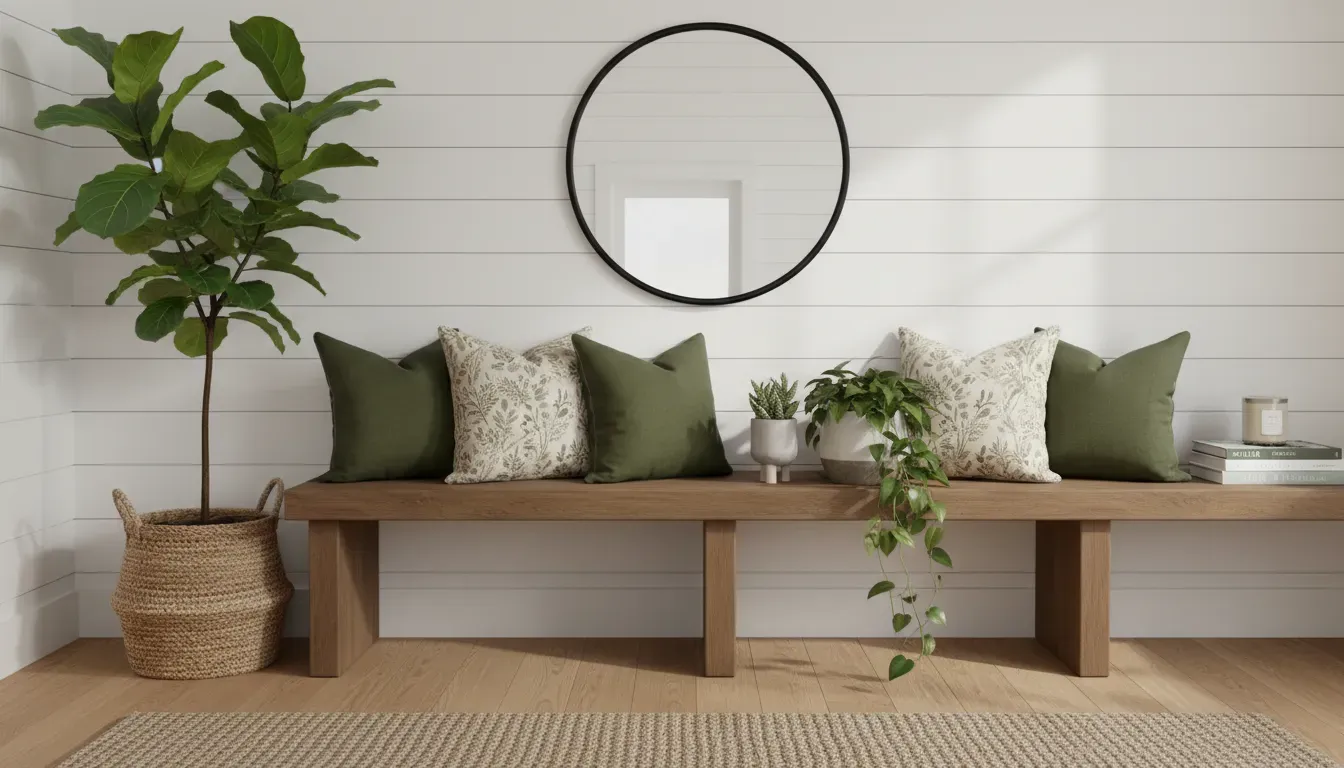
Finish by restyling the bench so it reads as furniture instead of a drop zone — fresh pillows and a tidy seat are the visual reward for the routine, and a bench that looks curated is far less likely to become a dumping ground.

Stop Guessing Measurements. Build Your Dream Entryway with Confidence.
Transform awkward hallways, cramped foyers, and cluttered mudrooms into organized sanctuaries. Includes 20 CAD floor plans, facing real-home photo spreads, the 36-Inch Clearance Rule, the Shoe Pairs Formula, and 7 printable worksheets.
Core Edition ($17.99) · Flagship Photo Edition v5 ($39.99)
