
Best Bins and Baskets for Fall Clothing and Blankets
Best storage bins and baskets for bulky fall clothing and heavy blankets: size, material, and lid choices that stop sagging, mustiness, and wasted shelf space.
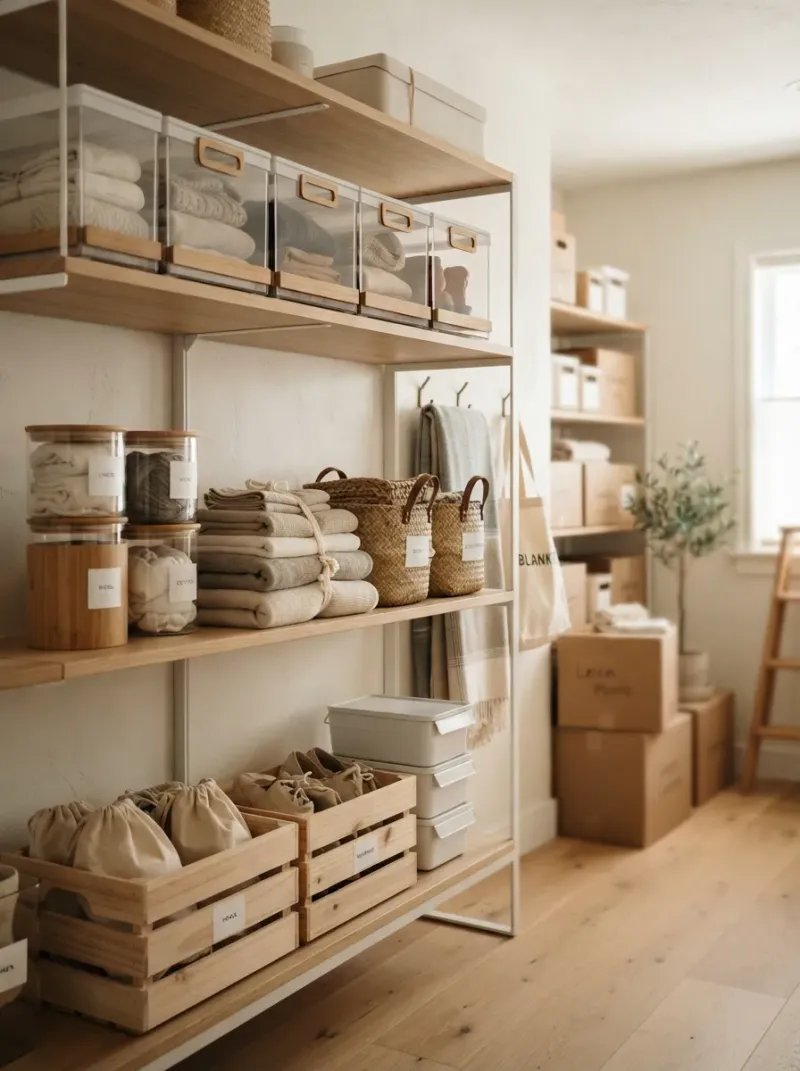
Published · Linda Wise
7 min readLast updated: November 8, 2026 | Reviewed by: Linda Wise, managing editor
Fall storage is a weight problem disguised as a space problem. A wool blanket weighs five to eight pounds, a folded sweater stack easily hits fifteen, and the bin holding them has to survive being dragged off a top shelf twice a year.
Most bins fail at exactly that moment. The walls bow, the handle tears, the base sags into the shelf below. The bins that hold up share a few unglamorous traits: straight sides, a rigid base, stitched handles, and a lid that keeps dust out without sealing moisture in.
Here is how to pick by load and material rather than by color, plus the basket types worth the money for the two categories that cause the most trouble — bulky knits and heavy blankets.
Start With the Load, Not the Look
Before you shop, weigh one full bin’s worth. A bathroom scale and a laundry basket get you there in two minutes.
- Sweaters and knits: 12 to 20 pounds per bin.
- Throws and small blankets: 10 to 15 pounds.
- Queen or king wool blankets: 15 to 25 pounds for two.
- Comforters and down duvets: 8 to 15 pounds but very high volume.
Those numbers decide everything else. A bin rated for 10 pounds will not hold a winter bedding load, no matter what the product photo suggests. Check the load rating on the product page; if there is none, assume the bin is for light goods.
The Four Bin Types That Actually Work
| Type | Best for | Typical capacity | Strength | Weak point |
|---|---|---|---|---|
| Rigid plastic tote with latching lid | Blankets, bedding, garage storage | 60-100 qt | High | Bulky; lids crack when stacked unevenly |
| Fabric bin with rigid insert | Sweaters, scarves, folded knits | 20-40 qt | Medium | Handle stitching is the failure point |
| Woven basket, seagrass or rattan | Throws in a living room, open shelving | 40-70 qt | Medium-high | Can snag knits; needs a liner |
| Deep canvas or felt basket | Entryway blankets, mudroom gear | 30-50 qt | Medium | Collapses when empty; holds dust |
The pattern: plastic for volume and protection, fabric for shelves and knits, woven for anything visible, canvas for the entryway where things get thrown rather than folded.
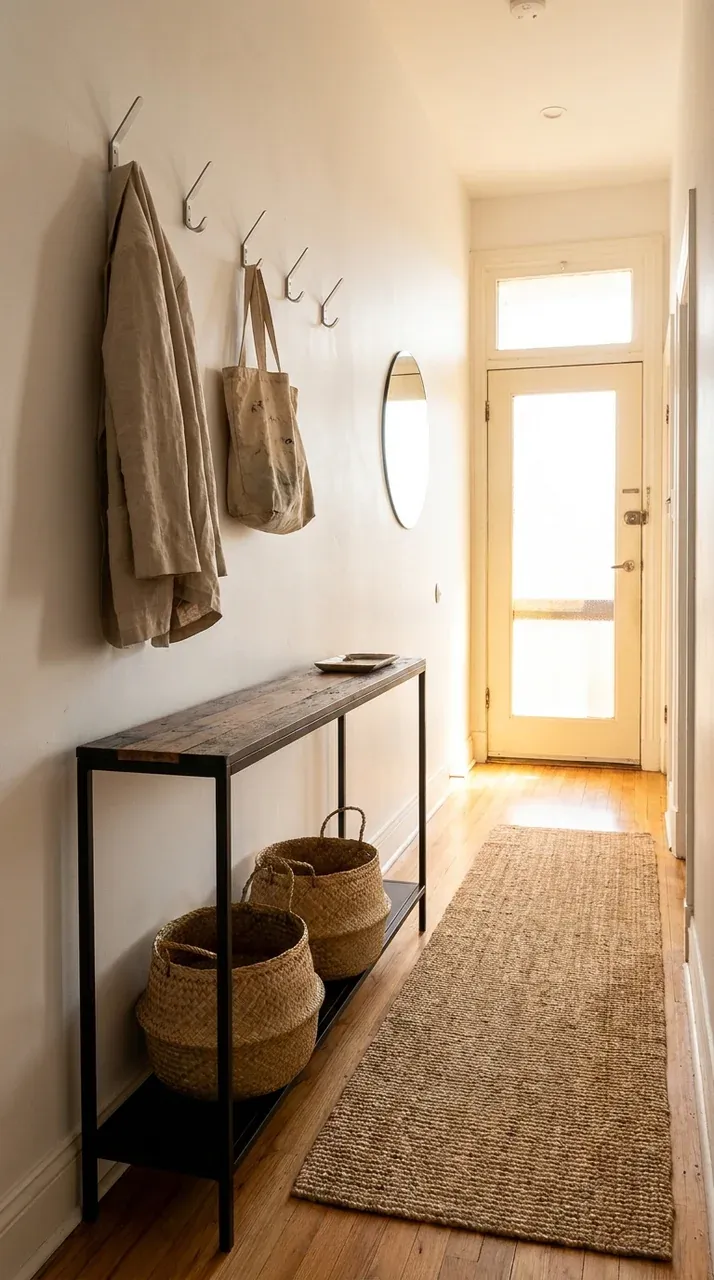
Image: lined woven baskets work on open shelving because the liner stops snags and the weave lets air move.
What Separates a Good Bin From a Bad One
Five details decide whether a bin survives three seasons.
- Straight, reinforced walls. Tapered bins look tidy but lose usable volume and bow outward under load. Look for vertical ribs or a double-wall construction.
- A sewn-in rigid base. The bottom panel is where soft bins fail. A board insert that is stitched in place beats one that slides into a sleeve.
- Stitched handles, not glued. Glued handles peel off within a season at 15 pounds. Look for bar-tacked or riveted attachment.
- A lid with a lip, not a gasket. You want dust out and air moving. A hard gasket seal is for garage pest protection, not for wool.
- Consistent footprints. Bins that stack on each other and match a shelf depth waste less air than a collection of near-misses.
Measure your shelf depth and clear height before ordering, and verify the exterior dimensions on the product page — listed capacity in quarts rarely maps cleanly to a shelf.
Baskets for Bulky Knits
Sweaters are the category people ruin. Two mistakes cause most of the damage: hanging them, and stacking too much weight on the bottom layer.
- Fold, do not hang. Hangers stretch shoulders permanently on knits.
- Keep bins shallow. Twelve inches deep maximum, so you get one or two layers, not five.
- Line the basket. A cotton or linen liner stops snags on rattan and seagrass and makes the basket washable.
- Skip the vacuum bag. Compression crushes loft in wool and down and leaves creases that do not come out.
For open shelving, a lined woven basket is the best-looking option and it breathes. For closed closet shelves, a fabric bin with a rigid insert is cheaper and stacks better.
Blankets: Volume Beats Weight
Blankets are the opposite problem. They are heavy but not crushing, and they take up enormous volume. Three approaches, in order of how much space they save:
- Rigid 60-to-100-quart totes — the default. One queen wool blanket per 60-quart bin, two throws per 40-quart.
- Vacuum bags inside a rigid bin — saves 50 to 70 percent of volume for synthetic fills and cotton. Do not use on wool or down long term.
- Open baskets with a lid — best for blankets in active rotation, because you will actually fold them back in.
Store blankets clean. Body oils and dust attract pests and set stains that appear months later. Wash or dry-clean before the bin closes, and make sure everything is fully dry — a slightly damp wool blanket in a closed bin is how mustiness starts.
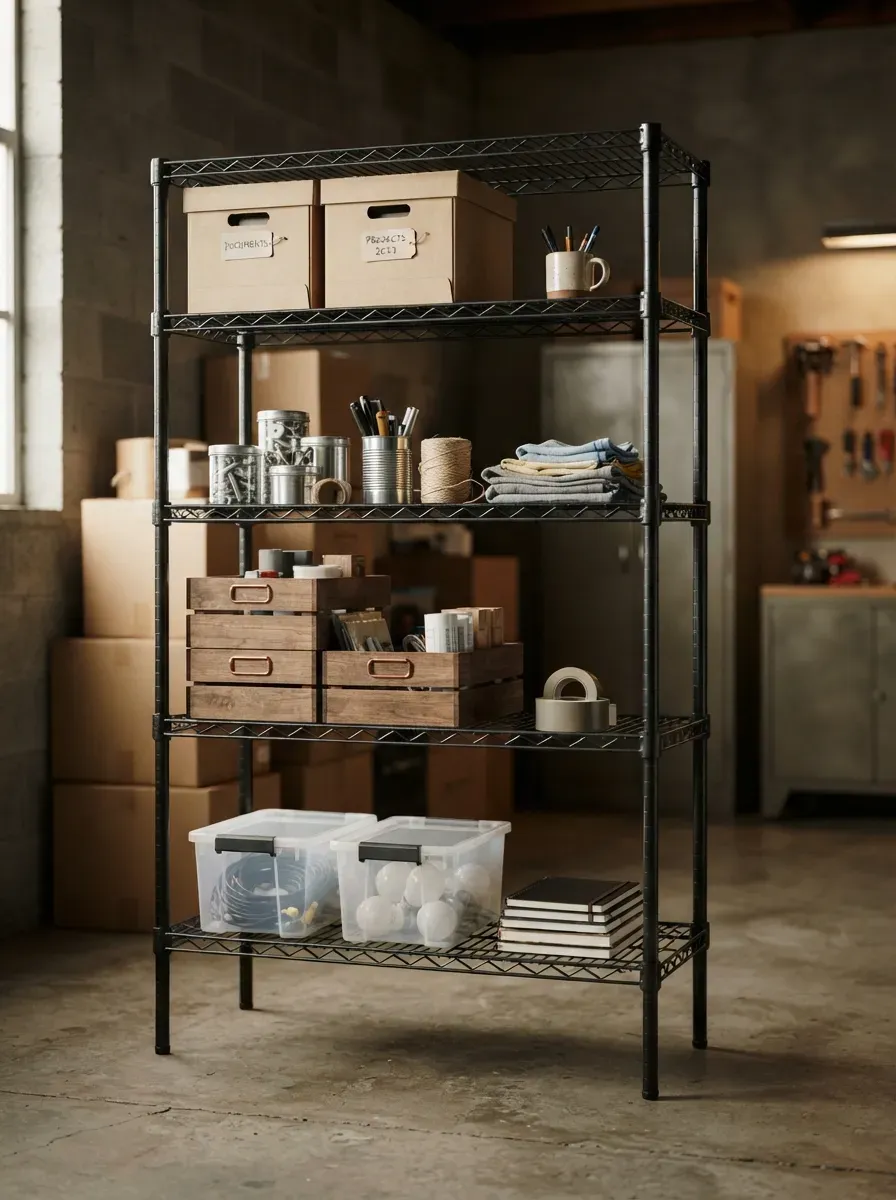
Image: label the front face, not the lid — stacked bins hide lids, and an unreadable label is decoration.
Airflow, Pests, and the Musty Smell
The most common complaint about stored fall clothing is the smell when the bin opens in October. It is almost always moisture, not the bin.
- Vent, do not seal, for anything in a conditioned room. Vented plastic or breathable fabric lets humidity equalize.
- Seal, then manage, for garages and attics. Airtight totes plus a desiccant pack, refreshed each season.
- Cedar and lavender repel some pests mildly and fade within months. They are a scent choice, not a control strategy. Clean storage does more than either.
- Never store in a damp basement without a dehumidifier. No bin solves a wet room.
If a bin already smells, air it in sunlight for a few hours, wipe it with a diluted vinegar solution, and dry it completely before refilling.
One more habit worth building: store the season you are leaving, not the season you are in. When the fall clothes come out, the summer clothes go into the same bins, in the same place, on the same day. Rotating in one motion keeps the bin count stable. Rotating in two motions — pulling fall out now, dealing with summer later — is how a closet ends up with both seasons in it and no floor space.
Labels, Handles, and the Two-Trip Rule
A bin you cannot identify from the front is a bin you will open four times looking for the same sweater. Three cheap habits fix that:
- Label the front face with a strip of painter’s tape and a marker, or a printable label if you want it to look deliberate.
- Describe contents, not category. “Wool sweaters, gray” beats “Winter.”
- Note the season on the label so October sorting takes seconds.
Handles deserve a second look before you buy. A bin without handles gets dragged by the rim, which is how lids crack and corners split. If you are storing above shoulder height, handles are not optional — they are the difference between a controlled lift and a bin dropped on your head.
The two-trip rule: never carry a loaded blanket bin up a ladder. Set it on a step stool, climb, then lift. It sounds obvious until the bin is at eye level and your arms are full.
Sizing Your Shelf Before You Buy
A quick planning table for a standard 12-inch-deep closet shelf with 16 inches of clear height:
| What you are storing | Bin capacity | Bins per 4-ft shelf | Notes |
|---|---|---|---|
| Folded sweaters | 20-30 qt | 4 | Keep to two layers |
| Throws | 40 qt | 3 | One per bin |
| Queen wool blanket | 60 qt | 2 | One per bin |
| Comforter or duvet | 100 qt | 1 | Consider vacuum bag first |
| Scarves and gloves | 12-15 qt | 5-6 | Dividers help |
These are planning figures. Verify the exterior dimensions and the loaded weight rating on the product page; the difference between a 15-inch and a 17-inch bin is the difference between a shelf that closes and one that does not.
Where to Spend and Where to Save
Spend on: the bins that hold blankets and anything going into a garage or attic. These take the load and the temperature swings.
Save on: the baskets in active rotation on open shelves. They get refolded constantly and replaced more often anyway.
A budget-friendly supplement
Costway’s storage and organization range includes stackable bins, foldable baskets, and closet organizers at factory-direct prices. Affiliate link: we may earn a commission at no extra cost to you. Measure first, and buy one sample before committing to a matching set.
For the broader bin comparison, read our storage bin buying guide. If you are rotating gear at the door rather than in a closet, our seasonal rotation strategy and seasonal gear organization guide cover the entryway version of this problem. Small-space planning lives in maximize your small space.
Bottom Line
Buy rigid, straight-sided bins with a sewn-in base and stitched handles for blankets, and shallow lined baskets for knits. Match capacity to load: 60 to 100 quarts for bedding, 20 to 40 for sweaters, and never more than two layers of knit in one bin.
In our assessment, the single best purchase for most households is a set of latching 60-quart totes plus two lined woven baskets for the living room. That covers the heavy, the bulky, and the visible — which is the whole problem.
Shop Entryway Furniture & Storage Deals on Costway
Factory-direct pricing on entryway benches, shoe cabinets, hall trees, and organizers with fast, free US delivery.
* Affiliate disclosure: We may earn a commission if you shop through this link at no added cost to you.
Check Costway Entryway DealsFrequently Asked Questions
What size bin do I need for a queen-size blanket?
A 60-to-100-quart bin holds one queen blanket or two throws with room to spare. Measure the folded blanket before buying; a thick wool queen can compress to roughly 18 by 14 by 10 inches, but a quilted down comforter will not compress at all and needs a 100-quart bin or a vacuum bag.
Should blanket storage bins be airtight?
No, not for natural fibers. Wool, cotton, and down need some airflow to avoid trapped moisture and mustiness. Vented plastic bins or breathable fabric bins are better than a hard seal. Airtight is right for pest protection in a garage, but then add a desiccant pack and check it seasonally.
Are fabric bins strong enough for heavy blankets?
Only if they have a rigid insert or a reinforced frame. Soft-sided bins with a cardboard base bow and eventually tear at the handle under 20 pounds or more. Look for bins with a sewn-in board base and stitched, not glued, handles.
How do I store wool sweaters without stretching them?
Fold, never hang. Store sweaters in a shallow bin no deeper than 12 inches so you are not stacking weight on the bottom layer. Line the bin with acid-free tissue or a clean cotton sheet, and add cedar or lavender only if you actually like the scent — both fade.
Can I store blankets in a vacuum bag?
Yes for synthetic fills and out-of-season cotton, but be careful with wool, down, and anything with structure. Long-term compression damages loft and creases natural fibers permanently. Use vacuum bags for transport and short-term storage, not for a wool heirloom.