
which entryway bench options are best for families with kids and pets?
Stop replacing furniture. Here is the definitive guide to durable, safe, and stylish entryway benches that survive kids, dogs, and daily chaos.
Feb 25, 2026 - Written by: Linda Wise

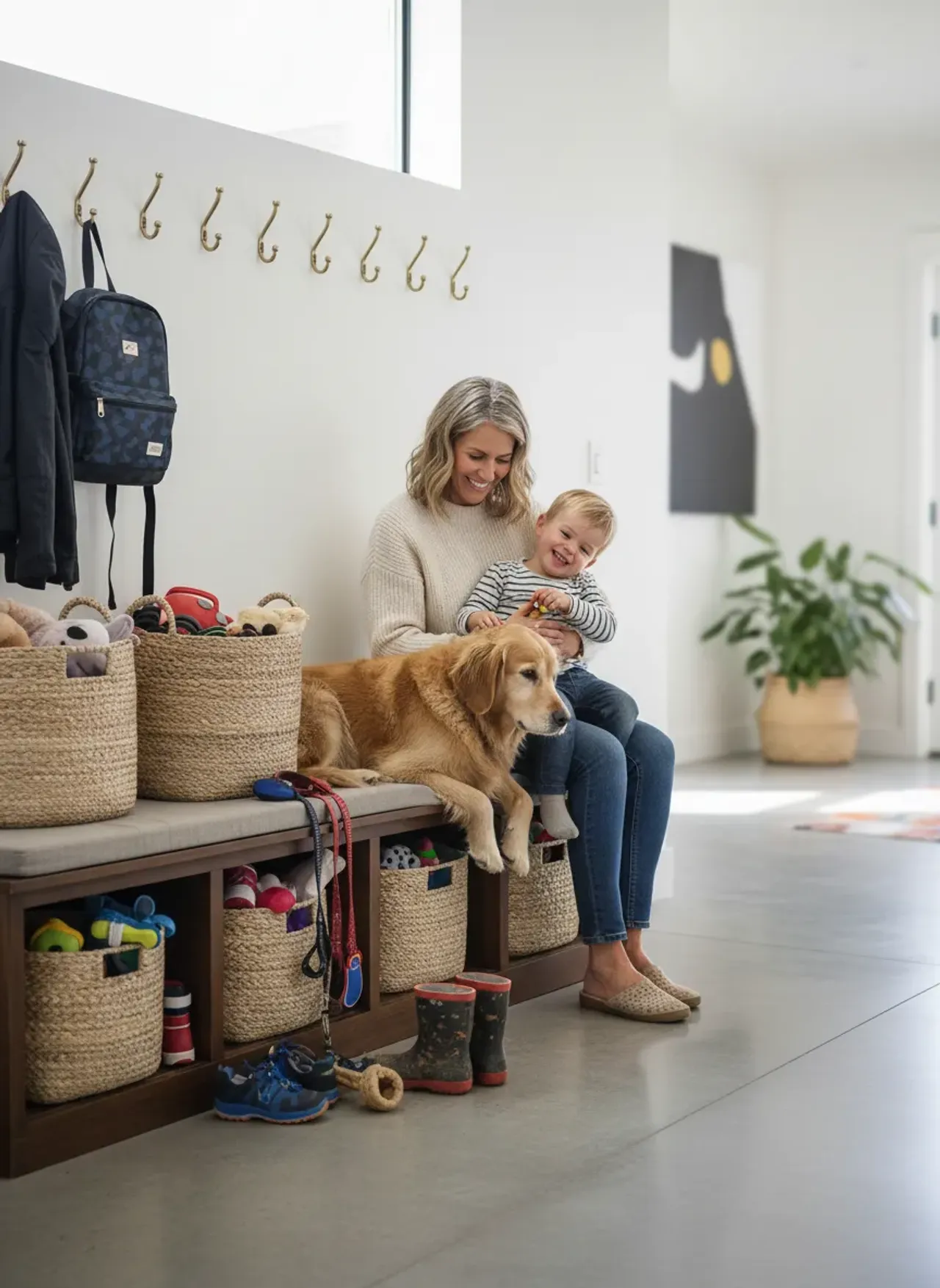
If you have kids or pets, your entryway isn’t just a transition space; it is the front line of a daily battle. It’s where muddy cleats get kicked off, where the dog shakes off rain water, and where backpacks are dropped with the force of a tectonic shift.
I’ve walked into too many homes where the entryway furniture looks like a war casualty. Beautiful, delicate velvet benches stained with juice boxes, or wicker baskets shredded by a cat who decided they were glorified scratching posts. The reality is simple: standard furniture design rules do not apply to us. We need armor that looks like furniture.
When asking yourself which entryway bench options are best for families with kids and pets, you have to look past the catalog photos. You need to look at abrasion ratings, joinery, and cleanability. This guide peels back the aesthetic layer to reveal what actually works in a high-traffic, high-chaos home.
The Material Reality Check: Durability Above All
Let’s start with the skeleton of the bench. If the frame can’t handle a six-year-old jumping on it or a 70-pound Labrador using it as a launchpad, it doesn’t matter how nice the cushion is.
Solid Wood vs. Engineered Composites
There is a massive difference between “wood” and “solid wood” in furniture descriptions. Particleboard (MDF) is cheap and common, but it has a fatal flaw: moisture. If wet snow boots sit against an MDF base, it will swell and crumble like a wet cracker.
For families, I generally steer clients toward hardwoods like Maple, Oak, or even high-grade Rubberwood. These materials can take a beating. They develop a patina rather than breaking. If you must go with a composite to save money, ensure it has a high-pressure laminate finish, not just a paper veneer.
The Metal Frame Advantage
If you want something virtually indestructible, consider an industrial-style bench with a welded steel frame. Metal doesn’t scratch easily from dog claws, it doesn’t absorb water, and it can support significant weight. It’s often the safest bet for the “drop zone.”
Pro Tip: If you choose a metal bench, check the corners. Sharp, industrial angles are a hazard for toddlers. Look for radiused (rounded) corners or add unobtrusive corner guards.
Upholstery: The Fabric of Survival
Most people think they have to sacrifice comfort for durability, ending up with a hard wooden slab. That’s not true, but you have to be surgical about your fabric choice.
The “No-Go” List
Avoid linen, silk, velvet, and loose-weave cotton. Linen absorbs stains instantly. Velvet attracts pet hair like a magnet. Loose weaves (like tweed) are essentially an invitation for cats to snag their claws.
The Champions: Crypton, Leather, and Microfiber
- Crypton/Performance Fabrics: Originally designed for hospitals and hotels, these fabrics are chemically treated to repel moisture and bacteria. You can literally spill red Gatorade on them and wipe it off.
- Distressed Leather: I love this option for pet owners. Pristine leather shows scratches; distressed leather just looks better with age. It wipes clean and doesn’t hold onto pet dander or odors.
- Microfiber: This is the budget-friendly hero. It’s tightly woven (so claws slide off rather than snag) and usually hydrophobic.
Storage Configurations: Managing the Chaos
A bench without storage in a family home is a wasted opportunity. However, the type of storage determines whether your hallway stays tidy or becomes a black hole of lost mittens.
The Flip-Top vs. The Cubby
I have a strong opinion here: Cubbies win.
Flip-top benches are aesthetically pleasing because they hide the mess. But consider the practical application. To get their shoes, your child has to clear off whatever is sitting on the bench, lift a heavy lid, and dig. It creates friction. When things are hard to access, kids stop using them.
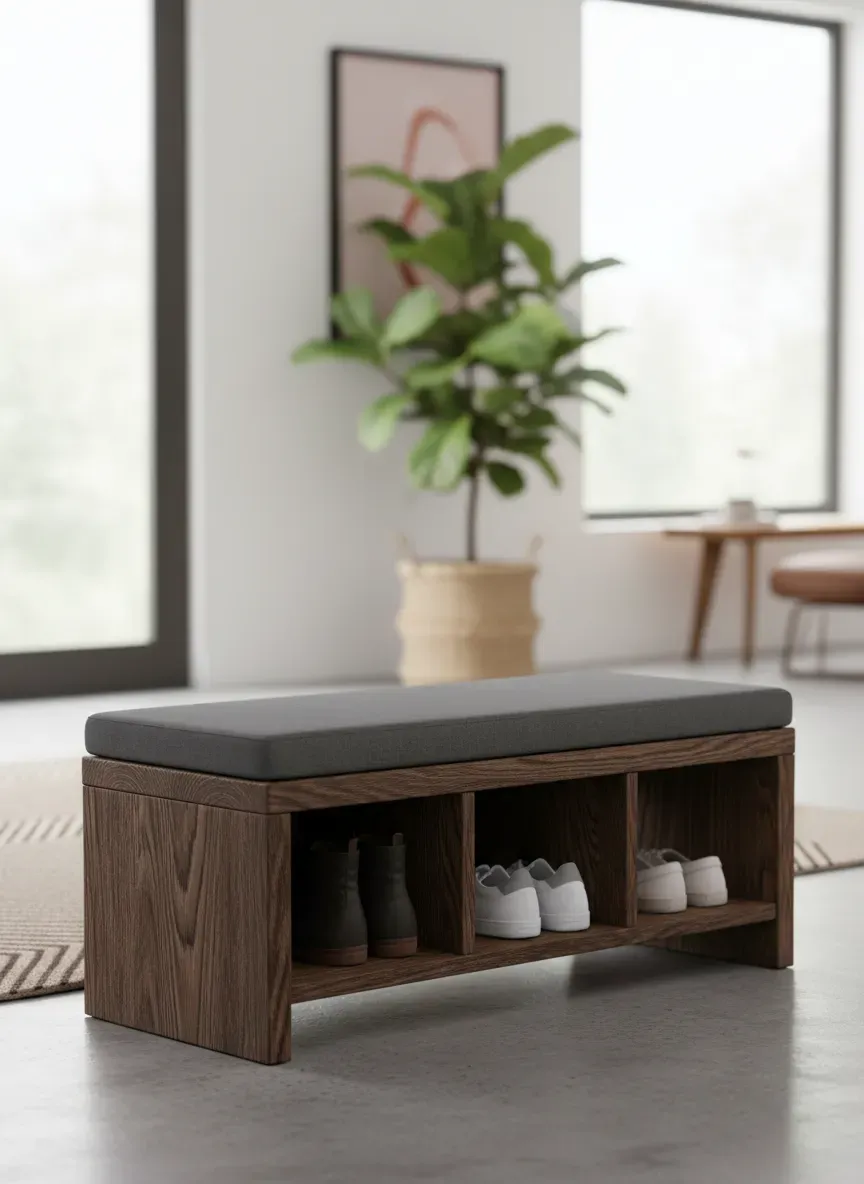
Open cubbies or shelves allow for “kick-off and slide-in” functionality. It’s intuitive. If you hate the visual clutter, use durable baskets within the cubbies.
If you are dealing with tight quarters, understanding the best depth for mudroom lockers and ensuring your bench aligns with those dimensions is critical. You don’t want a bench that protrudes into the walkway, becoming a knee-knocker for adults and an obstacle for running dogs.
The Shoe Rack Hybrid
Ideally, you want a bench with a slatted shelf underneath. Why slats? Airflow. If you shove damp sneakers into a closed drawer or a solid-bottom cubby, you are breeding bacteria and fungus. A slatted metal or wood shelf allows mud to dry and fall through (onto a mat you place underneath) and lets shoes breathe.
If you want the best experience for organizing heavy winter gear without breaking the bank, I highly recommend checking out the Vasagle Industrial Storage Bench. It combines a rigid metal frame with a wood top, making it impervious to most pet damage.
The Pet Factor: Claws, Paws, and Anxiety
Pets interact with furniture differently than we do. For a dog, an entryway bench might be a lookout tower or a safe cave.
The “Under-Bench” Sanctuary
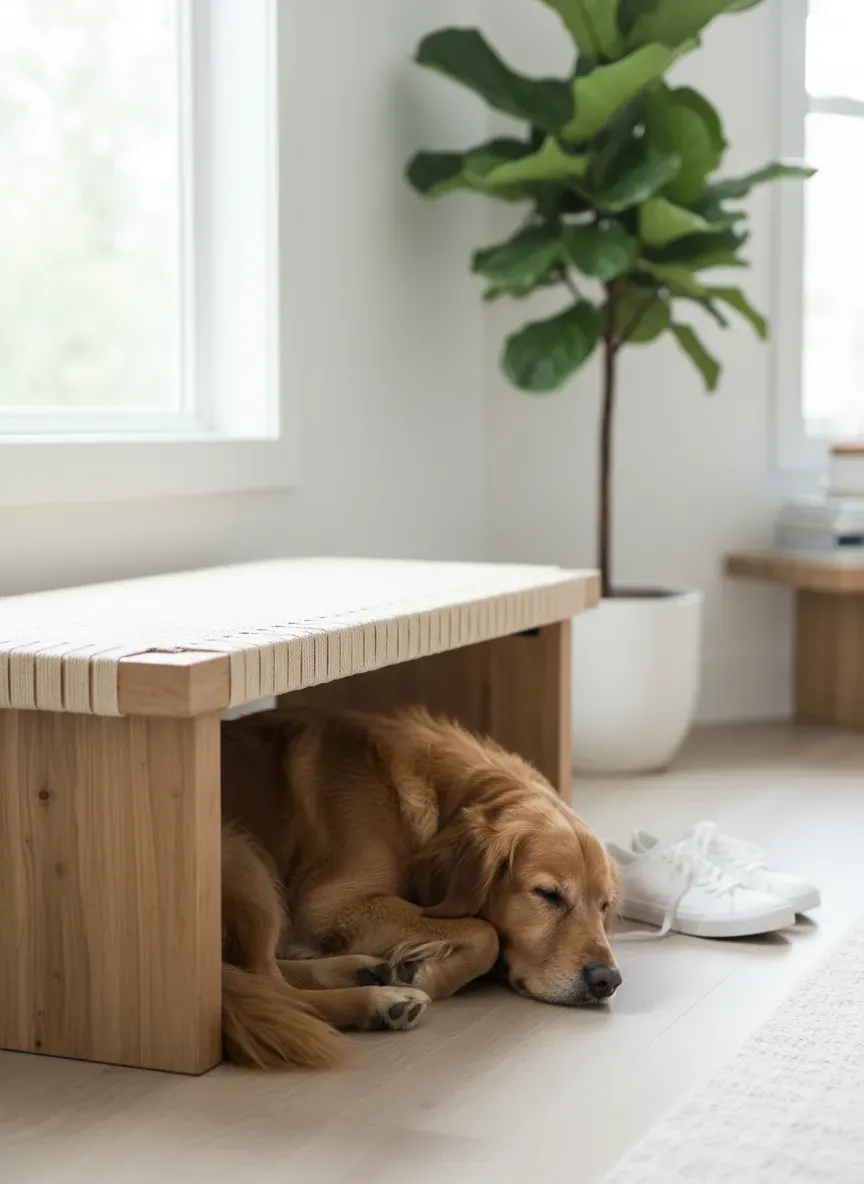
Many dogs feel anxious when strangers enter the home. A bench with open space underneath often becomes a “safe crate” for them. If you have a nervous dog, avoid benches with solid bases that go all the way to the floor. Leave that negative space open. It makes the room feel larger and gives your pet a retreat.
Scratch Resistance
Cats are the enemies of texture. Wicker baskets under a bench? Shredded in a week. Exposed foam? Gone. Stick to smooth surfaces. If you use baskets for storage, opt for wire or felt bins rather than woven seagrass.
Safety Features for Young Children
We need to talk about fingers. If you opt for a storage chest style bench (despite my earlier preference for cubbies), the hinge mechanism is the most critical component.
The Guillotine Effect
Cheap toy chests or storage benches have standard hinges. One slip, and a heavy wooden lid comes crashing down on small fingers. It happens more often than you think. You must look for slow-close safety hinges or torsion hinges that hold the lid open at any angle.
Stability and Tipping
Kids climb. It’s what they do. A tall hall tree with a bench attached is a tipping hazard if not secured. Always anchor tall units to the wall. For standalone benches, ensure the base is wide enough that it won’t tip if a child stands on the very edge to reach a coat hook.
When planning your layout, you need to consider traffic flow. You should read up on how to properly space furniture far apart to ensure that a romping dog or a running child doesn’t clip the edge of the bench.
Top 3 Bench Architectures for Families
After years of assessing layouts, three specific styles consistently outperform the rest.
1. The “Hall Tree” Combined Unit
This is the heavy hitter. It combines hooks, overhead storage, a bench, and shoe storage below. It creates a dedicated station for each family member.
- Why it works: It utilizes vertical space, keeping backpacks off the floor.
- Caveat: It requires a significant wall footprint.
For a robust option that handles heavy coats and offers a solid seating area, take a look at the Crosley Furniture Seaside Hall Tree. The distressed finish hides dings exceptionally well.
2. The Metal Frame with Wood Top
Simple, rugged, effective.
- Why it works: There is nothing to stain. Mud wipes off the wood; the metal resists kicks and scratches.
- Caveat: It’s not soft. You won’t want to lounge here for hours, but for putting on shoes, it’s perfect.
3. The Upholstered Storage Ottoman (Leather/Faux Leather)
This provides a softer look and hides clutter completely.
- Why it works: No sharp corners for toddlers. Wipeable surface. Huge internal volume for seasonal items like scarves or sports gear.
- Caveat: You lose the shoe rack ventilation.
If you prefer the soft-close safety route, the SafetyHinge Wooden Storage Chest is a lifesaver for preserving tiny fingers while hiding an immense amount of clutter.
Placement and Ergonomics
Buying the bench is step one. Putting it in the right spot is step two.
The “Drop Zone” Radius
The bench needs to be within arm’s reach of the door but out of the swing radius. If it’s too far, the kids will drop their bags on the floor before they get to the bench. It’s human nature.
Also, consider the height. Standard chair height is 18 inches. For small kids, 14-16 inches is more accessible. If you are specifically looking to accommodate toddlers, check out my guide on designing a kid-friendly entryway with low hooks. Lowering the interaction point empowers them to do it themselves.
Integration with Other Elements
Your bench doesn’t exist in a vacuum. It needs to work with your rug (use a washable runner!) and your lighting. But most importantly, it needs to work with the wall behind it. If you don’t have a hall tree, install heavy-duty hooks above the bench. But be careful—where exactly should you place those hooks to prevent coats from draping over the bench and making it unusable for sitting? The answer is usually higher than you think—about 60 inches from the floor for adults.
Maintenance: Keeping it Alive
Even the toughest furniture needs care. Here is my quick-fire maintenance routine for high-traffic benches:
- Wood: Use a wax stick to fill in deep scratches immediately. Water rings need to be dried instantly.
- Metal: If you see a scratch that exposes raw steel, dab it with clear nail polish or a matching metal paint to prevent rust from wet shoes.
- Fabric: Vacuum the crevices weekly. Crumbs act like sandpaper, wearing down fabric fibers every time someone sits and shifts their weight.
The Bottom Line
When you are deciding which entryway bench options are best for families with kids and pets, you are balancing three variables: abrasion resistance, safety mechanics, and storage volume.
Don’t get seduced by the delicate, tufted beige bench on Instagram. That bench lives in a house without muddy paws and spilled juice boxes. Go for the distressed leather, the welded steel, or the solid hardwood with the high-grade sealant.
Key Takeaways:
- Avoid: Velvet, linen, pure white fabrics, and cheap particleboard.
- Embrace: Distressed leather, solid wood, metal frames, and open cubbies.
- Safety: Prioritize soft-close hinges and rounded corners.
- Flow: Ensure the bench doesn’t block the door swing or the main walkway.
Your entryway sets the tone for your home. It can be a chaotic pile of shoes, or it can be a streamlined system that handles the mess for you. Choose the armor that fits your battle.