
Shoe Basket: the Stylish, Forgiving Way to Store Shoes (and Ditch the Rack)
A woven shoe basket is the fastest, friendliest fix for a messy entryway. Learn how to choose the best shoe basket, size it correctly, style it, and care for it — so your basket shoe storage looks like decor, not clutter.
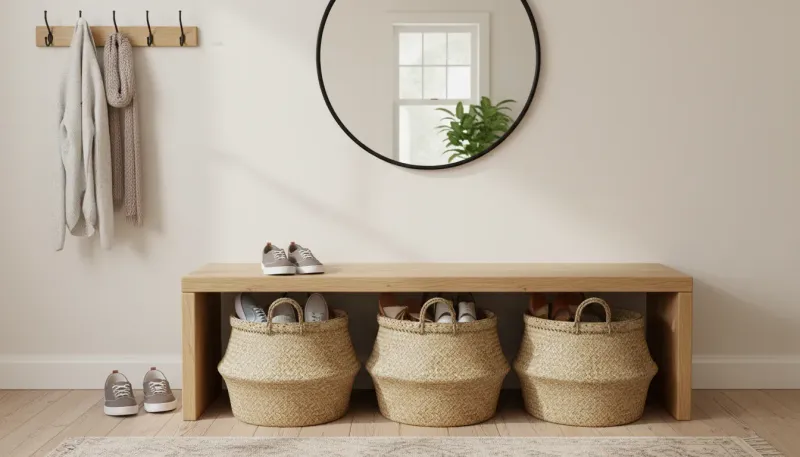
Jan 30, 2026 · Linda Wise
15 min readA shoe basket is quite simply the cheapest organizational glow-up you can give an entryway — shoes disappear into 40 dollars of woven goodness. No hinges, no drawers, no assembly beyond dropping it on the floor. You toss, it forgives, the room instantly looks intentional. Few storage purchases reward you that fast.
The catch is that a shoe basket isn’t a magic bin. Size it wrong and it tips, stuff it wrong and the weave strains, and skip the basics and the seagrass starts to smell. This guide covers which material holds up, what actually fits inside, and where to park a shoe basket for entryway duty so it stays looking like decor instead of a shoe pile with a disguise.
Why a Shoe Basket Beats a Rack (No More Pickiness About Lining Up Shoes)
Shoe racks demand a lot. Every pair has to be pulled out, aligned toe-out, and slid back in at exactly the right height slot. Sneakers won’t stand up. Boots knock over everything next to them. The bottom shelf becomes a graveyard of shoved-in flip-flops, and the whole metal contraption scrapes its way down your hallway every time someone kicks a pair at it.
A shoe basket asks for none of that. It’s top-loading and chaos-tolerant, which matters more than people admit: if putting shoes away takes more than one gesture, most of us won’t do it. The woven shoe basket is the one storage piece that survives actual family behavior because “toss it in” still reads as tidy.
There’s also the honesty question of an open rack versus closed storage. A rack displays mismatched shoes 24/7, while a closed shoe storage cabinet hides everything but eats floor depth and budget. The basket splits the difference: shoes are out of sight, but they’re not sealed away, so damp pairs can still air out.
Beyond the functional argument, a well-chosen shoe storage basket simply looks better. A woven seagrass basket beside your front door reads as intentional home styling. A wire rack with three different brands of sneakers on it reads as a yard sale.
Types of Shoe Baskets: Which One Is Right for You?
Not every shoe basket is the same, and matching the right style to your space makes a bigger difference than most people expect. Here’s a breakdown of the most common types.
Open-Top Woven Shoe Basket
The classic. An open-top woven shoe basket in seagrass, water hyacinth, or rattan sits on the floor or under a bench and accepts shoes tossed from any angle. This is the format that works best in a front hall because it’s the fastest to use — no lid to lift, no drawer to open. If you only buy one shoe basket for your home, make it an open-top woven one.
Shoe Basket With Lid
A shoe basket with lid is the step up for living rooms, bedrooms, or any space where you want shoes fully out of sight. The lid adds a surface for keys, a small plant, or a decorative tray, effectively turning the basket into a piece of furniture. The trade-off is that a lid slows down the toss-in habit, so these work better in bedrooms where you sit down to take your shoes off than at a front door where speed matters.
Large Shoe Basket
A large shoe basket — typically 22 inches or wider — is the family solution. It holds six or more pairs laid flat and absorbs the chaos of a busy household without needing to be tidied every day. Floor baskets in this size look intentional rather than overwhelming when paired with matching textures nearby. If you have kids, pets, or frequent guests, go large from day one.
Shoe Basket Organizer With Dividers
Some baskets include internal rope or fabric dividers that create two or three sections inside a single basket. This is useful if you want to keep kids’ shoes separate from adult pairs without buying multiple baskets. The dividers also prevent smaller sandals and flats from sliding under bulkier sneakers and disappearing. A shoe basket organizer with dividers suits households where keeping track of specific pairs actually matters.
Stackable Shoe Baskets
For narrow hallways or vertical wall shelving, stackable shoe baskets — usually wire or rigid rattan — let you multiply capacity upward. Keep the heaviest shoes on the lower baskets and lighter sandals on top. The visual effect of a column of matching baskets is clean and organized-looking even when the contents are not.
Woven vs. Wire vs. Fabric Shoe Baskets
Not every basket is built for footwear, and the material makes or breaks the whole idea.
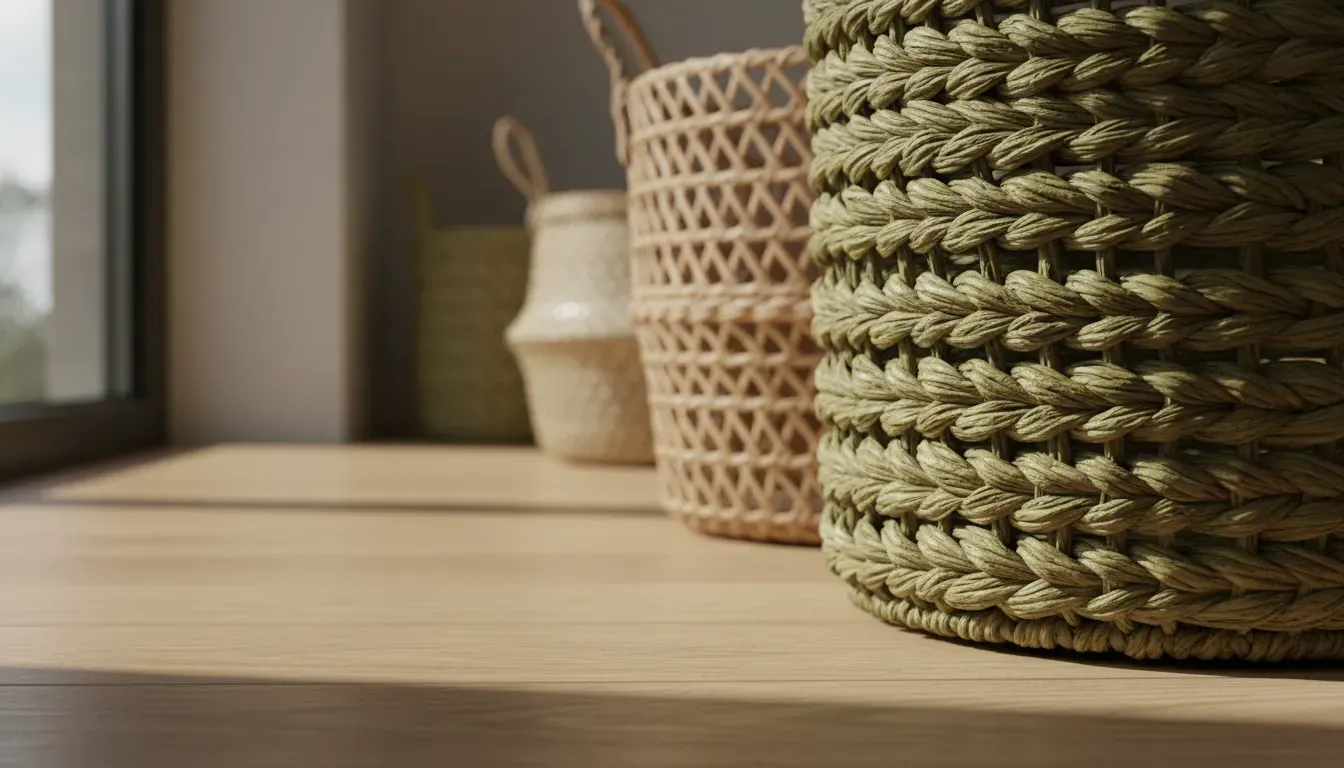
Woven baskets (seagrass, water hyacinth, rattan) are the entryway default for a reason. The natural gaps in the weave let air move around damp soles, which keeps sneakers fresher than any sealed box. Seagrass is the workhorse — tight, stain-resistant, and forgiving of mud flecks. Water hyacinth is softer and chunkier but can mildew if wet shoes sit in it too long. Rattan looks stunning and holds structure, though it can sag under constant heavy boots. If you want one material to bet on for a woven shoe basket, pick seagrass.
Wire baskets are the airiest option of all, which makes them brilliant for sweaty gym shoes or genuinely wet boots. The trade-off is that they show everything you throw in them, and the open grid catches laces and fails to contain small flats. They’re better in a garage or mudroom than a front hall.
Fabric baskets (canvas, cotton rope, polyester) are the wallet-friendly wildcard. Machine-washable, zero slivers, and many are collapsible. But they slouch when underfilled, trap moisture against shoe soles, and the casual canvas look reads more “laundry” than “entryway.” Fine for a kids’ basket by the back door; underwhelming for a front hall you actually style.
Shoe Basket for Entryway: Sizes & What Fits
Before you shop for a shoe basket for entryway use, measure your space — the gap under a bench or console table — because baskets are sold by outside dimensions, and the inside of a woven body is genuinely smaller than it looks. A shoe basket for entryway stools should clear the seat above it and sit an inch off the floor so you don’t scrape the baseboards.
Honest capacities, assuming shoes laid flat rather than stacked like books:
| Basket Size | Fits | Good for |
|---|---|---|
| Small (15 x 11 x 10 in) | About two pairs of sneakers flat, or four flip-flops tumbled | A narrow shelf, a single person’s daily rotation |
| Medium (18 x 13 x 12 in) | Four pairs of sneakers flat, or six to eight flip-flops | Bench cubbies, one kid’s entire shoe collection |
| Large (24 x 16 x 14 in) | Around six pairs of sneakers flat, or ten flip-flops tumbled | Floor baskets, family dumping grounds, guest overflow |
A few sizing truths worth knowing: heels and boots don’t lie down, so a pair of tall boots will eat most of a medium basket. Sandals and crocs pack twice as dense as sneakers. And if you’re tempted to overstuff, stop — a basket that bulges at the seams stops hiding shoes and starts announcing them.
How Many Shoe Baskets Do You Need?
A useful rule of thumb: one shoe basket per person for everyday rotation, plus one communal basket near the door for guests and overflow. A household of four typically does well with four medium baskets under a bench (one per person) and one large basket beside the door for catch-all use. That’s five baskets total, which sounds like a lot until you price it against a custom shoe cabinet.
How to Choose the Best Shoe Basket: Buying Guide
Shopping for a shoe basket gets overwhelming fast — there are hundreds of options. Use these five criteria to filter the field quickly.
1. Material durability. For entryway use, prioritize seagrass or water hyacinth over cheap pressed-paper imitations. Real natural fiber can last five years or more with basic care. Imitation weave materials shed, crack, and look tired within months.
2. Base stability. A flat, solid base keeps the basket upright when you’re tossing shoes in with one hand. Baskets with rounded bottoms tip. Baskets with wooden base inserts stay put. If the listing doesn’t mention a flat base, look at the product photos carefully.
3. Handle placement. Handles on a shoe basket aren’t just decorative — they let you pull the basket out from under a bench, carry it for reorganizing, and tip it to retrieve a shoe from the bottom. Rope handles and leather-wrapped handles hold up better than thin metal loops over time.
4. Interior lining or liner compatibility. A basket that accepts a removable liner is worth paying more for. The liner protects the weave from buckles and mud, and it washes in the machine. Baskets without liner compatibility get dirty faster and are harder to clean.
5. Weave tightness. Hold the basket up to light before buying in-store, or look for zoomed-in photos online. Very open weave looks stylish but lets small shoes (baby shoes, sandal straps) fall through or get snagged. Medium weave is the practical sweet spot for most households.
How to Keep a Woven Shoe Basket Looking New
Woven storage gets punished harder than most decor, but four cheap habits keep it fresh for years.
Line it. A removable fabric liner protects the weave from buckles, zippers, and mud that would otherwise embed itself between the fibers. It also unzips into the washing machine, which is how you actually clean a basket without destroying it.
Dry before you drop. A woven shoe basket is not a drying rack. Let wet boots drain on a tray or mat first, or the trapped moisture will rot the seagrass and create the exact odor you bought the basket to hide.
Vacuum, don’t scrub. The brush attachment on your vacuum handles dust in the weave better than wet cleaning. For deep-set grime, a damp cloth and a drop of mild soap work, then let it air dry completely.
Add cedar. A cedar sachet under the liner pulls moisture, deters bugs, and smells better than any spray. Swap it out every season.
Rotate and air out. Every couple of months, empty your shoe basket completely, shake it outdoors to remove dust and fiber debris, and let it air in sunlight for an hour if possible. Sunlight naturally sanitizes and reduces odor in natural fiber. This five-minute routine keeps the basket smelling clean and extends its lifespan significantly.
Where to Put Your Shoe Basket (Rack, Bench, Floor, Cubby)
Location decides whether your baskets get used or become decor that’s annoying to reach.
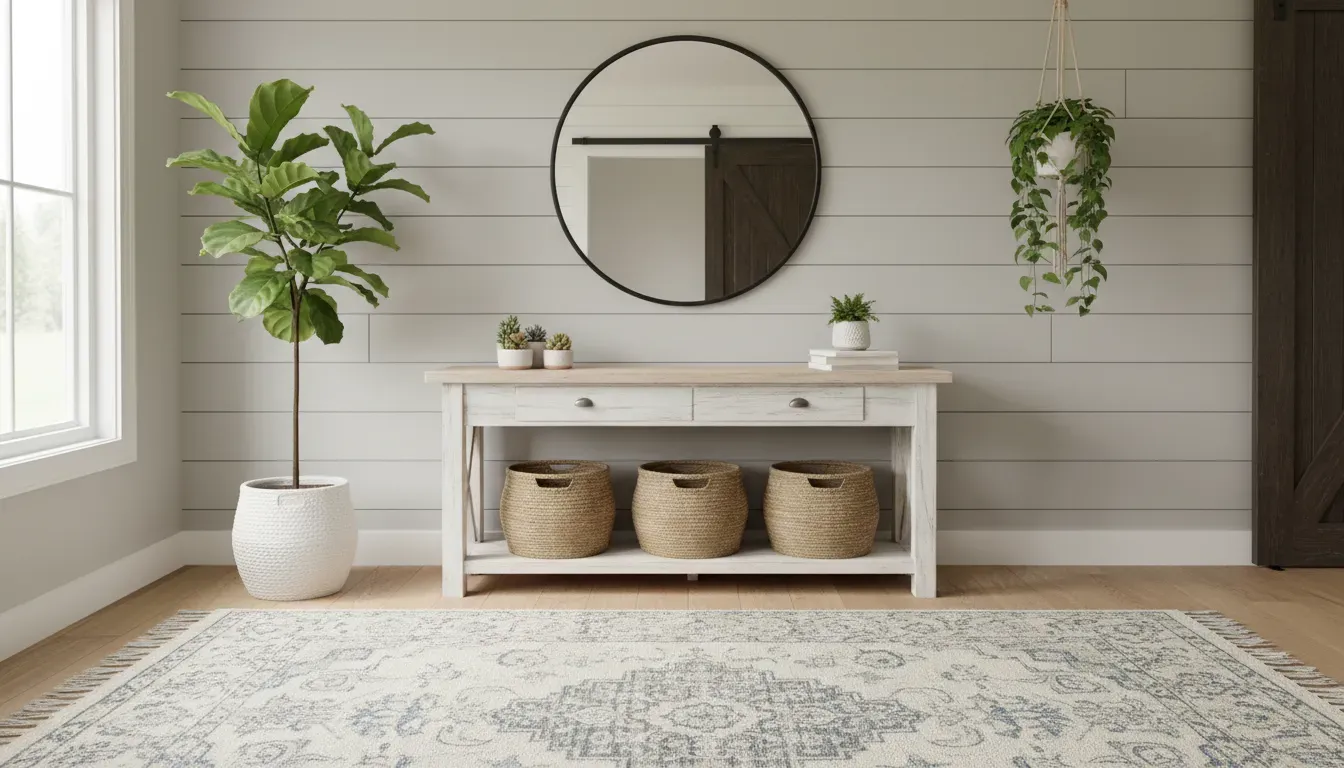
Under a bench or console. This is the classic setup: medium baskets sized to the cubby, sliding out like soft drawers. If you don’t have cubbies, leaving open floor under the seat and dropping two large baskets there gives you a built-in look for a fraction of custom cabinetry. Once shoes are handled, finishing the same zone with a wall-mounted mail sorter keeps the bench top from becoming the next pile.
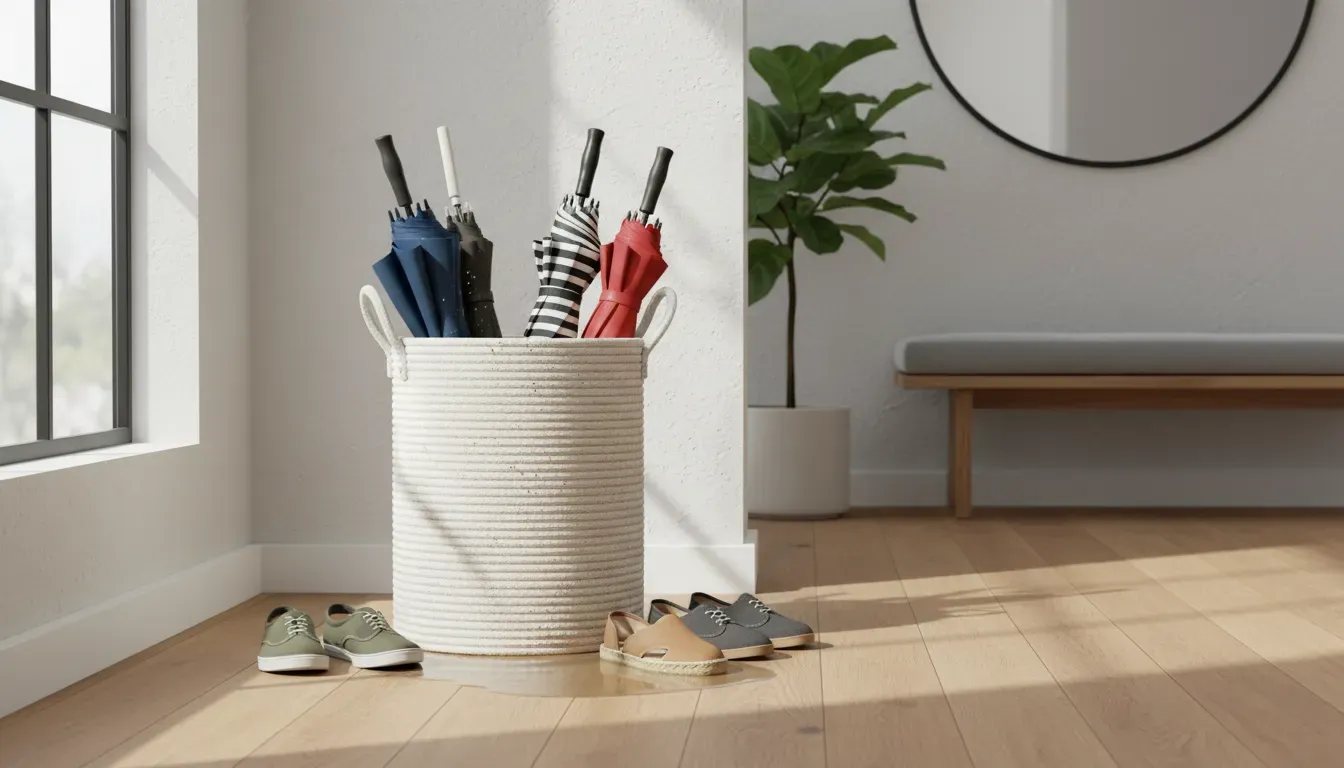
On the floor by the door. The real-life spot where shoes actually land. One big open-top shoe basket here catches the morning chaos, including guests who will not be sorting anything. Make it the largest capacity you can stand and accept that it’s the family dump basket — that’s its job.
Stacked on shelves or a rack. For narrow halls, small baskets on an open shelf unit put vertical space to work. Keep the heavy stuff low and the flip-flops high, and consider the math in our vertical shoe storage guide if you’re going this route.
In cubbies, one per person. When you have a bench with cubby openings, assign a basket to each person instead of mixing. Everyone owns their basket, and “whose sneakers are these” stops being a mystery. If your bench came as part of a hall tree, the basket bays under the seats are usually sized for medium baskets — the same size relationship covered in our hall tree basket guide.
In the bedroom or closet. A shoe basket isn’t just for entryways. A medium woven basket beside the bed catches the shoes you wore that day, which keeps your closet floor tidy without forcing you to re-shelve every night. In a walk-in closet, a row of small baskets on a low shelf organizes seasonal shoes without boxes.
Visual bonus: pair the woven basket with smooth textures (velvet cushion, metal mirror, a ceramic vase) so it reads as intentional styling rather than functional clutter.
Shoe Basket Styling Tips: Make Storage Look Like Decor
The difference between a shoe basket that looks like storage and one that looks like an interior design choice comes down to a few styling decisions.
Match the basket to your entryway palette. Seagrass baskets are naturally warm and beige-toned, which suits wood floors, cream walls, and warm lighting. Black wire baskets suit industrial or Scandinavian spaces. White cotton rope baskets work in airy, all-white rooms. Don’t fight your existing palette — lean into it.
Use an odd number. Interior designers default to odd-number groupings because they look more natural. Two baskets look like a pair. Three baskets look like a considered collection. If you’re using multiple shoe baskets under a bench, three matching ones look more intentional than two mismatched ones.
Add a small plant or object on top. For a shoe basket with lid, placing a trailing pothos, a candle, or a small decorative tray on the surface elevates it from “storage container” to “furniture.” This small step is what separates entryways that photographers shoot from ones that don’t photograph well.
Keep the area around the basket tidy. A beautiful woven shoe basket in the middle of scattered coats, bags, and junk mail still looks like chaos. The basket only reads as decor when the surfaces around it are clear. Pair it with hooks for bags and a small tray for keys and the whole entry becomes cohesive.
Frequently Asked Questions About Shoe Baskets
What is the best material for a shoe basket? Seagrass is the most practical material for a shoe basket used in entryways. It’s tightly woven enough to hold structure under weight, naturally resistant to minor stains, and the gaps in the fiber allow air circulation that keeps shoes fresher. Water hyacinth is a close second but is more prone to mildew in humid climates.
How do I stop my shoe basket from smelling? The most effective approach is to prevent the problem rather than treat it. Never place wet shoes directly into a woven shoe basket — let them air on a mat first. Add a cedar sachet inside the basket to absorb moisture and odors. Use a removable liner so you can wash it regularly. If odor has already set in, remove the liner, let the basket air in sunlight for several hours, and spray the interior lightly with a diluted white vinegar solution. Let it dry completely before use.
How many pairs of shoes fit in a shoe basket? It depends on basket size and shoe type. A medium shoe basket (roughly 18 x 13 x 12 inches) holds four pairs of adult sneakers laid flat or six to eight pairs of sandals. A large shoe basket (roughly 24 x 16 x 14 inches) holds six pairs of sneakers or ten pairs of sandals. Boots significantly reduce capacity because they don’t lie flat.
Can I use a shoe basket in a closet? Absolutely. A woven shoe basket in a closet works especially well on low shelves for casual shoes you wear regularly. It’s faster than placing shoes back in individual boxes and keeps the closet floor clear. Use smaller baskets on upper shelves for seasonal shoes.
What size shoe basket fits under a standard bench? Most entryway benches have a seat height of 17 to 18 inches from the floor. A medium shoe basket with a height of 12 to 13 inches fits comfortably with several inches of clearance, which gives you enough space to pull it out easily. Always measure the specific bench you own before buying — listed dimensions vary.
Is a shoe basket with a lid worth it? A shoe basket with a lid is worth it if you need shoes completely out of sight and want to use the top surface of the basket for display or storage. It’s less practical for high-traffic entryways where the lid adds a step to putting shoes away. For bedrooms and living rooms, the lid version is usually the better choice.
How do I clean a woven shoe basket? Vacuum the exterior and interior with a brush attachment to remove loose dust and debris. For surface grime, wipe with a slightly damp cloth and a small amount of mild dish soap. Rinse by wiping with a clean damp cloth and let the basket air dry completely — never store wet shoes back in it before it’s fully dry. Avoid submerging woven baskets in water, as it weakens the natural fibers.
The Bottom Line
If you’ve been holding out for a perfect shoe rack that will finally sort your entryway, stop waiting. The shoe basket wins because it lowers the bar for everyone in the house: no lining up, no slots, no knuckle-scraping. Whether you choose an open-top seagrass basket for the front door, a large shoe basket under the bench for the whole family, or a stylish shoe basket with lid for the bedroom, the principle is the same — the simpler the storage habit, the more consistently it gets used.
Choose seagrass, measure your space honestly, buy the largest size your floor plan allows, and let the baskets do the forgiving. Add a cedar sachet, use a liner, and air the basket out twice a year. In an hour and 40 dollars, your entryway will look like you hired an organizer — and it’ll still be standing when the shoe rack era ends.
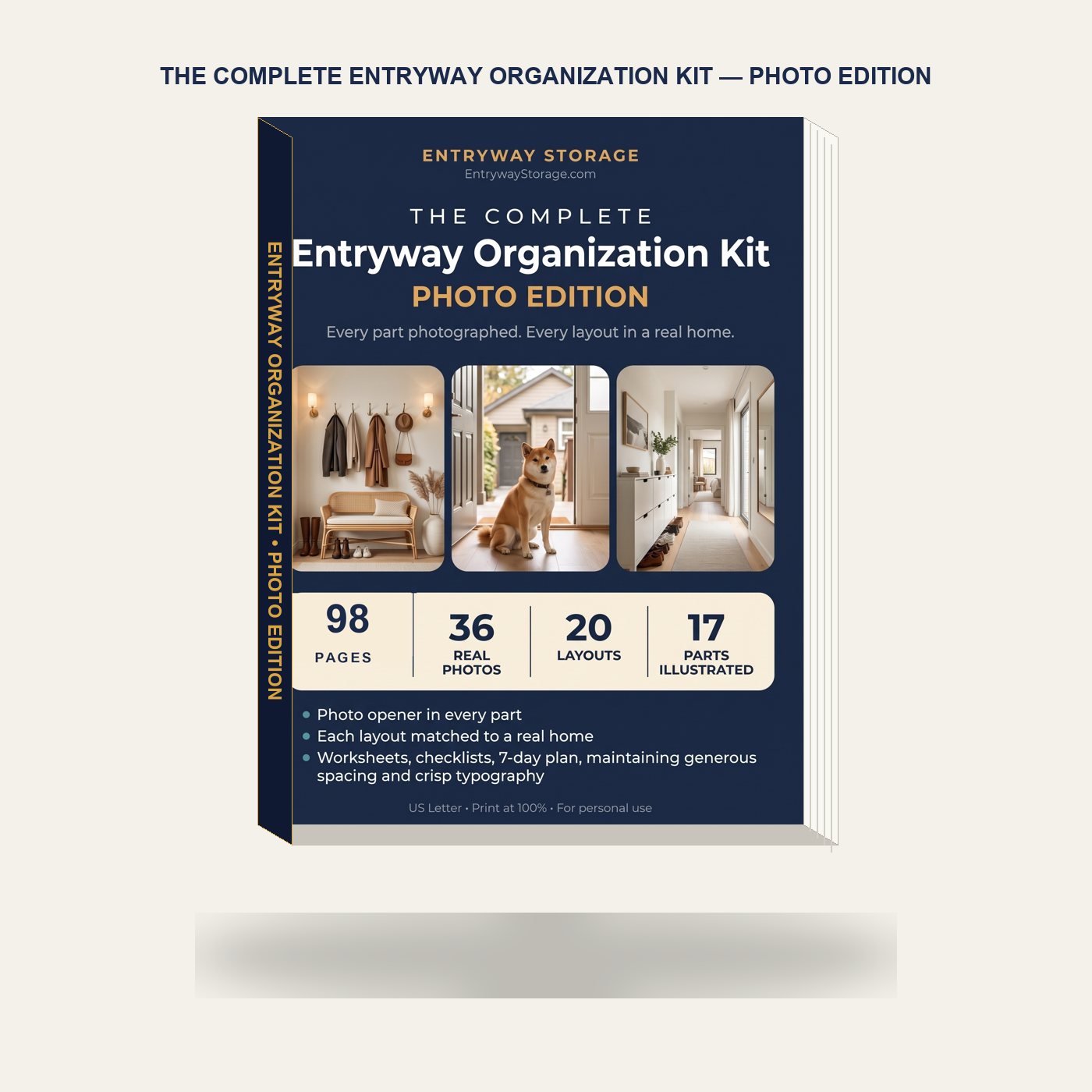
Stop Guessing Measurements. Build Your Dream Entryway with Confidence.
Transform awkward hallways, cramped foyers, and cluttered mudrooms into organized sanctuaries. Includes 20 CAD floor plans, facing real-home photo spreads, the 36-Inch Clearance Rule, the Shoe Pairs Formula, and 7 printable worksheets.
Core Edition ($17.99) · Flagship Photo Edition v5 ($39.99)
