
The Best Shelves to Display Legos: Sturdy, Stylish, and Dust-Free Setups
The best shelves to display Legos: sturdy wall shelves, glass cabinets, and acrylic cases for large sets and minifigures—plus weight, depth, and dust advice.
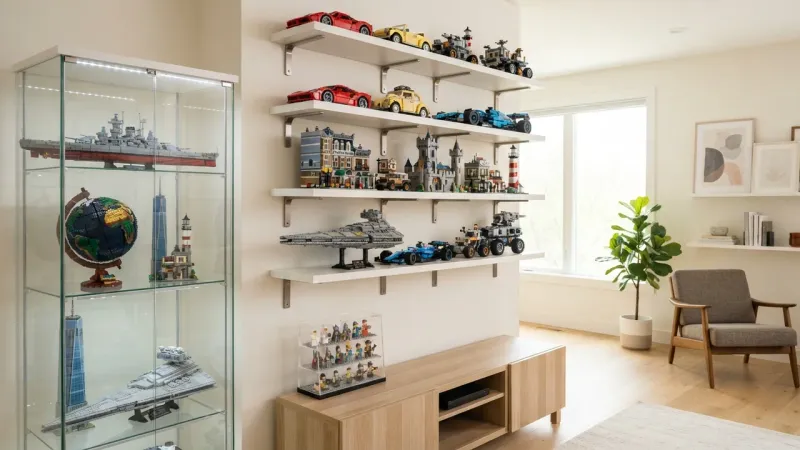
Published · Linda Wise
6 min readLast updated: November 6, 2026 | Reviewed by: Linda Wise, managing editor
A Lego collection grows in two directions: piece count and display space. The first is fun. The second is a structural problem.
A shelf that holds paperbacks will not necessarily hold a 5,000-piece set. The load is concentrated, the footprint is wide, and the set may sit at eye level where any sag is visible. The best Lego shelves solve three things at once: weight, depth, and dust.
The Short Answer
| Display goal | Best shelf type | Depth | Why |
|---|---|---|---|
| Large UCS sets | Wall shelf with steel brackets | 18-24 in | Wide footprint and high load |
| Modular buildings | Kallax-style cube or deep shelf | 15 in | Fits a city block footprint |
| Medium sets | Floating shelf | 10-12 in | Clean look, easy to arrange |
| Minifigures | Acrylic tiered case | 4-6 in | Dust protection and visibility |
| Dust-free collection | Glass-door cabinet | 12-16 in | Enclosed display |
| Kids’ playroom | Low bookcase with bins | 12-15 in | Accessible and safe |
Shelf Types Compared
| Shelf type | Load capacity | Dust protection | Cost | Best for |
|---|---|---|---|---|
| Floating wall shelf | Medium-high with studs | Low | $$ | Medium sets, clean walls |
| Bracket shelf | High | Low | $ | Large sets, garages |
| Cube system (Kallax) | Medium | Low-medium | $$ | Modular buildings |
| Bookcase with glass doors | Medium | High | $$$ | Dust-free collections |
| Glass display cabinet | Medium | High | $$$ | Minifigures and small sets |
| Acrylic case | Low-medium | High | $$ | Individual sets |
| Picture ledge | Low | Low | $ | Minifigures and small sets |
Weight Math: What Lego Actually Weighs
Lego bricks are light individually, but a large set is dense. Use these planning ranges, then check the actual set weight if you are displaying a collector model:
| Set size | Approximate built weight | Recommended shelf load |
|---|---|---|
| Small (under 500 pieces) | 1-2 lb | 15-20 lb |
| Medium (500-1,500 pieces) | 2-5 lb | 25-35 lb |
| Large (1,500-3,000 pieces) | 5-10 lb | 40-50 lb |
| UCS / collector (3,000+ pieces) | 10-30+ lb | 60-100 lb |
The shelf’s load rating is only half the equation. The brackets and wall anchors carry the load. A 50-pound shelf on two drywall anchors is not a 50-pound shelf. Anchor into studs whenever possible; use toggle bolts for heavy loads in drywall, and never rely on adhesive hooks for a large set.
The span rule
A shelf that spans more than 36 inches without a center support will sag under a concentrated load, even if the brackets are rated for the weight. Keep shelf spans at 36 inches or less for heavy sets, or add a center bracket.
Best Shelves by Collection Type
Large UCS sets
Best choice: a 24-inch-deep wall shelf with heavy-duty steel brackets anchored into two or three studs. The UCS Millennium Falcon, AT-AT, and similar models have wide footprints and irregular shapes; a shallow shelf forces the set to overhang.
Shelf specs to look for:
- 1.5-2 inch thick shelf board
- Steel L-brackets, not hidden plastic brackets
- 18-24 inch depth
- 50-100 lb load rating
- Anchor into studs
Placement: eye level or slightly above, with 12-18 inches of clearance above the tallest point of the set.
Modular buildings
Best choice: a Kallax-style cube unit or a 15-inch-deep bookcase. Modular buildings are designed to sit side by side, and a cube grid makes a natural city block.
Shelf specs:
- 13-15 inch cube openings
- 15-inch depth
- Wall anchor included or added
- Back panel for rigidity
Layout tip: put the buildings on one level, not stacked, so the street scene reads as a continuous row. Use the top of the unit for a larger landmark set.
Medium sets and vehicles
Best choice: a 10-12 inch floating shelf. It keeps the wall clean and lets the set be the focus.
Shelf specs:
- 1.5 inch thick
- 10-12 inch depth
- Hidden bracket rated for 25-35 lb
- Anchored into studs
Layout tip: group by theme or color, and leave 6-8 inches between sets so they do not visually merge.
Minifigures
Best choice: an acrylic tiered display case or a shallow picture ledge. Minifigures are light, but they are dust magnets and easy to knock over.
Shelf specs:
- 4-6 inch depth
- Tiered rows for visibility
- Clear acrylic or glass front
- Wall-mounted or freestanding
Layout tip: sort by theme, series, or color. A black or white backing makes the figures stand out.
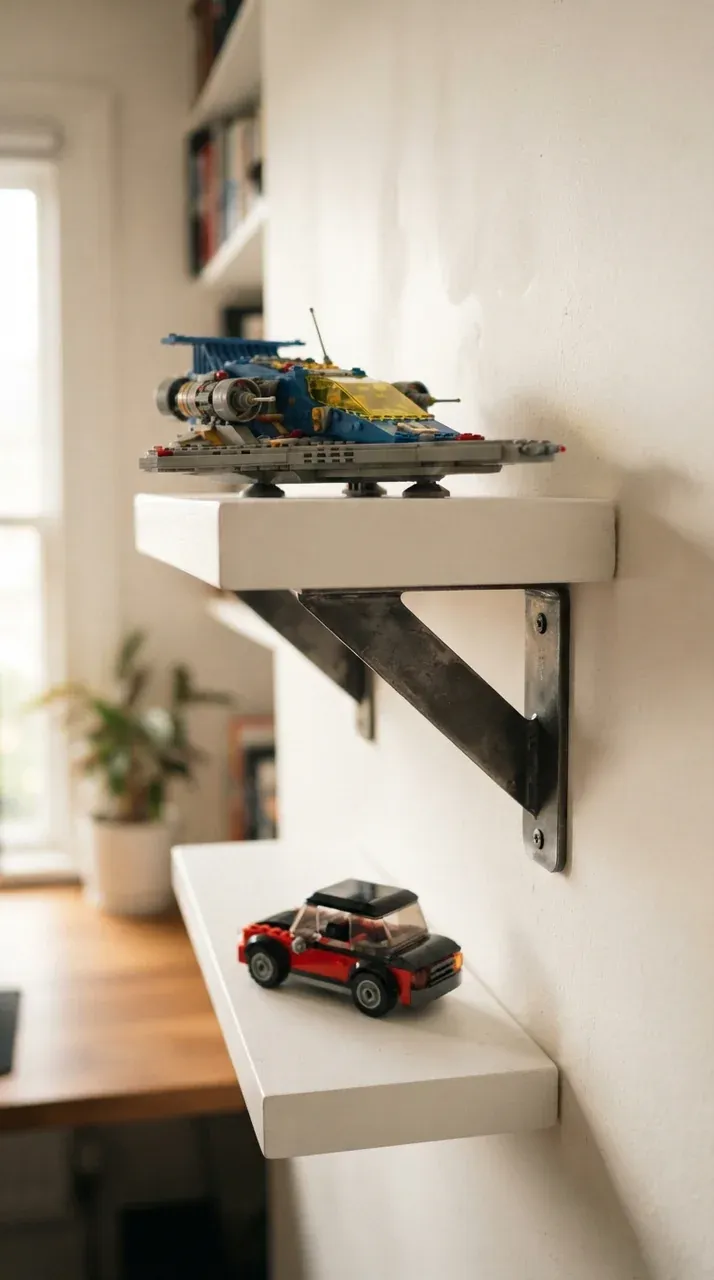
Image: a sturdy floating shelf keeps medium sets visible, secure, and easy to dust.
Dust-Free Display Options
Dust is the quiet enemy of a Lego collection. It settles between studs, dulls transparent pieces, and is hard to remove without knocking off small parts.
1. Glass-door cabinet
The most practical dust-free option. A bookcase with glass doors, such as an IKEA Billy/Oxberg combination, keeps the majority of dust off the sets while letting you see them. Add a thin foam gasket around the doors if dust still gets in.
Best for: a full collection in a living room or office.
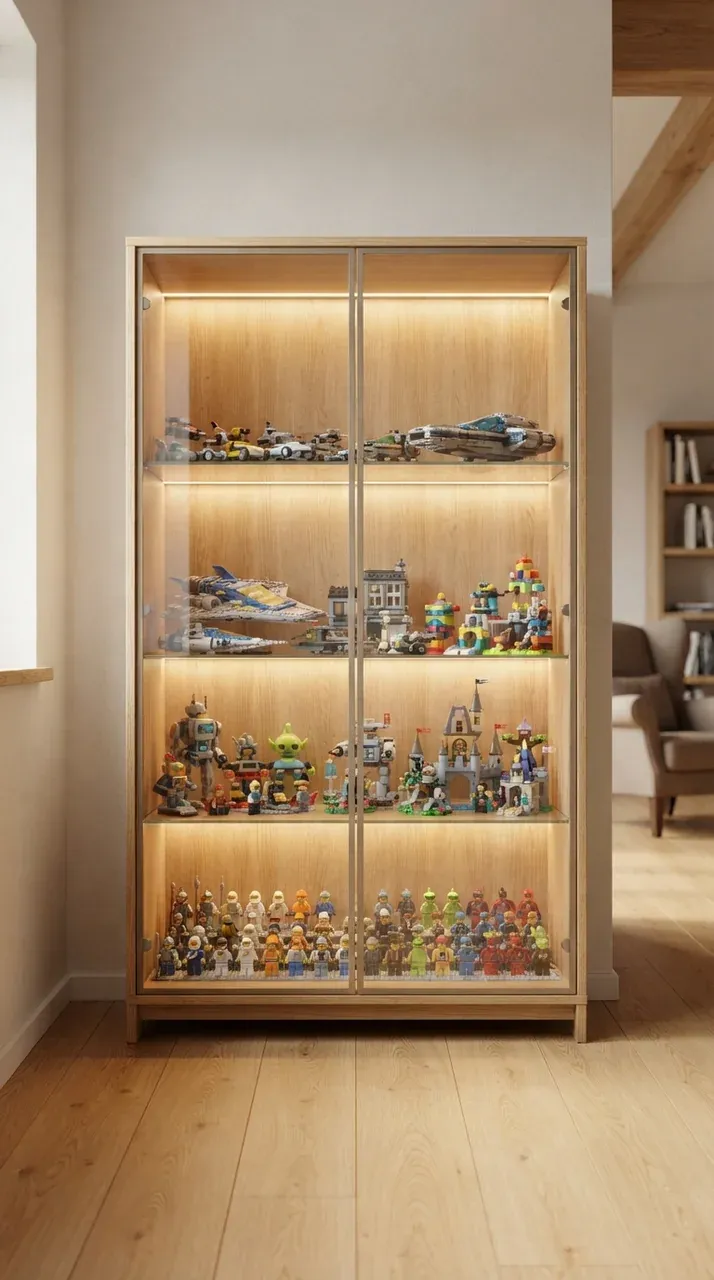
Image: a glass-door cabinet keeps dust off the collection while keeping every set visible.
2. Acrylic display case
An acrylic case fits over an individual set or a small group. It is the best choice for a single collector model or a minifigure lineup. Look for a case with a removable top or front panel for access.
Best for: one large set or a minifigure collection.
3. Glass display cabinet
A glass cabinet with adjustable shelves looks museum-like and protects from dust. Check the shelf load rating; glass shelves can be brittle under a heavy set.
Best for: a curated collection in a dedicated room.
4. Open shelves with a dust cover
If you prefer open shelves, add a thin acrylic or glass cover over the set. It is less elegant than a cabinet but much cheaper than replacing yellowed or dusty bricks.
Lighting and Layout
- Use LED lighting. Avoid incandescent bulbs that produce heat near plastic.
- Keep light indirect. A strip light behind the shelf or above the set is better than a spotlight.
- Avoid direct sun. UV light yellows white bricks and fades stickers.
- Create height variation. Put large sets on lower shelves and small sets at eye level, or vice versa depending on the focal point.
- Leave negative space. A shelf packed edge to edge looks like storage, not display.
- Label the theme, not the set. Small labels help viewers understand the collection without cluttering the shelf.
Installation and Safety
- Find the studs. Use a stud finder and mark both edges of each stud.
- Use the right anchor. Lag bolts or heavy-duty wood screws for studs; toggle bolts for drywall when studs are not available.
- Level the shelf. A shelf that is off-level will make the set look crooked.
- Anchor tall units. A bookcase or cube unit must be strapped to the wall, especially in homes with kids or pets.
- Check the load. Test the empty shelf with a gentle pull before loading it.
- Keep heavy sets low. Put the heaviest models on the bottom or a reinforced shelf.
- Avoid overhang. At least 80% of the set’s base should sit on the shelf.
A Realistic Budget
| Budget | What you can do |
|---|---|
| Under $50 | One bracket shelf + acrylic case for a small set |
| $50-$150 | Two floating shelves + a minifigure case |
| $150-$300 | A cube unit or bookcase with doors |
| $300-$600 | A wall of shelves or a glass cabinet |
| $600+ | Custom built-in display with lighting |
A budget-friendly display option
Costway’s bookshelves and storage cabinets include display units, cube organizers, and wall shelves that can be adapted for Lego collections. Affiliate link: we may earn a commission at no extra cost to you. Check the shelf load rating, internal depth, and whether the unit includes a wall anchor before ordering.
For wall shelf sizing and placement, see our floating shelves vs. wall hooks guide. For a small-space display wall, read our small apartment storage solutions.
Bottom Line
The best shelves to display Legos are deep enough, strong enough, and protected from dust. Use 12-15 inch shelves for most sets, 18-24 inches for UCS models, and a glass-door cabinet for the collection you want to keep clean.
Anchor everything into studs, keep heavy sets low, and avoid direct sunlight. A well-planned display wall protects the bricks and makes the collection look intentional—not like it is waiting to be put away.
For more display and shelving ideas, see our entryway shelf with hooks guide.
Shop Entryway Furniture & Storage Deals on Costway
Factory-direct pricing on entryway benches, shoe cabinets, hall trees, and organizers with fast, free US delivery.
* Affiliate disclosure: We may earn a commission if you shop through this link at no added cost to you.
Check Costway Entryway Deals
Stop Guessing Measurements. Build Your Dream Entryway with Confidence.
Transform awkward hallways, cramped foyers, and cluttered mudrooms into organized sanctuaries. Includes 20 measured floor plans, facing photo spreads, the 36-inch planning rule, the shoe pairs formula, and 7 printable worksheets.
Core Edition ($17.99) · Flagship Photo Edition v5 ($39.99) — compare editions
Frequently Asked Questions
How much weight can a Lego display shelf hold?
It depends on the shelf, brackets, and wall anchors, not the Lego. A wall shelf anchored into two studs with steel brackets can typically hold 50-100 pounds when the load is distributed. A single drywall anchor may hold only 10-20 pounds. Always check the shelf's stated load rating and anchor into studs for large sets.
What is the best shelf depth for Lego sets?
Use 8-12 inches for small and medium sets, 12-15 inches for modular buildings and most large sets, and 18-24 inches for UCS sets with wide wings or long hulls. Measure the set's footprint including any stand or display base, then add 2 inches of clearance.
How do I keep Lego displays dust-free?
Use a glass-door cabinet or acrylic display case for the most protection. For open shelves, add a thin acrylic dust cover, keep the room's air moving with a filter, and dust gently with a soft brush or compressed air. Avoid wet cloths, which can push dust into studs and stickers.
Can I display Legos in direct sunlight?
Avoid direct sunlight. UV exposure can yellow white and light-colored bricks, fade stickers, and weaken some plastics over time. Use curtains, blinds, or LED lighting, and keep the display away from south- and west-facing windows.
Are IKEA Kallax shelves strong enough for Lego sets?
Kallax is a good choice for modular buildings and medium sets, but check the weight and anchor the unit to the wall. The cube openings are about 13 inches, which fits many sets but not the widest UCS models. For very heavy sets, add a reinforced shelf or choose a deeper, wall-anchored unit.