
Miniso vs. Muji Home Organization: Which Brand Offers Better Quality for the Price?
Miniso vs Muji home organization compared on materials, sizing, durability, and cost per year. See which brand wins for closets, pantries, bathrooms, and desks.
Published · Updated · Linda Wise
6 min readLast updated: November 6, 2026 | Reviewed by: Linda Wise, managing editor
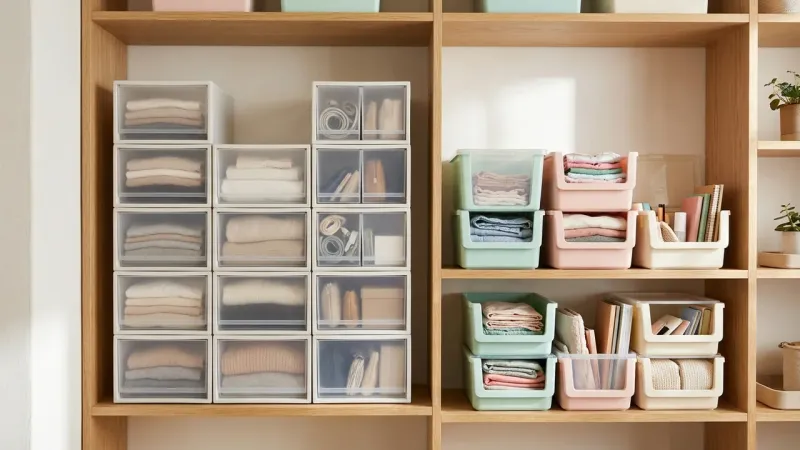
Miniso and Muji both sell the same promise: calm, clever, affordable organization. The difference is what happens after the first month, when drawers are pulled twenty times a day and a bag of flour sits on the same shelf as a stack of sweaters.
The short version: Muji is the better quality-for-price buy for daily-use storage; Miniso is the better price-for-flexibility buy for light, decorative, or temporary organizing. Neither brand wins every category. The smartest shoppers mix them.
Miniso vs Muji at a Glance
| Category | Better pick | Why |
|---|---|---|
| Material consistency | Muji | Tighter tolerances and stable dimensions across restocks |
| Modular expansion | Muji | PP boxes are designed to stack and combine by size |
| Entry price | Miniso | Lower cost per bin, especially for small organizers |
| Trend and color variety | Miniso | More seasonal colors, characters, and playful shapes |
| Heavy daily use | Muji | Thicker walls and more predictable load behavior |
| Food storage | Muji | Clear food-contact labeling is easier to verify |
| Kids’ rooms and dorms | Miniso | Cheap enough to replace after a move or growth spurt |
| Built-in look | Muji | Neutral finishes and uniform sizing disappear into a room |
Materials: The Difference Is Consistency, Not Magic
Both brands rely heavily on polypropylene (PP), acrylic, and polyester fabric. Neither uses exotic materials. The real difference is quality control and specification discipline.
Muji
Muji’s PP storage boxes are the benchmark. They use a matte, slightly textured finish that resists visible scuffs, and the walls are stiff enough that a full drawer does not bow when pulled. The dimensions are stable from batch to batch, which matters when you buy one box this year and want a matching one next year.
Muji’s soft polyethylene cases are a different product: flexible, lightweight, and best for clothes and linens rather than heavy tools. The acrylic lines are clear and precise but scratch more easily than PP. Muji’s weakest category is anything with thin fabric or untreated natural fiber; those are decor pieces, not workhorses.
Miniso
Miniso’s storage range is broader and less predictable. A single store can carry thick, well-made PP drawers next to thin folding boxes with paperboard cores. The best Miniso pieces are genuinely good value: small desktop drawers, stackable cosmetic organizers, and simple baskets. The weakest are large fabric cubes and anything with a glued-on handle.
The practical rule: judge the SKU, not the logo. Tap the side wall. Flex the rim. Look for a seam that runs down the inside corner. If the bin twists easily or the handle is only heat-sealed, it is a light-duty piece no matter which brand made it.
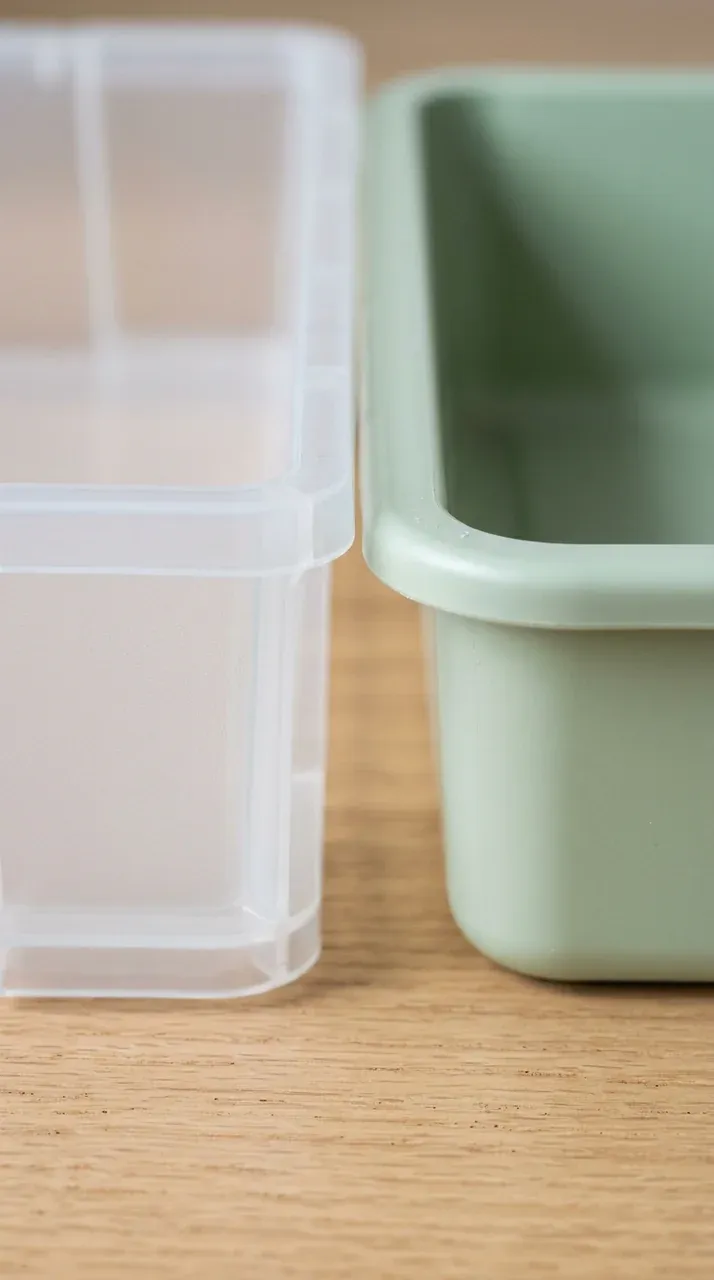
Image: compare the wall thickness, rim stiffness, and stacking lip before buying a full set.
Sizing and Modularity: Muji’s Biggest Advantage
Muji’s organizational advantage is not that the plastic is indestructible. It is that the boxes are designed as a system. The PP series comes in multiple widths, depths, and heights that stack in predictable combinations. You can start with two drawers, add a third later, and still have a flush front.
Miniso’s sizes change with the season and the collection. That is fine for a one-off shelf, but it is frustrating when you want to expand a closet wall six months later. If you are building a permanent system, buy the full set at once or choose a brand with stable dimensions.
The fit checklist
- Measure the internal opening of the shelf or closet, not the outside.
- Subtract at least 0.5 inch from the width for finger clearance.
- Subtract at least 0.5 inch from the depth so the box does not protrude.
- Check the stacking lip; two boxes that look identical may not nest securely.
- Buy one sample before committing to a wall of boxes.
Price and Cost Per Year
Prices vary by country, store, and promotion, so treat the numbers below as planning ranges rather than quotes.
| Product type | Muji typical range | Miniso typical range | Expected heavy-use life | Better value |
|---|---|---|---|---|
| Small desktop drawer | $8-$18 | $4-$10 | 3-6 years | Miniso for light use |
| PP storage box, medium | $12-$25 | $6-$15 | 8-12 years | Muji |
| Soft fabric cube | $15-$30 | $5-$12 | 2-4 years | Miniso |
| Acrylic organizer | $10-$25 | $5-$15 | 3-5 years | Either |
| Woven basket | $20-$45 | $8-$20 | 4-8 years | Muji for finish |
| Full drawer unit | $60-$150 | $30-$80 | 8-12 years | Muji |
A $10 Miniso bin replaced every two years costs about $5 per year. A $22 Muji box that lasts ten years costs about $2.20 per year. That math flips only when the Miniso piece is treated gently or used for lightweight items that never stress the walls.
There is also a time cost. Mismatched sizes and discontinued colors create visual clutter, and replacing a whole set because one box failed is more expensive than buying the better set once.
Where Each Brand Wins
Choose Muji for:
- Pantry and food storage where airtightness and food-contact labeling matter.
- Closet drawer systems that need to stack flush and expand later.
- Bathroom vanity storage that will see water, soap, and daily handling.
- Visible shelving where a uniform, neutral look is the goal.
- Heavy or sharp items such as tools, craft supplies, and canned goods.
Choose Miniso for:
- Entryway catch-alls for keys, mail, masks, and small daily items.
- Kids’ rooms and dorms where colors and characters matter more than longevity.
- Seasonal storage that gets packed away for months.
- Desktop and vanity organizers that hold lightweight items.
- Trial runs before you commit to an expensive modular system.
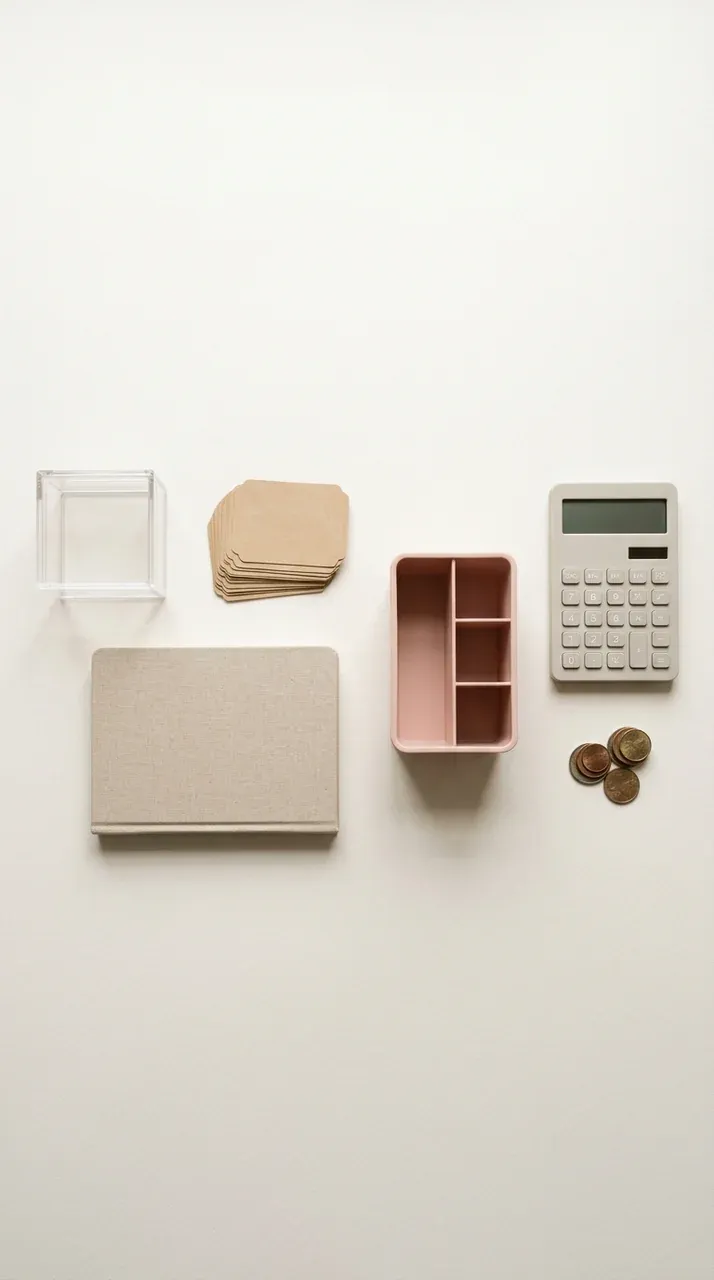
Image: the cheapest bin is not always the cheapest system. Compare replacement cost, not just shelf price.
The Mixed Strategy That Works Best
The most practical approach is a two-tier system:
- Tier 1 — daily-use, visible storage: spend on Muji or a comparable modular brand. This is the closet wall, pantry shelf, and bathroom drawer that opens every day.
- Tier 2 — hidden, light, or temporary storage: buy Miniso. Use it inside drawers, on high shelves, in kids’ rooms, and for seasonal gear.
This gives you a consistent look where guests see it and low-cost flexibility where they do not. It also protects your budget from the most common mistake: buying a beautiful matching set for the whole house before you know how each room actually behaves.
A budget alternative worth considering
If neither brand fits your budget or your dimensions, Costway’s home storage selection includes modular bins, stackable baskets, and slim carts at factory-direct prices. Affiliate link: we may earn a commission at no extra cost to you. Measure the external dimensions against your shelf before ordering, and check the load rating on drawer-style units.
For more small-space systems, see our guide to the best storage solutions for small apartments and our storage bin sizing guide.
What About Durability Claims?
Neither brand publishes a consumer-facing durability rating for every storage SKU. That makes owner feedback more useful than marketing copy. Across both brands, the failure patterns are consistent:
- Fabric bins fail at the handle first. The fabric tears away from the cardboard or plastic insert.
- Acrylic cracks at the screw holes. Over-tightening is the usual cause.
- PP boxes fail at the stacking lip. Dropping a full box on a hard floor chips the rim.
- Woven baskets fail at the rim. Moisture and repeated lifting loosen the binding.
Muji’s advantage is that these failures are less common on its core PP line because the material and wall thickness are consistent. Miniso’s advantage is that the replacement cost is low enough that a failure is annoying rather than expensive.
Bottom Line
Muji is the better quality-for-price choice for storage you touch every day. You pay more upfront, but you get stable sizing, tighter construction, and a neutral look that survives redecorating. Miniso is the better budget choice for light, playful, or temporary organizing. Buy it where the stakes are low and the color payoff is high.
If you only remember one rule: spend on the container that moves, save on the container that sits. Drawers, pantry bins, and bathroom organizers move. High-shelf boxes and seasonal baskets mostly sit.
For a step-by-step plan that works with either brand, read our simple tidying buying guide.
Shop Entryway Furniture & Storage Deals on Costway
Factory-direct pricing on entryway benches, shoe cabinets, hall trees, and organizers with fast, free US delivery.
* Affiliate disclosure: We may earn a commission if you shop through this link at no added cost to you.
Check Costway Entryway DealsFrequently Asked Questions
Is Miniso cheaper than Muji for home storage?
Yes, usually. Miniso storage bins and drawers typically cost less per piece than Muji's PP and acrylic lines. The gap is smallest on small desktop organizers and largest on modular drawer systems. Miniso is the lower-entry-cost choice; Muji is the lower-replacement-cost choice for heavy daily use.
Is Muji storage worth the higher price?
It is worth it when the container is handled daily, must fit a modular system, or holds food or heavy items. Muji's PP boxes have consistent dimensions, tight tolerances, and a restrained finish that hides scratches. For seasonal or lightweight storage, the premium is harder to justify.
Are Miniso storage containers food-safe?
Only buy Miniso containers that are explicitly labeled food-safe and intended for food contact. Miniso sells both household storage and food containers, and the materials differ by SKU. Check the base for a food-contact symbol and follow the care label; do not assume every plastic bin is suitable for pantry staples.
Do Muji storage boxes fit IKEA Kallax or other cube shelving?
Some do, but do not assume it. Muji's PP boxes come in several widths and depths, and the standard cube fit depends on the exact model. Measure the internal opening of your shelving and compare it with the box's outer dimensions, then allow at least 0.25 inch of clearance on each side.
Which brand is better for a rental apartment?
Miniso is often the better first purchase for renters because the lower price makes it easier to reconfigure when you move. Muji is better if you plan to stay and want a consistent system that can expand. In both cases, choose freestanding or adhesive options if your lease limits wall drilling.