
Modular Closet Systems vs. Cube Organizers: Which to Buy?
Modular closet systems vs. cheap cube organizers: real cost per year of use, load limits, and the specific closets where each one is the smarter investment.
Published · Linda Wise
7 min readLast updated: November 8, 2026 | Reviewed by: Linda Wise, managing editor
A $90 cube organizer and a $700 modular closet system both hold clothes. One of them will still be in your closet in ten years.
That is the whole argument, and it is a cost-per-year argument rather than a quality argument. Cube organizers are not bad products. They are short-life products being asked to do a long-life job in the wrong room.
Here is how to tell which closets deserve which, and where the cheap option is genuinely the smarter buy.
The Head-to-Head
| Factor | Cube organizers | Modular closet systems |
|---|---|---|
| Typical cost | $60-$200 | $300-$900 |
| Installation | None, freestanding | Rail into studs, 2-4 hours |
| Hanging space | None built in | Rods at any height |
| Adjustability | Fixed grid | Shelves move on standards |
| Load per shelf | Light to moderate | Moderate to heavy |
| Rental friendly | Yes | Partly, leaves holes |
| Expected life | 3-6 years | 10+ years |
| Best for | Folded items, shoes, kids | Primary closets, hanging |
The table makes the modular system look like the obvious winner. It is not, in about a third of the closets where people install one.
Where Cube Organizers Actually Win
- Rentals. No holes, no rail, no patching on move-out. A cube unit comes down in ten minutes and goes in the truck.
- Kids’ rooms. Low height, cheap replacement, and forgiving when a shelf gets used as a step. Our cube storage ideas guide covers kid-height layouts.
- Folded-only storage. If your wardrobe is sweaters, jeans, and shoes, cubes with fabric bins are efficient and cheap.
- Dorm and temporary rooms. A cube unit is the right answer for a space you will occupy for nine months.
- Supplementing a system. Cubes under a hanging rod, or on the floor of a walk-in, add folded storage without new cabinetry.
The honest limitation: cubes give you no rod. Anyone with dresses, coats, or suits needs hanging space from somewhere else, and that usually means a wall-mounted rod anyway.
Where Modular Systems Win
- Primary closets. Daily use, mixed hanging and folding, and a decade-long horizon.
- Anything with a long garment. Rods at two heights are the single biggest capacity gain in a reach-in.
- Adjustable needs. Standards let you move shelves when your wardrobe changes, which it will.
- Heavy loads. Steel brackets and a rail into studs carry what thin particleboard cannot.
- Resale presentation. A fitted system reads as built-in. A cube unit reads as furniture.
If your closet is the one you use every morning and you plan to stay, the modular system is the better investment by a wide margin. Our affordable closet system roundup covers the current field, and the narrow closet kit guide covers tight openings.
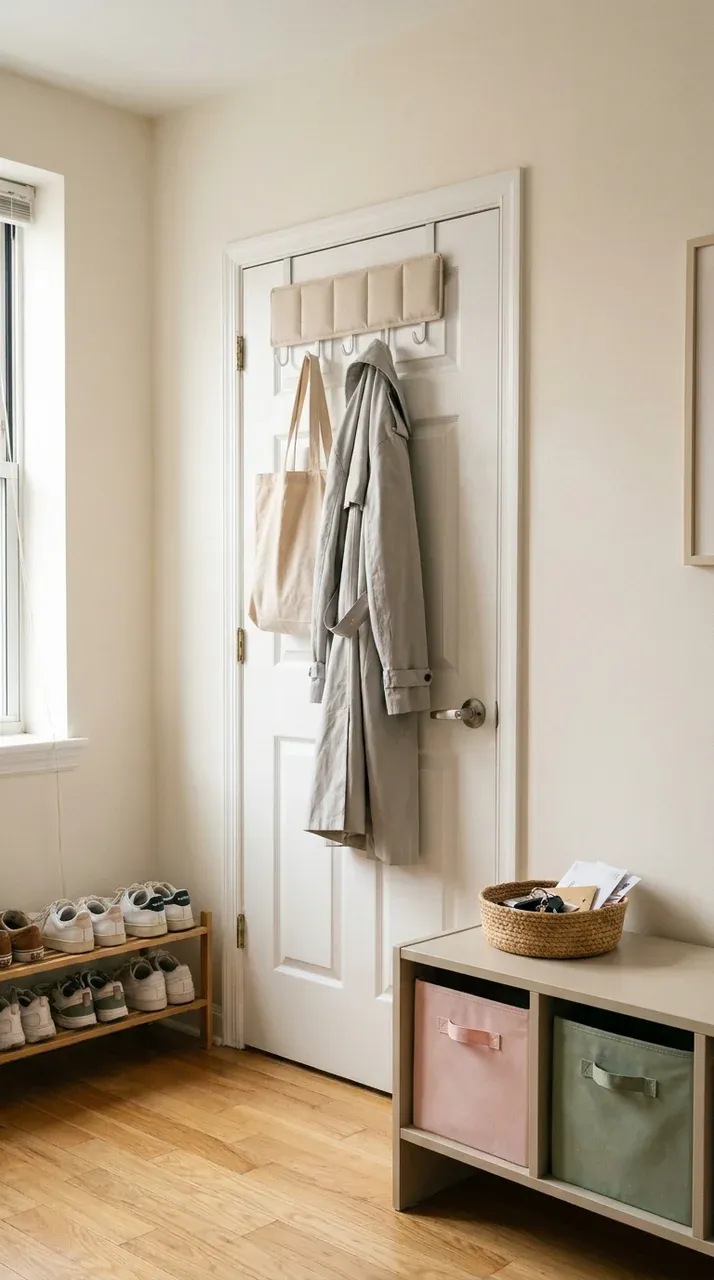 Cube organizers earn their place for folded items and shoes, but they provide no hanging space of their own.
The Cost-Per-Year Math
This is where the comparison gets uncomfortable for the cheap option.
- Cube organizer at $90, replaced every four years: about $22 per year, plus the cost of the second and third units.
- Cube organizer at $90 plus a wall rod and shelf at $120, replaced once in ten years: about $42 per year.
- Modular system at $600, lasting ten years: about $60 per year.
The gap is smaller than the sticker prices suggest. A $600 system costs roughly $18 more per year than a cube setup that you replace twice, and it delivers hanging space, adjustability, and a fitted look the whole time.
Now add the labor. Rebuilding a closet twice means two afternoons of emptying, disassembling, and reinstalling. If your time is worth anything, the modular system wins outright.
Where the math flips back: if you will move within three years, the cube unit never needs to be replaced and the modular system never amortizes. Renters should do the math on their lease, not on a decade.
The hidden cost of the cheap option
Cube organizers are not actually cheap once you finish them. A bare unit is a grid of open cubbies, which is not storage. You need bins.
- Fabric bins: $8-$15 each, and a 3x3 unit needs up to nine.
- A wall rod and shelf to get hanging space: $80-$150.
- Brackets and anchors: $15-$30.
- Labels and dividers: $10-$20.
That turns a $90 unit into a $250-$350 project, which is halfway to a basic modular system. The comparison people make in the aisle is not the comparison they live with.
What resale and rentals actually reward
Renters should ignore resale entirely and optimize for move-out. Cube units leave no holes, come apart flat, and survive two or three moves. That is a real advantage worth paying for.
Owners should think about how the closet photographs. A fitted system with a rail and rods reads as built-in cabinetry in listing photos. A cube unit with mismatched bins reads as furniture. Neither changes an appraisal, but one changes how a buyer feels walking through.
Load Limits and Failure Points
Cube organizers fail in predictable places.
- The internal divider. Thin vertical panels carry the shelf load. Overload the middle bay and the divider bows.
- The top panel. People stack heavy boxes on top of cube units. The top panel is usually the thinnest part.
- The back panel. Often a thin hardboard sheet that provides shear stiffness. Remove it and the unit racks sideways.
- Fasteners. Cam locks and dowels loosen with repeated movement. A unit that gets dragged across a floor will wobble afterward.
Modular systems fail differently: at the wall, not the unit. A rail screwed into drywall alone will pull out under load. Anchored into studs, it holds. That is the entire installation difference, and it is why the rail matters more than the shelf.
Installation Reality Check
Cube organizer: assemble with the included hardware, place it, optionally anchor it to a stud with the included strap. Budget 45-90 minutes. Anchor any unit over 30 inches tall if children are in the house.
Modular system: find studs, mark a level line, drill the rail, hang standards, cut shelves, install rods and brackets. Budget 3-5 hours for a reach-in, longer if the walls are out of square. A helper makes the shelf work dramatically easier.
If you are weighing whether to do it yourself at all, our DIY vs. custom comparison covers the tools and the failure modes. And if the closet is genuinely awkward, the modular vs. bespoke breakdown explains when neither of these options is right.
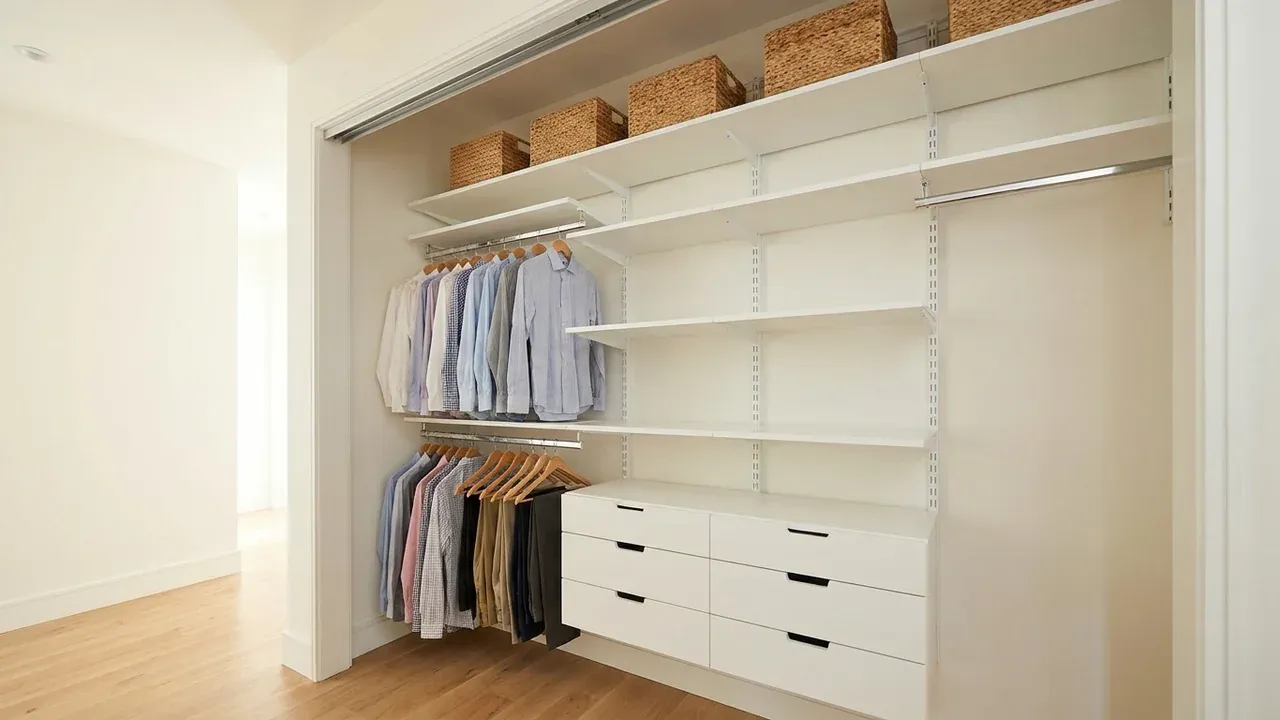 A rail anchored into studs is what lets a modular system carry loads a freestanding cube unit cannot.
The Hybrid That Usually Wins
Most well-organized closets use both, and the split is predictable.
- Modular system on the walls for hanging rods, high shelves, and drawers.
- Cube organizer on the floor or under a rod for folded items, shoes, and bins.
- Fabric bins in the cubes to hide clutter and make the grid look intentional.
- Labels on bin fronts, not lids, so you can read them at a glance.
This gets you hanging space, adjustability, and cheap folded storage without paying cabinetry prices for the whole closet. It also means the cube unit can be replaced independently when it wears out.
A budget-friendly supplement
Costway’s storage and organization range includes stackable bins, foldable baskets, and closet organizers at factory-direct prices. Affiliate link: we may earn a commission at no extra cost to you. Measure first, and buy one sample before committing to a matching set.
Fabric bins are the cheapest upgrade in this whole comparison. Buy one first and check that it holds its shape when full before ordering eight. Our storage bins guide covers which materials survive heavy use.
Mistakes That Waste Money Either Way
- Buying a cube unit for a closet with dresses. You will add a rod anyway, and the unit becomes an obstacle.
- Buying a modular system for a nine-month lease. It never amortizes, and you will leave it behind or patch the holes.
- Skipping the stud finder. A rail in drywall alone pulls out under a full load of coats.
- Filling the closet before planning it. Empty it completely, sort by category, then design around what you actually own.
- Buying bins before the unit. Bin sizes rarely match across brands, and returns are a hassle.
- Ignoring the door swing. A deep unit behind an inswing door makes the closet unusable.
Each of these costs more than the difference between the two product categories.
A Quick Decision Test
Answer three questions honestly.
- Do you hang more than 30 percent of your clothes? If yes, you need a rod, and that points to a modular system.
- Will you still be in this home in three years? If no, cubes win on flexibility.
- Is the closet yours to modify? If you cannot drill, cubes win by default.
Two or more answers pointing to modular means buy the system. Two or more pointing to cubes means buy the cubes and stop second-guessing it. The worst outcome is buying neither and living with a pile on the floor.
Bottom Line
Buy the modular system if the closet is your primary one, you hang more than you fold, and you plan to stay more than three years. Buy cube organizers if you rent, if the room belongs to a child, or if your storage is folded-only.
If you are unsure, buy the modular system for the walls and one cube unit for the floor. That combination costs less than a custom closet, lasts longer than cubes alone, and adapts when your wardrobe changes.
Shop Entryway Furniture & Storage Deals on Costway
Factory-direct pricing on entryway benches, shoe cabinets, hall trees, and organizers with fast, free US delivery.
* Affiliate disclosure: We may earn a commission if you shop through this link at no added cost to you.
Check Costway Entryway DealsFrequently Asked Questions
Are cube organizers strong enough for a closet?
For folded clothes, shoes, and bins, yes. For hanging rods and heavy items, usually no. Most cube organizers are built from thin particleboard with a paper or laminate skin, and the internal dividers carry the load. Hanging a rod across a cube unit, or loading the top with heavy boxes, is where they fail.
How much does a modular closet system cost compared to cube organizers?
A basic cube organizer runs $60-$200, while a modular closet system for a standard reach-in runs roughly $300-$900 for the components plus installation if you hire it out. Over ten years the modular system often costs less per year because it does not need replacing.
Can I use cube organizers in a walk-in closet?
You can, and many people do for folded items and shoes. The limitation is hanging space: cubes do not provide a rod, so you still need a wall-mounted rod or a separate hanging unit. In a walk-in, cubes work best as a supplement to a proper system, not a replacement.
Do cube organizers damage walls?
Freestanding cube units do not, which is why renters like them. Wall-anchored units need screws into studs, and any wall-mounted rod or shelf leaves holes. Use a stud finder, and patch and paint before you move out if your lease requires it.
Which is better for a kids' room?
Cube organizers usually win. They are low, cheap, easy for children to reach, and forgiving of abuse. Add fabric bins at kid height and keep the hanging rod lower. A modular system becomes worth it once the child is tall enough to use a full-height closet.